How to Lose Weight Safely and Sustainably
If you want to lose weight and actually keep it off, the first thing to change is your mindset. Forget the quick-fix diets and dramatic drops on the scale. True, lasting success comes from building a healthier lifestyle one small step at a time.
The most effective, and safest, way to do this is by aiming for a gradual loss of 1 to 2 pounds per week. This isn't just a random number—it's the sweet spot for losing fat while preserving muscle, and it sets you up for changes you can stick with for life.
Laying The Groundwork For Sustainable Weight Loss
Starting a weight loss journey is a huge commitment. But how you start makes all the difference. Real progress isn't about seeing the scale plummet in the first week. It's about making smart, sustainable changes that your body can adapt to and that you won't dread doing every day.
The goal here is a permanent lifestyle shift, not a temporary diet you'll abandon in a month.
This whole approach is built on a steady, safe pace. Losing 1 to 2 pounds a week is considered the gold standard by health professionals, and for good reason. It encourages your body to burn stored fat for energy instead of breaking down precious muscle—something that almost always happens with those extreme, low-calorie crash diets.
The Risks Of Rapid Weight Loss
I get it, the promise of fast results is tempting. But it's a trap that often backfires, leading to rebound weight gain and a host of health problems. When you shed pounds too quickly, your body fights back.
Here's what you're up against:
- Muscle Loss: Extreme calorie deficits force your body to burn muscle for fuel. This tanks your metabolism, making it even harder to keep the weight off long-term.
- Nutrient Deficiencies: When you severely limit what you eat, you're also limiting the essential vitamins and minerals your body needs to function properly.
- Fatigue and Irritability: Drastic diets can leave you feeling exhausted, cranky, and mentally foggy. It’s nearly impossible to stick to a plan when you feel that terrible.
Sustainable weight management is a marathon, not a sprint. Focusing on slow, consistent progress builds the foundation for lifelong health and helps you break the cycle of losing and regaining.
The Power Of A Steady Approach
Taking the slow and steady route has benefits that go way beyond what you see on the scale. It gives you the time to build solid habits, learn what your body actually needs, and develop a much healthier relationship with food and exercise.
The image below really drives home the difference between a safe rate of loss and a risky one.
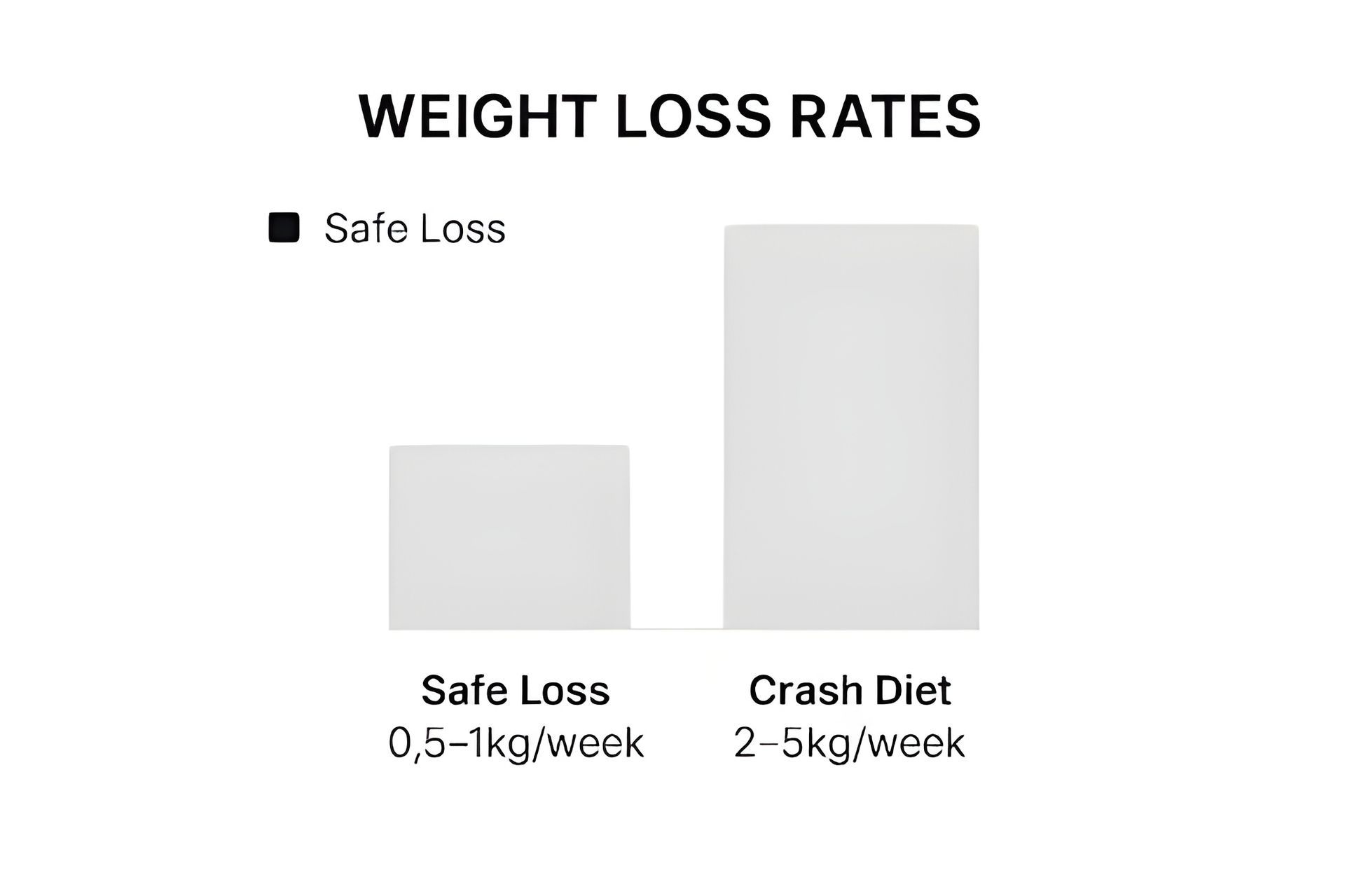
As you can see, a smart approach focuses on manageable progress, not unsustainable drops. The data backs this up. Keeping weight off is the real challenge; studies show only about 20% of overweight individuals successfully maintain at least a 10% weight loss for a year or more. This statistic alone shows why a gradual, safe method is so critical.
To put it all in perspective, let's compare the two approaches side-by-side.
Comparing Sustainable vs. Unsafe Weight Loss Methods
| Characteristic | Safe Approach | Unsafe Approach |
|---|---|---|
| Pace of Loss | 1-2 pounds per week | 3+ pounds per week |
| Diet Focus | Balanced nutrition, portion control | Extreme calorie restriction, elimination of food groups |
| Energy Levels | Stable or increased energy | Fatigue, lethargy, irritability |
| Muscle Mass | Preserved | Significant muscle loss |
| Long-Term Outcome | High chance of sustained results | High chance of rebound weight gain |
| Mental State | Builds confidence and positive habits | Creates food anxiety and diet burnout |
This table makes it clear: while the fast track might seem appealing, the slow and steady path is the one that actually leads to lasting health and success.
Crafting a Nutrition Plan You Can Actually Follow
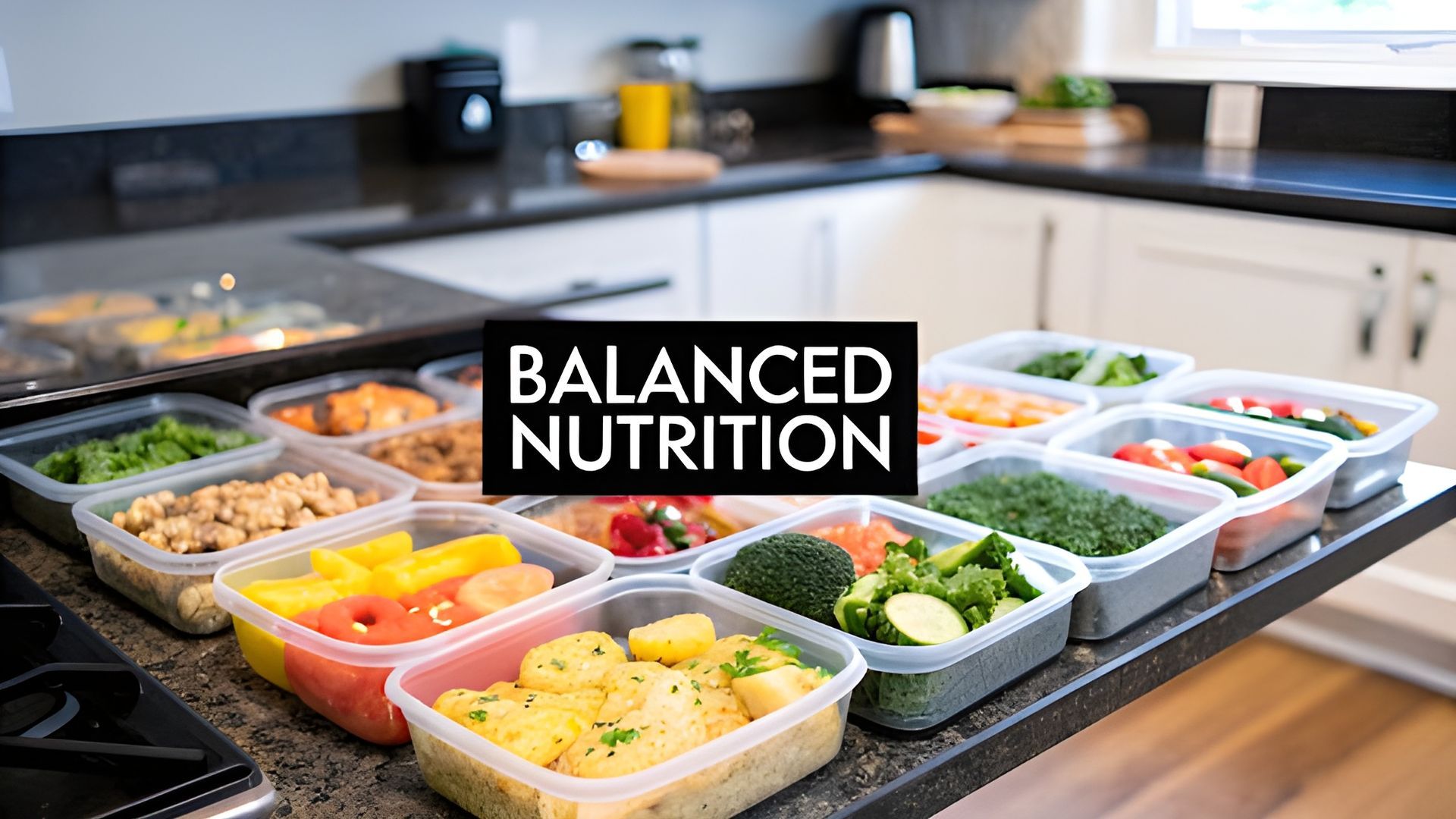
Let's be honest: the most effective nutrition plan is one you can actually stick with long-term. Forget extreme restrictions or obsessive calorie counting. The real foundation of safe, sustainable weight loss is building a satisfying, balanced way of eating that fuels your body and supports your goals.
It all comes down to understanding how different foods work together to keep you energized, full, and moving forward. The key lies in balancing your macronutrients—protein, fats, and carbohydrates. Each one plays a vital, non-negotiable role in how your body functions and manages weight.
The Power Trio: Protein, Fats, and Carbs
One of the biggest mistakes people make is demonizing an entire food group, whether it's carbs or fats. In reality, a healthy balance of all three is what creates lasting results. Think of them as a team working in perfect sync.
- Protein: This is your muscle-building, satiety-boosting powerhouse. Including lean protein in your meals helps you feel fuller for longer, which naturally helps manage your overall intake without feeling deprived.
- Fats: Healthy fats—the kind you find in avocados, nuts, and olive oil—are absolutely essential for hormone production and absorbing key vitamins. They also play a huge part in that feeling of satisfaction after a meal.
- Carbohydrates: Complex carbs like sweet potatoes, brown rice, and quinoa are your body’s preferred energy source. They provide the fuel you need to power through your day and your workouts.
Building meals that feature all three of these is a total game-changer. A perfect example? A lunch of grilled chicken (protein), a side of quinoa (carbs), and a big salad drizzled with olive oil and topped with avocado (fats). It's a combination that delivers sustained energy and keeps you full for hours. You can dive deeper into how protein specifically supports weight management here.
Remember, the goal is balance, not elimination. A truly satisfying meal gives your body a mix of everything it needs, preventing the energy crashes and cravings that come from overly restrictive diets.
Smart Strategies for Real-Life Success
Knowing what to eat is half the battle; putting it into practice every day is the other half. Simple strategies are your best friend here. For instance, meal prepping can make a world of difference. Spending just a couple of hours on a Sunday to cook some grains, grill proteins, and chop up veggies sets you up for an entire week of easy, healthy choices. No more last-minute takeout dilemmas.
Another crucial skill is learning to read nutrition labels without feeling like you need a science degree. Just focus on the basics: serving size, protein, and fiber. Foods high in fiber are your secret weapon—they aid digestion and are fantastic for helping you feel full. Simple swaps, like choosing whole-grain bread over white, can give your daily fiber intake a serious boost.
How Medical Marijuana Can Support Your Nutrition Goals in Mississippi
For some patients here in Mississippi, the biggest hurdle isn't motivation—it's managing symptoms that get in the way of healthy eating. Chronic nausea, a suppressed appetite, or persistent pain can make it nearly impossible to stick to any nutrition plan.
This is where medical Marijuana, obtained with a valid Mississippi medical card, can offer incredible support.
Certain cannabis products are well-known for their ability to reduce nausea and gently stimulate appetite. For someone struggling to eat enough nutrient-dense food, this can be transformative. By addressing these underlying symptoms, medical Marijuana helps create a stable foundation, making it far easier to focus on building healthier habits. It allows you to engage with your nutrition plan instead of constantly fighting against your body's discomfort.
Building a Fitness Routine You'll Actually Stick With

While what you eat is the cornerstone of safe weight loss, exercise is its most powerful partner. But here’s the secret no one tells you: the "best" workout is the one you don't dread doing. When you find movement you genuinely enjoy, it stops feeling like a chore and becomes a natural, rewarding part of your life. That’s the real key to consistency.
A truly effective plan isn’t just about burning calories; it’s about building a stronger, more resilient body. This means combining two key types of exercise—cardiovascular training and strength training. They each bring something unique to the table, and together, they create a powerful synergy for melting fat, firing up your metabolism, and transforming your health from the inside out.
The Perfect Pair: Cardio and Strength Training
Cardiovascular exercise, or "cardio," is really anything that gets your heart pumping for a sustained period. Think brisk walking, cycling, swimming, or even dancing around your living room. Cardio is an absolute champ at burning calories and, of course, strengthening your heart.
Strength training, on the other hand, is all about making your muscles work against some form of resistance. This could be lifting weights at the gym, using resistance bands at home, or leveraging your own body weight with exercises like push-ups and squats. Its main superpower is building lean muscle.
Why does that matter? Because muscle is metabolically active tissue. The more lean muscle you have, the more calories your body torches, even when you're just sitting on the couch. This metabolic boost makes strength training non-negotiable for long-term weight management.
When you combine them, you get the best of both worlds. Cardio burns a significant number of calories during the workout, while the muscle you build from strength training keeps your metabolism humming 24/7.
Start Small to Build Unstoppable Momentum
If you're just getting started—or getting back into it after a long break—the golden rule is to start small. People often go too hard, too fast, and end up injured, burnt out, and right back on the sofa. Forget the "go big or go home" mentality. You don't need to live in the gym to see real results.
Start with just 10-15 minutes of movement a day. Seriously. A quick walk around the block is a fantastic beginning. The initial goal isn't to run a marathon; it's to build the habit and prove to yourself that you can show up.
- Weeks 1-2: Just focus on being consistent. Aim for a 15-minute walk, maybe 3-4 days this week.
- Weeks 3-4: Let's increase the time. Add another 5 minutes to your walks, getting you to a solid 20 minutes.
- Weeks 5-6: Now, let's layer in some strength. Add two 15-minute sessions of basic bodyweight exercises. Think squats, lunges, or wall push-ups.
This slow-and-steady approach lets your body adapt safely, dramatically cutting your risk of injury and making the whole process feel completely doable.
Creative Ways to Weave Fitness into Your Life
"I don't have time" is the biggest hurdle for most people. The good news? Your exercise doesn't have to happen in one long, uninterrupted block. Breaking it up into smaller chunks throughout the day can be just as effective.
Here’s what a realistic week could look like:
- Monday & Wednesday: A 30-minute brisk walk after dinner.
- Tuesday & Thursday: A 20-minute at-home strength session before your morning shower.
- Friday: Fun day! Go for a bike ride with the family, take a swim, or try that new dance class you've been eyeing.
- Saturday & Sunday: Active rest. This could be a gentle walk in the park or some light stretching.
You can also become an expert at "exercise snacking." Take the stairs instead of the elevator. Do a set of squats while your coffee brews. Pace around the house while you're on a phone call. Every little bit truly does add up.
Mastering the Mindset for Long-Term Change
Anyone who's been on the weight loss roller coaster knows the truth: lasting change is more than just counting calories or hitting the gym. It’s a profound mental game. Success isn't just about what you eat, but getting brutally honest about why you eat.
The real key to breaking free from the exhausting cycle of guilt, restriction, and rebound weight gain is to build a healthier, more honest relationship with both food and your body.
It often starts by figuring out your personal triggers. So many of us eat not because we’re hungry, but for comfort, to numb stress, or just to fight off boredom. Pinpointing these emotional eating patterns is the first real step toward taking back control. Once you see the pattern, you can start building new, healthier coping skills.
If stress sends you straight to the pantry, for instance, try stepping outside for a five-minute walk or doing a quick breathing exercise instead. It feels small, but this is how you build mental resilience and slowly sever that powerful link between your emotions and your fork.
Setting Goals Beyond the Scale
Getting obsessed with the number on the scale is a trap. It’s one of the fastest ways to feel defeated and give up. While it’s one way to measure progress, it never tells the full story of your health.
To stay motivated for the long haul, you have to learn to spot and celebrate the non-scale victories. These are the real-life improvements that truly matter:
- Having more energy to chase your kids around the yard without feeling winded.
- Sleeping deeply and actually waking up feeling rested.
- Feeling your clothes fit better, even when the scale is being stubborn.
- Noticing you feel stronger during workouts or just carrying in the groceries.
These wins create powerful momentum. They’re tangible proof that your hard work is paying off in ways that genuinely improve your quality of life.
Self-compassion is non-negotiable. You’re going to have off days and setbacks—we all do. The goal isn’t perfection. Instead of beating yourself up, see a misstep as a learning opportunity. Acknowledge it without judgment, and then get right back to your plan with your very next healthy choice.
How Medical Marijuana Can Support Your Mental Wellness in Mississippi
Here in Mississippi, many patients with a medical Marijuana card find it essential for managing conditions that sabotage a healthy mindset, like chronic anxiety or persistent pain. It’s incredibly difficult to focus on building good habits when you're constantly fighting discomfort or worry.
By helping to manage these underlying issues, medical Marijuana can create the mental space you need to focus on your wellness goals. When you aren't drained by anxiety or pain, you have more emotional energy to practice self-compassion and stay committed to your long-term health. It helps build a stable foundation for the journey ahead.
This shift toward holistic solutions is happening on a massive scale. The global weight loss industry was valued at USD 297.43 billion in 2024 and is projected to explode to USD 590.13 billion by 2033. That incredible growth shows that people want more than just another diet; they are demanding comprehensive support that includes mental wellness and personalized medical guidance. You can read the full forecast on global weight loss market trends to see where the industry is headed.
Breaking Through Plateaus and Maintaining Your Success
Sooner or later, every single person on a weight loss journey hits that dreaded wall: the plateau. It's that frustrating moment when you’re doing everything right, but the number on the scale just won't budge.
First things first: this is completely normal. It doesn’t mean you've failed or that your plan has stopped working. It simply means your body is adapting.
Think about it—as you get smaller, your body doesn't need as many calories to function. Your metabolism adjusts. The strategies that helped you drop the first 20 pounds might not be enough to get you past this new sticking point. This is a sign of success, not failure. It’s time to evolve your approach.
Why Progress Stalls and How to Reignite It
When you hit a plateau, the initial instinct is often to panic or get discouraged. Don't. Instead, it’s time to do a little detective work on your daily habits. It's almost always the small, subtle things that creep back in and halt your progress.
Are you still as precise with your portion sizes as you were in the beginning? Have a few "harmless" extras started sneaking into your meals? A little honesty here goes a long way.
Here are a few things that work for patients all the time:
- Shake Up Your Workouts: Your body is smart and gets incredibly efficient at exercises you do over and over. If you’ve just been walking, try adding two days of strength training to build muscle, which in turn boosts your metabolism. Already lifting? Switch up your routine or throw in some high-intensity interval training (HIIT) to shock your system.
- Re-evaluate Your Calorie Needs: Remember, your body has changed. Your old calorie target might be your new maintenance level. You may need to make a small adjustment to your daily intake or tweak your macronutrient ratios (protein, carbs, fats) to get the scale moving again.
- Make Sleep a Priority: This one is non-negotiable. Poor sleep spikes your cortisol levels—the stress hormone directly linked to storing fat, especially around your belly. Aiming for 7-9 hours of quality sleep is one of the most powerful tools you have for breaking through a plateau.
A plateau isn't a dead end. It’s a fork in the road. It’s your body’s way of telling you it’s time to fine-tune your approach and challenge yourself in a new way.
If you feel like you've tried everything and are still stuck, it might be time to dig deeper. You can find more targeted strategies in our detailed guide on what to do when you hit a weight loss plateau.
How Medical Marijuana Can Help in Mississippi
For some patients here in Mississippi, the root of a plateau isn't just about calories or exercise. It's often tied to underlying issues like chronic pain, poor sleep, or anxiety, which can completely derail motivation and consistency.
When pain keeps you from being active or anxiety disrupts your sleep night after night, sticking to a health plan feels impossible. For patients with a medical Marijuana card, cannabis can be an effective tool for managing these specific barriers.
By getting those core symptoms under control, it becomes much easier to stay active, make mindful food choices, and stay committed to your goals. It helps you address the real reason your progress stalled so you can get back on track.
Ultimately, the goal is to shift your thinking from losing weight to maintaining a healthy life. This means making your new habits permanent, building a solid support system, and learning how to adapt as your body and lifestyle continue to change.
Your Questions About Safe Weight Loss, Answered
Let's be honest: navigating the world of weight loss can feel like a full-time job. There's so much conflicting advice out there, it's easy to get overwhelmed and not know where to start. We hear the same questions time and again from people just like you, so we've put together some straightforward answers to help you find clarity and move forward with confidence.
The conversation around healthy weight has never been more critical. The global obesity crisis continues to grow, with some projections showing the number of adults living with obesity could skyrocket by more than 115% between 2010 and 2030. This isn't just a number; it represents a massive public health issue contributing to millions of preventable deaths each year. If you want to dig into the data, you can discover more insights from the World Obesity Federation. These stats underscore just how vital it is to find safe, sustainable ways to manage our health.
How Fast Should I Lose Weight?
Everyone wants quick results, but the safest and most effective pace is a steady 1 to 2 pounds per week. It might not sound like a lot, but this is the sweet spot for sustainable change.
When you lose weight too quickly, you're often shedding water weight and, more importantly, precious muscle mass—not just fat. This can actually slow down your metabolism, making it much easier to gain the weight back later. A gradual approach helps you build healthy habits that stick for good, without feeling totally deprived.
What If I’m Too Stressed or Anxious to Even Start?
This is such a real and common roadblock. When you're dealing with chronic stress or anxiety, mustering the energy to focus on a new wellness plan can feel impossible. It's not just in your head—high levels of the stress hormone cortisol can ramp up cravings for junk food and even signal your body to store more fat. It's a vicious cycle.
For eligible patients here in Mississippi, getting a medical Marijuana card can be a game-changer. Certain cannabis products may help take the edge off anxiety, giving you the mental space you need to focus on positive changes. By managing the underlying stress first, making mindful choices about food and exercise becomes so much more achievable.
Key Takeaway: You can't build a healthy lifestyle on a foundation of chronic stress. Your mental well-being is a critical, and often overlooked, part of any successful weight loss journey.
Can I Still Eat the Foods I Actually Enjoy?
Yes, absolutely! In fact, you should. The whole point of learning how to lose weight safely is to create a lifestyle you can actually maintain. Banning your favorite foods is a recipe for failure. The real goal here is moderation, not deprivation.
Instead of declaring certain foods off-limits, work on portion control. Love chocolate? Great. Plan for a small, satisfying piece instead of impulsively eating the whole bar. Learning to savor the foods you love in smaller amounts is a powerful skill that helps you stay on track for the long haul. For more advice on building this kind of balanced approach, take a look at these
5 weight loss tips for a healthier you.
Are you ready to take control of your health with a plan that addresses your unique needs? Pause Pain and Wellness provides personalized guidance on weight management and medical marijuana in Mississippi, helping you overcome barriers and achieve your goals. https://pausethepain.com