What Is Intractable Pain? A Mississippi Guide to Causes & Management
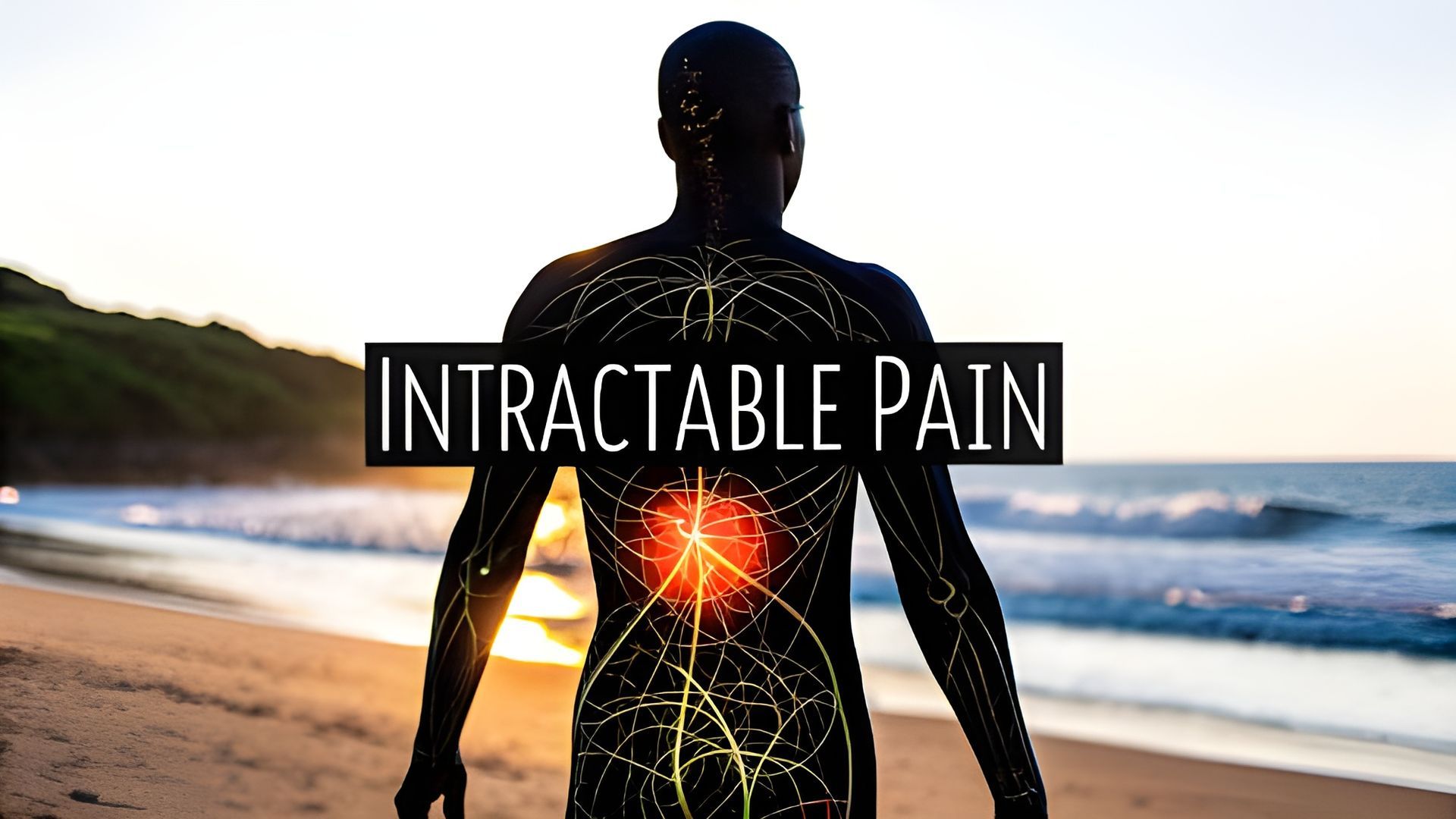
When you hear the term "intractable pain," it's easy to mentally file it away with "chronic pain." But they aren't the same thing at all. While both describe long-term discomfort, intractable pain is something else entirely—it's a severe, constant, and unrelenting pain that simply does not respond to standard medical care.
This isn't just pain that sticks around for a while. It's a relentless condition that fundamentally upends a person's ability to live a normal life. In fact, it is officially recognized as a debilitating medical condition under Mississippi law, putting it in a class of its own.
Defining Intractable Pain in Mississippi
Imagine a fire alarm that never stops blaring. It rings day and night, without a moment of peace. You try everything to shut it off—flipping switches, calling for help, even cutting the wires—but the noise just won't stop. That's a glimpse into what living with intractable pain feels like.
It's a condition that goes far beyond physical discomfort. This constant battle takes a massive toll on a person's overall well-being. Simple, everyday tasks like going to work, cooking a meal, or spending time with family can feel monumental, if not impossible.
Distinguishing It from Other Pain Types
It's critical to understand the key difference here: not all long-term pain is intractable. Many people live with chronic pain that can be managed, or at least lessened, with physical therapy, lifestyle changes, or other approaches.
The defining characteristic of intractable pain is its treatment resistance. This is the point where all the standard approaches have been tried and have failed to bring any meaningful relief.
To make this clearer, let's compare the different kinds of pain you might experience.
Comparing Intractable Pain to Other Pain Types
This table breaks down the crucial differences between acute, chronic, and intractable pain.
| Pain Type | Typical Duration | Response to Treatment | Impact on Daily Life |
|---|---|---|---|
| Acute Pain | Days to weeks; resolves as injury heals. | Generally responds well to standard treatments. | Temporary disruption; usually returns to normal. |
| Chronic Pain | 3-6+ months; persists beyond normal healing time. | Can often be managed with ongoing therapies. | Can be challenging but is often manageable. |
| Intractable Pain | Constant and lifelong; no periods of relief. | Resistant to all standard medical treatments. | Severe and debilitating; prevents normal daily function. |
As you can see, intractable pain is in a category of its own. It's not just a matter of duration, but a complete failure of conventional care to provide comfort. Busting common myths about chronic pain can help further clarify these important distinctions.
The infographic below puts this into perspective, showing just how different intractable pain is from more manageable chronic conditions.
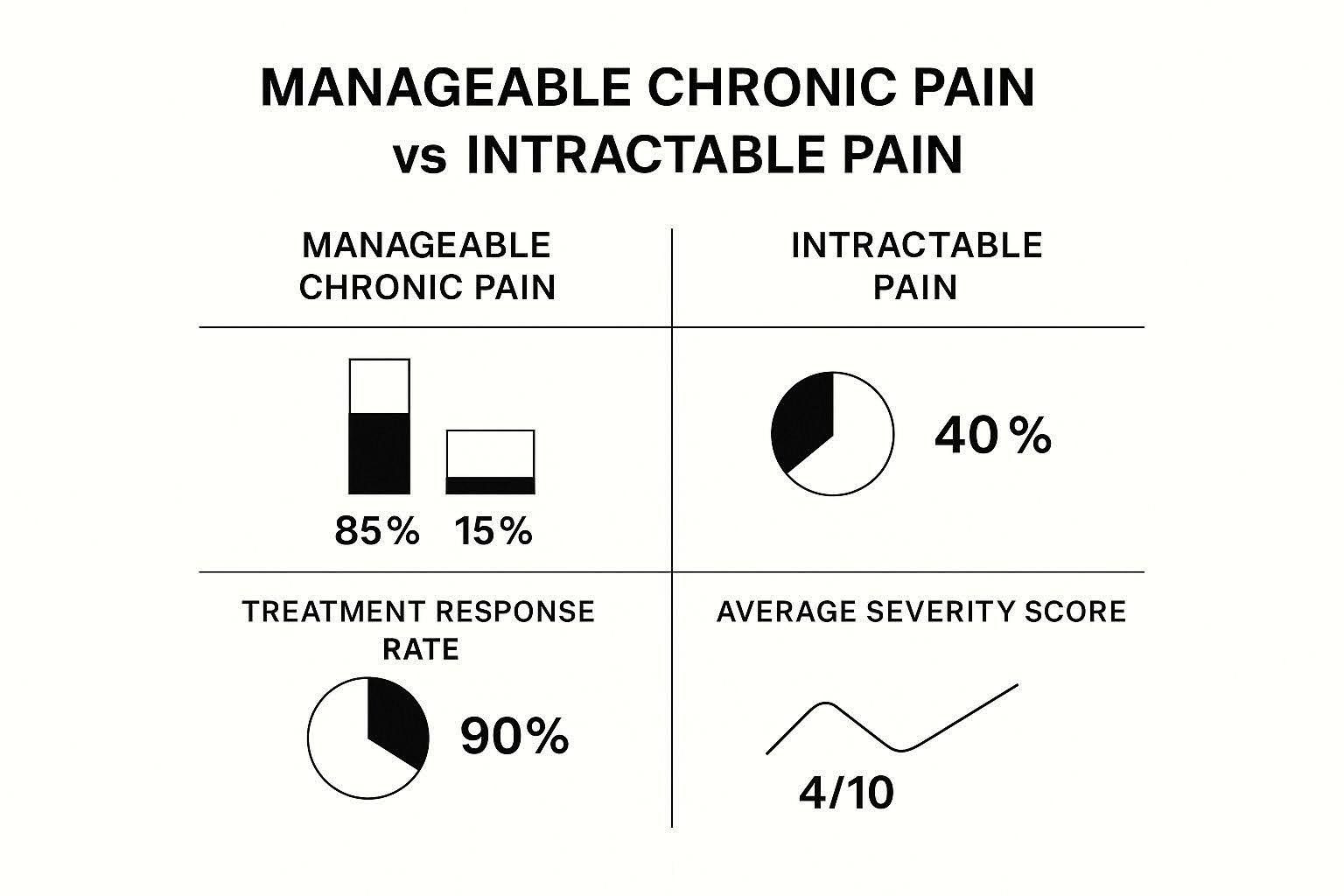
The data is clear: intractable pain is thankfully less common, but it is far more severe and profoundly less responsive to typical treatments. It's precisely because of this unique and devastating impact that Mississippi has specifically included intractable pain as a qualifying condition for its medical marijuana program.
This provides a much-needed alternative path for residents who have exhausted all other options and are still searching for a way to pause the pain.
The Causes and Symptoms of Intractable Pain
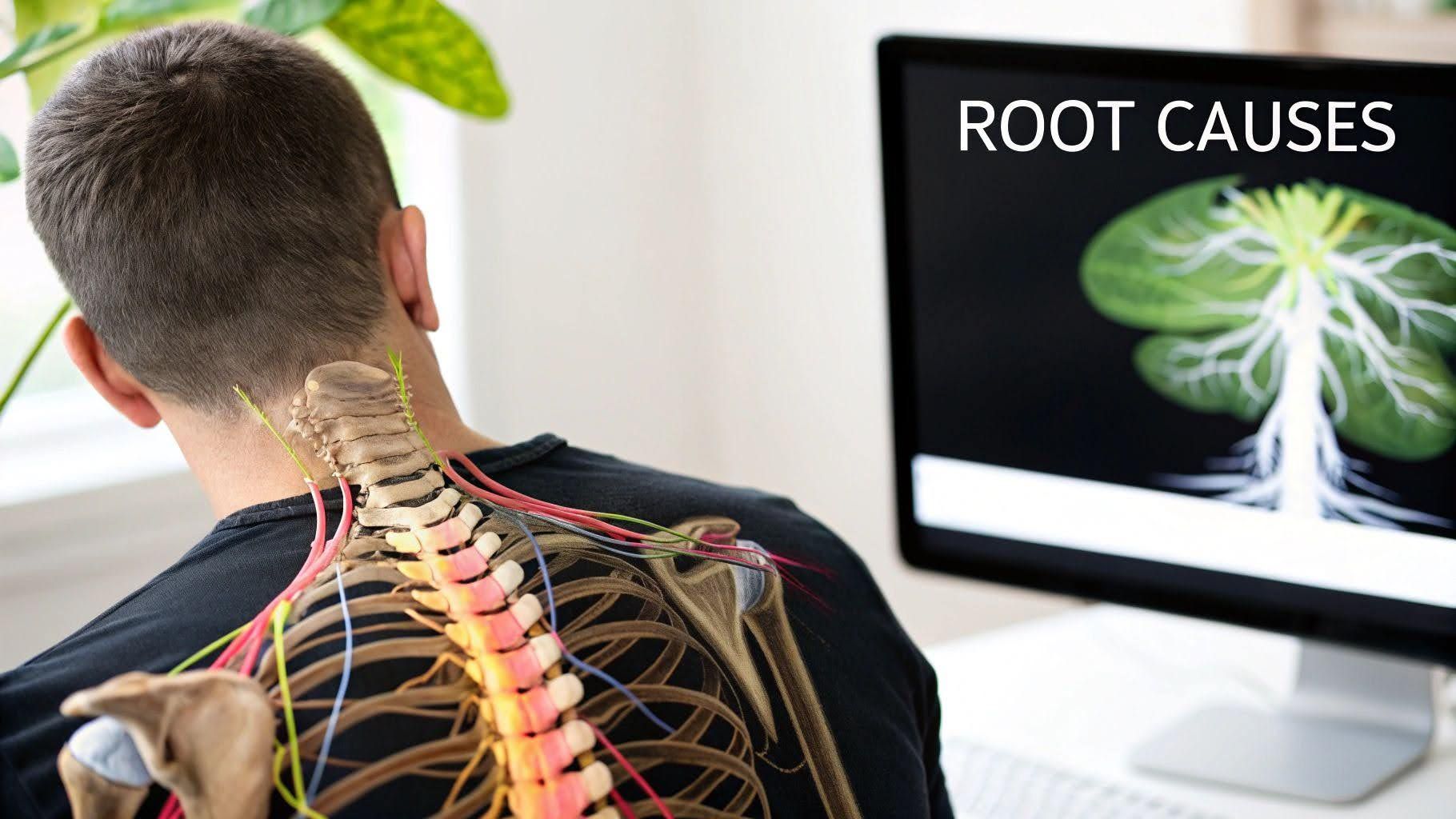
Intractable pain doesn't just appear out of thin air. It's almost always anchored to a specific, underlying medical problem that has either resisted treatment or reached an advanced stage. Think of it as a complex chain reaction where an initial injury or illness causes the body's pain signals to get stuck in the "on" position, long after they should have switched off.
Several well-known conditions are common culprits behind this relentless pain. For many people, the path toward an intractable diagnosis starts with one of these issues.
Common Medical Origins
The conditions that can spiral into intractable pain usually involve severe, long-term damage or dysfunction somewhere in the body. Some of the most frequent sources include:
- Advanced Arthritis: This is when joint inflammation and wear-and-tear become so severe that every movement is a source of agony.
- Nerve Damage (Neuropathy): Conditions like diabetic neuropathy or post-herpetic neuralgia can cause damaged nerves to fire off continuous, powerful pain signals for no clear reason.
- Failed Back Surgery Syndrome: Sometimes, one or more surgeries meant to fix back pain don't work. In the worst cases, they can lead to even more complex and persistent pain.
- Complex Regional Pain Syndrome (CRPS): This is a rare disorder of the nervous system where pain becomes completely disproportionate and widespread after what might have been a minor injury.
What all these conditions share is their ability to push the body's pain response so far that the pain becomes a disease in itself. It's no longer just a symptom of the original problem; it has turned into its own self-sustaining cycle of suffering.
The Ripple Effect Beyond Physical Pain
The most devastating part of intractable pain is that it's never just a physical sensation. It radiates outward, touching every corner of a person's life and creating a cascade of secondary symptoms that can be just as debilitating as the pain itself. This is why it's also known as high-impact chronic pain (HICP)—a term that highlights its profound disruption of daily life.
Living with this level of pain is a full-time job that demands immense physical and emotional energy. It slowly chips away at a person's resilience, leading to significant challenges in overall well-being.
These secondary symptoms aren't a sign of weakness; they are the natural result of a body and mind stuck in a constant state of high alert. They often include:
- Chronic Fatigue: The body and mind are simply exhausted from the unending fight against pain.
- Insomnia: Pain makes it nearly impossible to get comfortable enough to rest, which leads to severe sleep deprivation.
- Social Withdrawal: The sheer effort required to put on a brave face and interact with others becomes too much, leading to deep isolation.
Data shows that while new chronic pain cases occur at a rate of 52.4 cases per 1000 person-years, the more severe HICP happens at a rate of 12.0 cases per 1000 person-years. For those already living with chronic pain, the risk of it becoming high-impact rises dramatically. You can explore more about these findings on the prevalence and impact of persistent pain.
Because of this far-reaching impact, many Mississippians find that medical marijuana offers a positive alternative. It can help manage not only the physical pain but also the associated symptoms like insomnia, providing a more holistic form of relief when other methods have come up short.
How Intractable Pain Is Diagnosed in Mississippi
Figuring out if someone has intractable pain isn't as simple as running a blood test or ordering an X-ray. There's no single "gotcha" result. Instead, diagnosing this condition in Mississippi is a careful, detailed investigation into a patient's entire health story.
A qualified medical provider will conduct a comprehensive evaluation to understand not just
where it hurts, but the relentless nature of the pain itself. They need to see a clear pattern of severe, ongoing pain that has stubbornly refused to get better, even after trying all the typical approaches.
The Diagnostic Checklist
To officially diagnose intractable pain, a Mississippi provider looks for several key factors. This isn't just about checking boxes; it's about building a complete picture that shows why your pain is fundamentally different from a standard chronic condition.
A diagnosis of intractable pain is a formal recognition that conventional care has reached its limits. It validates the patient's experience and opens the door to alternative therapeutic pathways.
Providers will carefully document evidence for the following:
- Treatment History: Have you already tried and failed to find relief with conventional care? This means having a documented history of attempts with things like physical therapy, injections, or even surgery.
- Pain Duration and Severity: The pain can't just be temporary or mild. It must be persistent and severe, often lasting for months or even years without any meaningful breaks. Your provider will want to understand its intensity and how constant it is.
- Impact on Quality of Life: This is a crucial piece of the puzzle. The evaluation looks at how the pain significantly disrupts your ability to function—whether that's holding a job, maintaining relationships, or even handling basic daily activities..
Mississippi's Legal Recognition
This is where the diagnosis becomes especially important for residents. The state of Mississippi has taken a major step to support people living with this condition.
State law officially recognizes intractable pain as a 'debilitating medical condition.' This legal classification is a game-changer for patients.
What this means is that a formal diagnosis of intractable pain makes a Mississippi resident eligible to be considered for the state's medical marijuana program. For the many people who have exhausted all other options, this provides a legitimate, state-sanctioned pathway to manage their symptoms. It empowers you to work with a provider to see how medical marijuana might improve your pain, sleep, and overall well-being when nothing else has worked.
Medical Marijuana as a Pain Management Option

When every conventional approach has failed, it's easy to feel like you've run out of options for intractable pain. For many people in Mississippi, this is a frustrating reality. But the state's medical marijuana program offers a new path forward—a promising alternative for managing symptoms that have refused to respond to anything else.
For those trapped in a cycle of unrelenting pain, medical marijuana can be a powerful therapeutic tool. Its effectiveness isn't magic; it's science. It works by interacting with the body's own endocannabinoid system (ECS).
Think of the ECS as your body's master balancing system. It's constantly working behind the scenes to regulate critical functions like pain perception, sleep, mood, and appetite. The active compounds in marijuana, called cannabinoids, fit into this system like a key in a lock. THC (tetrahydrocannabinol) is well-known for its pain-relieving effects, while CBD (cannabidiol) helps reduce inflammation without the strong psychoactive effects.
By working with ECS receptors, these compounds can help turn down the volume on the pain signals bombarding your brain.
More Than Just Pain Relief
One of the biggest wins for patients with intractable pain is that medical marijuana offers multi-faceted relief. The real goal isn't just to dull the pain—it's to reclaim your quality of life. Many people find it helps with the secondary symptoms that almost always come with chronic conditions.
These positive side effects often include:
- Significant Pain Reduction: Directly targets pain pathways to bring a sense of comfort.
- Improved Sleep Quality: Helps calm a restless body and mind, making it easier to get the restorative sleep that pain so often steals.
- A Greater Sense of Calm: Eases the constant mental and emotional stress that comes from living in a state of discomfort.
The global burden of chronic and intractable pain is staggering, with some estimates suggesting up to 1.5 billion people worldwide live with these conditions. This highlights just how urgent the need is for effective, alternative strategies when traditional methods fall short.
Many patients also find they can cut back on other approaches, some of which carry a heavy burden of side effects. For a deeper look at how this works, you might find our guide on
using medical marijuana for chronic pain helpful.
Finding What Works for You in Mississippi
In Mississippi, medical marijuana isn't a one-size-fits-all solution. Patients have access to different forms, allowing you to choose a method that fits your lifestyle and specific needs. Each one works a little differently, changing how quickly you feel relief and how long it lasts.
This empowers you to build a personalized treatment strategy and find what truly works for your body.
| Consumption Method | Onset of Effects | Duration of Effects | Best For |
|---|---|---|---|
| Vaporization | Almost immediate (seconds to minutes) | Shorter (1–3 hours) | Fast relief from sudden, intense pain flare-ups. |
| Tinctures (Sublingual) | Relatively fast (15–45 minutes) | Moderate (4–6 hours) | Controlled dosing and quicker onset than edibles. |
| Edibles/Capsules | Slower (30 minutes to 2 hours) | Longer (6–8+ hours) | Sustained, long-lasting relief throughout the day or night. |
This variety ensures that Mississippians with intractable pain can create a management plan that is both effective and suited to their daily routines, helping them finally regain a sense of control.
How to Access Mississippi's Medical Marijuana Program
Figuring out how to access medical marijuana for intractable pain in Mississippi might seem complicated at first, but it's actually a clear, state-regulated path designed to help you find relief. The journey boils down to a few key stages, from confirming your eligibility to submitting your application. Knowing the steps can give you clarity and confidence as you look for better ways to manage your symptoms.
The whole process starts with one fundamental requirement: your condition has to be recognized as debilitating under state law. The good news? Mississippi explicitly lists intractable pain as a qualifying condition. This means if a provider has diagnosed your pain as severe, constant, and resistant to standard medical care, you've already met the first and most important criterion.
The Role of a Medical Provider
Next up, you'll need a formal certification from a qualified medical provider. This isn't just any regular visit; it's a specific consultation to confirm your diagnosis of intractable pain and figure out if medical marijuana is a suitable option for you.
During this appointment, the provider will go over your medical history, talk about the treatments you've tried that haven't worked, and assess how your pain is impacting your daily life. If they agree you meet the state's criteria, they'll issue a written certification. Think of this official document as the cornerstone of your application.
A provider's certification does more than just check a box; it formally validates your experience with intractable pain. It acknowledges that your condition is severe enough to warrant consideration for the state's medical marijuana program, paving the way for you to access a new form of relief.
Submitting Your Application
Once you have your certification in hand, the final major step is to complete and submit your application to the Mississippi State Department of Health. This is all done through an online portal where you'll upload your provider's certification along with other required personal information. For a detailed walkthrough of this part of the process, our comprehensive guide on getting started with Mississippi's medical marijuana program provides step-by-step instructions.
The state will review your submission to make sure everything is in order. After your application is approved, you'll be issued your official state identification, which allows you to legally buy products from licensed dispensaries across Mississippi. This is your key to accessing a regulated, tested, and safe supply of medical marijuana to help manage your intractable pain and improve your overall quality of life.
Questions About Intractable Pain in Mississippi

When you're dealing with an intractable pain diagnosis, you've got enough on your plate without adding confusion about treatment options. It's only natural that Mississippi residents have a lot of questions about how the state's medical marijuana program fits into their situation.
Getting clear, straightforward answers is a huge part of feeling confident in your healthcare choices. We hear these questions every day, so we've put together some direct information to help you understand your options and the path to finding relief.
Key Questions Answered
For a lot of people, digging into the details is a must before taking the next step. Let's clear up a few of the most important points about intractable pain and Mississippi's medical marijuana program.
- Is Intractable Pain a Recognized Disability?
This is a great question. While the constant pain is absolutely disabling in a practical sense, the legal classification can be tricky. Here's what matters for getting help: Mississippi state law officially recognizes intractable pain as a "debilitating medical condition." That specific term is what makes you eligible for the medical marijuana program. - Will Medical Marijuana Make Me Feel Intoxicated?
Not necessarily. The effects you feel depend entirely on the product you use—its specific cannabinoid profile—and your serving size. Many medical products are actually designed to maximize pain relief while keeping psychoactive effects to a minimum. A knowledgeable provider can help you find a plan that meets your goals without unwanted side effects.
The real objective of using medical marijuana for intractable pain is to improve your function and get your quality of life back. This is often done with carefully selected products and serving sizes that manage symptoms without causing significant impairment, letting you stay clear-headed and active.
Finally, we often get asked about past treatments. By its very definition, an intractable pain diagnosis means your pain has resisted other types of conventional care, like physical therapy or injections. A qualified provider makes the final call after a complete review of your medical history, how severe your condition is, and the real-world impact it has on your daily life.
If you're living with intractable pain in Mississippi and feel like you've hit a wall, know that state-approved options are available. You can be guided through every step of participating in Mississippi's medical marijuana program to explore a new path toward a better quality of life. Find out more at https://pausethepain.com.