Finding Affordable Mental Health Care in Mississippi
Trying to find affordable mental health care can feel like a massive, uphill battle, but real, accessible support is available right here in Mississippi. Think of this guide as your practical roadmap, designed to help you navigate the system, understand what's out there, and find quality care that doesn't break the bank.
Why Finding Affordable Mental Health Care Matters
The journey to mental wellness often starts with a major hurdle: finding care that is both high-quality and financially manageable. For many of us in Mississippi, that challenge is made even tougher by real-world barriers like long drives to clinics, the lingering stigma around mental health, and, most of all, the simple cost of services.
Just taking that first step to ask for help is an act of courage. We recognize that. Our goal here is to give you clear, actionable information that empowers you to move forward with confidence, replacing uncertainty with a genuine sense of hope and direction.
The Growing Need for Accessible Support
The demand for mental health services isn't just a local issue; it's a global one. By 2025, it's projected that over 1 billion people worldwide will be living with a mental health condition. Here in the United States, while nearly 23% of adults experienced a mental illness in 2021, less than half actually received the treatment they needed—often because of the price tag.
This gap between who needs help and who can get it is exactly why exploring every available path to support is so critical. Conditions like anxiety and depression are incredibly common, but so many people hesitate to reach out because they assume they can't afford it. Knowing what resources are available is the key to breaking down that barrier. If you want to learn more, you can explore our guide on depression symptoms and treatment.
This guide is more than just a list of resources; it's a tool to help you reclaim your well-being. By understanding the system, you can find a path that works for you, ensuring that financial constraints do not stand in the way of your mental health.
In this article, we'll walk through different pathways to affordable care in Mississippi, from state-funded programs to the potential role of medical marijuana for qualifying conditions. Our focus is on providing educational, practical steps to help you find the support you deserve.
How to Use Mississippi's Public Mental Health System
Navigating the path to affordable mental health care in Mississippi can feel overwhelming, but it often starts with the state's public system. For many residents, the best first step is to connect with their regional Community Mental Health Center, or CMHC. These state-supported facilities are specifically designed to be accessible hubs for care, no matter your financial situation.
Think of CMHCs as the community's front door to mental wellness. They were created to ensure everyone has a place to turn for support, offering a surprisingly broad range of services that go far beyond what most people expect from traditional therapy. The core mission is simple: provide quality, local care to Mississippians right in their own communities.
Services Available at Community Centers
One of the biggest strengths of the public system is just how much support is available under one roof. When you first contact a CMHC, a professional will usually conduct an initial assessment to really understand what's going on and what you need. This is a crucial step that helps them connect you with the right kind of care from the very beginning.
Mississippi's Community Mental Health Centers (CMHCs) offer a variety of services to help you find the right support. The table below breaks down some of the most common options available.
Services Offered by Public Mental Health Centers
| Service Type | Typical Purpose | Who It Helps |
|---|---|---|
| Individual & Group Counseling | Provides a confidential space to work through personal challenges one-on-one with a therapist or in a supportive group setting with others facing similar issues. | Individuals seeking to manage anxiety, depression, stress, or life transitions. |
| Case Management | Helps you coordinate all aspects of your care, from housing and employment assistance to connecting with other essential social services. | Anyone who needs help navigating complex systems to get the comprehensive support they need to be stable and well. |
| Psychiatric Services | Includes evaluation by a psychiatrist or nurse practitioner, who can prescribe and manage medications if that's part of your treatment plan. | People whose mental health conditions may benefit from or require medication for effective management. |
| Crisis Intervention | For urgent mental health situations, CMHCs provide immediate support and stabilization services to ensure your safety and help you through a difficult moment. | Individuals experiencing a mental health emergency, severe distress, or suicidal thoughts. |
This range of services ensures that care is more than just a single appointment; it's a network of support tailored to your life.
The infographic below shows just how big of a roadblock cost can be—and why programs like the sliding scale fees used in CMHCs are so important for bridging that gap.
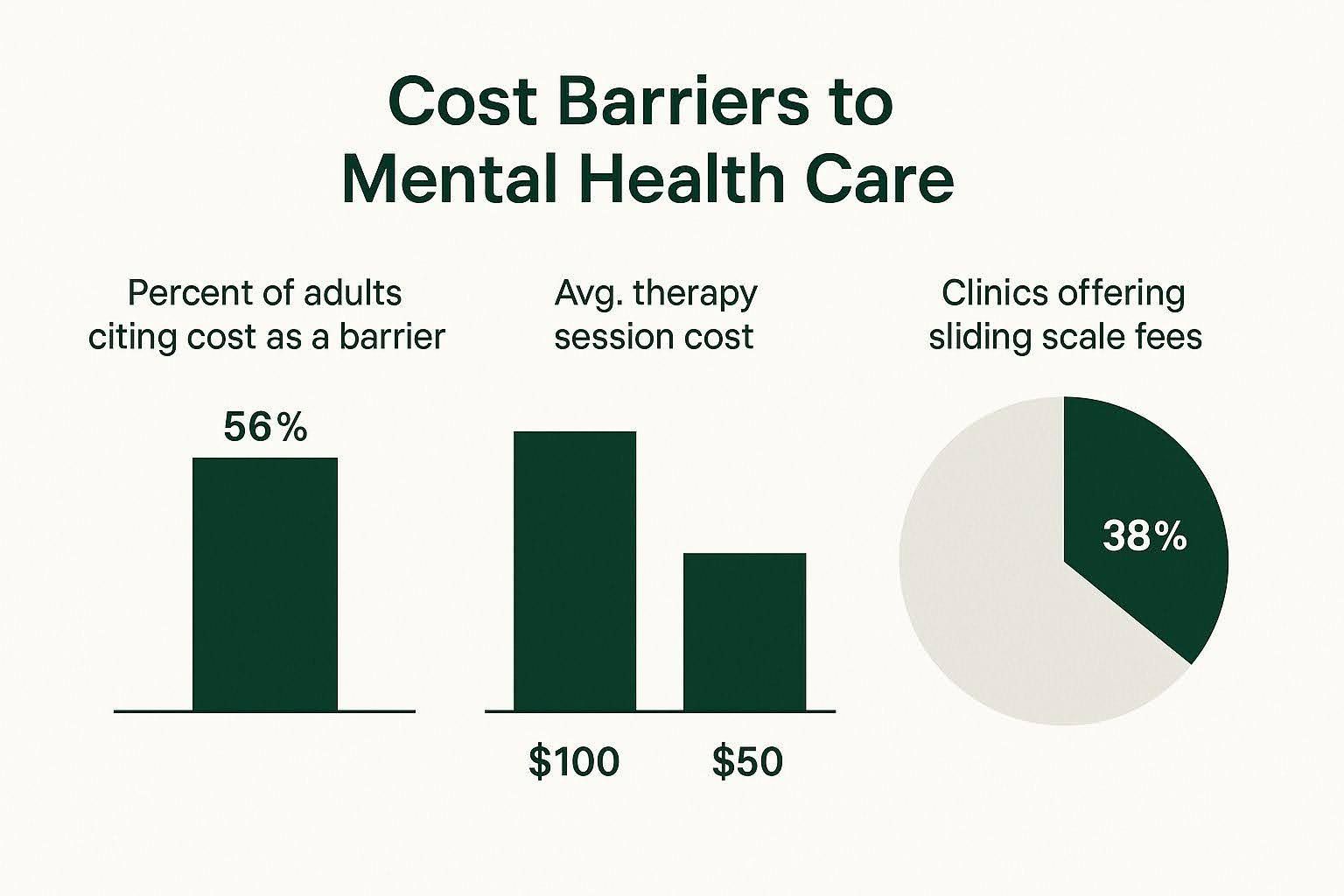
This data really drives home the critical role that income-based pricing plays in making professional support a reality for more people.
Understanding Eligibility and Costs
While eligibility for services at a CMHC is generally inclusive, it’s the cost structure that makes it a genuinely affordable option for so many. Most centers run on a sliding scale fee model.
What does that mean? It means the amount you pay for services is adjusted based on your household income and family size. For those with very low or no income, services might even be available at little to no cost. If you're weighing your options, our guide on accessing mental health services without insurance has even more helpful information.
Getting started is pretty straightforward. All you need to do is contact the CMHC that serves your county. They’ll walk you through their intake process, which usually involves providing proof of residency and income to figure out your fee. They're there to help, and the process is designed to be as supportive as possible.
How Telehealth Makes Mental Wellness More Accessible
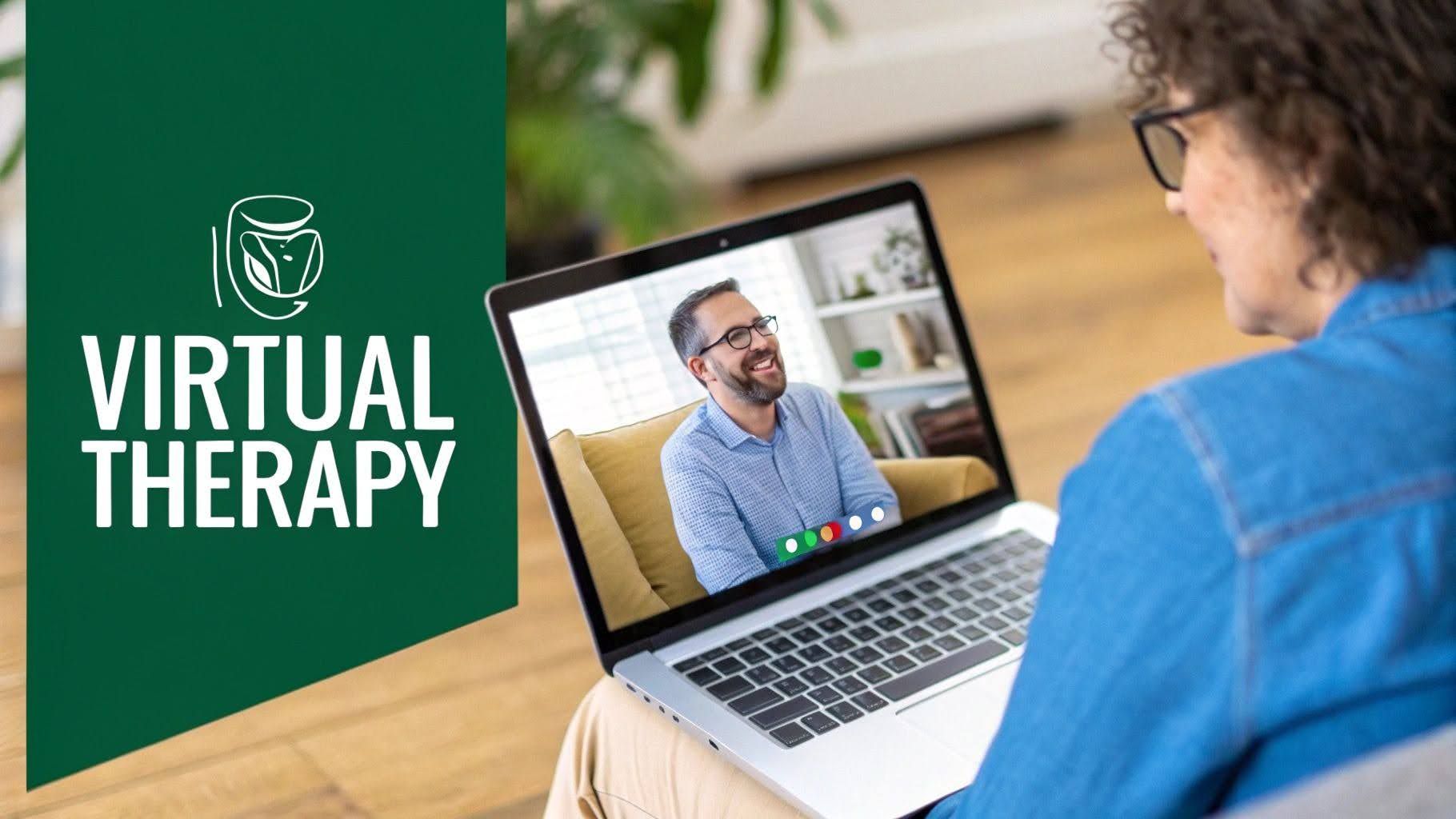
For so many people in Mississippi, especially those living in rural areas, just getting to a mental health appointment is a huge hurdle. Think about it—long drives, taking time off work, and arranging childcare are real-world problems that can stop consistent support dead in its tracks. This is exactly where telehealth is changing the game for affordable mental health care.
Telehealth simply uses the everyday tech you already own—a smartphone, tablet, or computer—to connect you with a healthcare provider from a distance. It completely removes geography from the equation, letting you have a secure, private consultation right from the comfort of your home. That convenience doesn't just save you travel time; it also cuts down on costs like gas and lost wages, making it so much easier to stick with your care plan.
This shift to virtual care is happening for a reason. In 2021, the global burden of mental health disorders hit roughly 155.4 million Disability-Adjusted Life Years—a massive jump since 1990 that shows just how urgent the need for better access is. Telehealth is a key part of the solution, especially in places where in-person clinics are few and far between. You can dig into these global mental health trends on PMC to see the bigger picture.
What to Expect from a Virtual Session
A telehealth appointment for your mental health works almost exactly like an in-person visit. You’ll book a time, get a secure link, and then connect with your provider over a video call. This approach is incredibly effective for all sorts of services, from initial assessments and regular therapy sessions to managing medication.
To really get the most out of your virtual session, a little prep goes a long way. Find a quiet, private spot where you won’t be disturbed. It’s also a good idea to jot down any questions or things you want to talk about beforehand. This helps make sure your time is focused and productive, allowing you to build a strong, trusting relationship with your provider just as you would face-to-face.
The real magic of telehealth is its flexibility. It works around your schedule and your life, removing the usual roadblocks so you can put your well-being first without adding more stress.
The Technology You Need Is Simple
Don't worry, you don't need to be a tech wizard to use telehealth. The requirements are incredibly basic, and you likely have everything you need already.
- A reliable internet connection: This just makes sure your video call is clear and doesn't cut out.
- A private device: A smartphone, laptop, or tablet with a camera and microphone is all it takes.
- A quiet space: Finding a room where you can have some privacy helps keep your session confidential and lets you focus.
This simplicity is what makes telehealth such a fantastic option for anyone looking for convenient and discreet support. As you think about your own mental wellness journey, it’s also helpful to explore if online treatment for depression is right for you.
Exploring Medical Marijuana for Mental Health in Mississippi
As Mississippi’s approach to health and wellness continues to grow, medical marijuana has emerged as a state-regulated option for people with certain medical conditions. It's not a typical first-line treatment for mental health, but it does offer an alternative path for those who haven’t found relief with other methods.
Understanding how this program works is key to exploring every available avenue for your care. The state has put a structured and legal framework in place to ensure patients can access medical marijuana safely, all under the guidance of a registered practitioner. It’s all about focusing on therapeutic potential, not recreational use.
Qualifying Conditions Under Mississippi Law
Here in Mississippi, access to medical marijuana is strictly for patients with one or more specific debilitating medical conditions defined by state law. While many physical ailments are on the list, the main mental health diagnosis included is Post-Traumatic Stress Disorder (PTSD).
This is a critical distinction to understand. General anxiety or depression alone won't qualify you for a medical card in Mississippi at this time. A practitioner must provide a formal diagnosis of a qualifying condition, like PTSD, before they can start the certification process for you.
The focus on specific, diagnosed conditions ensures that medical marijuana is integrated into a patient’s overall care plan with clear therapeutic goals. It is intended to be a targeted treatment for serious health issues.
For some people living with PTSD, medical marijuana has shown positive effects, like reducing hypervigilance and improving sleep. These reported benefits are a big reason why it’s considered a viable option for qualifying patients looking for alternative relief. If you're curious about how it might relate to other conditions, you can learn more about the role of medical marijuana for anxiety and depression in a broader sense.
The Path to Obtaining a Medical Card
Getting a medical marijuana card in Mississippi is a clear, step-by-step process. The state manages it carefully to make sure all legal and medical standards are met.
- Consult with a Registered Practitioner: Your journey starts with an appointment with a practitioner who is certified by the state to recommend medical marijuana. They'll review your medical history and current health to confirm if you have a qualifying condition.
- Receive Your Certification: If the practitioner determines you're eligible, they will issue your official medical certification. This is the document that proves you meet the state's criteria for the program.
- Submit Your State Application: With your certification in hand, the next step is to complete an application with the Mississippi State Department of Health. This is usually done online, where you'll upload your certification and pay a state fee.
- Receive Your Card: Once your application is reviewed and approved, you'll get your official medical marijuana card. This card is what allows you to legally purchase products from licensed dispensaries across Mississippi.
Building Your Holistic Wellness Plan
Let’s be honest: true mental wellness is rarely a straight line. It's a journey, and like any important journey, it benefits from having a few different kinds of support working together. This is what we call integrated care—an approach that stops treating symptoms in isolation and starts focusing on your overall well-being.
Think of it as building a solid foundation for your mental health. An integrated plan is designed just for you, recognizing that you're a whole person. It might mean pairing traditional talk therapy, where you build powerful coping skills, with other options that address different parts of your health. The goal is to create synergy, where each piece of your plan makes the others even stronger, leading to results that actually last.
Creating Synergy in Your Care
For some Mississippians, this might look like combining counseling with the state's medical marijuana program. A qualifying patient living with Post-Traumatic Stress Disorder (PTSD), for instance, might find that therapy gives them the tools to process trauma, while medical marijuana helps manage specific, disruptive symptoms like hypervigilance or insomnia.
When used under the guidance of a healthcare provider, these two approaches don't compete; they complement each other beautifully. Counseling provides the long-term emotional strategies for healing, while medical marijuana can offer symptom relief that makes it easier to show up and fully engage in that therapeutic work. It's a collaborative approach that makes sure all aspects of your well-being are getting the attention they deserve.
The real power of integrated care is that it puts you in the driver's seat. It’s all about working with your providers to build a wellness plan that fits your unique needs, using the strengths of different treatments to help you feel your absolute best.
This method isn’t about just managing symptoms; it’s about moving toward a more balanced and complete state of health.
Your Role in Building Your Plan
Crafting this plan is a team effort between you and your healthcare providers, and your voice is the most important one in the room. Being open and honest about your goals, your struggles, and what is or isn't working is the key to creating a plan that truly supports you.
When you sit down to discuss your wellness strategy, keep these points in mind:
- Be Honest About Your Symptoms: Don't hold back. Clearly explain everything you're experiencing, both emotionally and physically. This gives your provider the full picture.
- Discuss All Current Treatments: Make sure your provider knows about any therapies, medications, supplements, or other supportive measures you’re already using.
- Ask Questions: This is your health. Never hesitate to ask how different treatments can work together, what benefits you can realistically expect, and how you’ll measure progress along the way.
By taking an active role, you make sure your care plan isn't just effective but is also perfectly aligned with your personal path to wellness. This proactive stance is a huge part of finding affordable mental health care that delivers lasting results.
Your Mississippi Mental Health Questions, Answered
Navigating the world of mental health care can feel overwhelming, especially when you're trying to find affordable options. We get it. To help clear things up, we’ve put together direct answers to some of the most common questions Mississippians have.
Think of this as your quick-reference guide to feel more confident taking that next step.
What’s the First Step if I Have a Limited Budget?
Your most direct first step is to connect with your regional Community Mental Health Center (CMHC). These state-supported centers are set up specifically to make care accessible.
They offer services on a sliding scale based on your income, which often makes them the most budget-friendly starting point. A confidential initial assessment will help them understand what you need—whether it’s counseling, psychiatric support, or other local programs—and get you pointed in the right direction, no matter your financial situation.
Are Telehealth Appointments Covered by Insurance in Mississippi?
Yes, for the most part. Mental health telehealth services are generally covered by insurance plans in Mississippi, including Medicaid and most private insurers, just like in-person visits are. The Mississippi Parity Law helps ensure this, requiring plans to offer the same level of benefits for mental health as they do for physical health.
That said, it's always a smart move to confirm the specifics with your insurance provider directly. A quick call can clarify any co-pays, deductibles, or pre-authorization rules for virtual appointments before you get started.
A few minutes on the phone with your insurance provider can save you from unexpected costs down the road. It helps you make an informed decision by knowing exactly what your plan covers for both in-person and virtual care.
Can I Get a Medical Marijuana Card for Anxiety or Depression in Mississippi?
This is a common question, and the answer requires a bit of nuance. Under Mississippi's current medical marijuana program, general anxiety and depression are not listed as standalone qualifying conditions. The law is very specific about which debilitating medical conditions are included.
For mental health, the most notable qualifying condition is Post-Traumatic Stress Disorder (PTSD).
While a practitioner can’t certify you solely for general anxiety, they can and should evaluate your complete health profile. Sometimes, anxiety or depression symptoms are part of a broader, qualifying condition. The only way to know for sure is to have an open, honest discussion with a registered practitioner who can assess your full medical history and see if you meet the state's legal criteria.
This ensures the entire process is handled correctly and stays fully compliant with state regulations. An expert evaluation is the only way to know if this path is an option for you.
At
Pause Pain & Wellness, we're here to help you build a complete wellness plan that fits your unique needs. Our local Mississippi healthcare providers can guide you through all your options, including medical marijuana for qualifying conditions. To learn more or schedule a consultation, visit us at
https://pausethepain.com.