Does Marijuana Help OCD? Discover How Medical Marijuana May Offer Relief
For Mississippi residents living with Obsessive-Compulsive Disorder (OCD), the question keeps coming up: can medical Marijuana actually help? While the clinical research is still catching up, many people are sharing their own stories. They report finding real relief from the anxiety, intrusive thoughts, and compulsive behaviors that can make daily life so difficult.
It's a very personal journey, but for some, medical Marijuana represents a new and promising way to manage their symptoms.
Exploring Marijuana's Role in Managing OCD
If you're in Mississippi and thinking about a medical Marijuana card to help with your OCD, the first step is to understand what's happening inside your body. The conversation starts with a fascinating network called the endocannabinoid system (ECS).
Think of the ECS as your body’s internal balancing act. It’s always working behind the scenes to keep things like your mood, stress levels, and even sleep patterns stable and on track.
When this system gets thrown off-balance, it can crank up the volume on anxiety and repetitive behaviors—the very hallmarks of OCD. This is where medical Marijuana comes in. It introduces compounds called cannabinoids, like THC and CBD, that interact directly with your ECS, potentially helping to restore that crucial balance.
The Endocannabinoid System and Mental Wellness
So, how does this actually work? The cannabinoids from Marijuana can influence key receptors in your brain that are part of the ECS. By doing this, they may help regulate the neurotransmitters responsible for your mood and anxiety levels.
For someone with OCD, this interaction could lead to some significant positive side effects:
- Reduced Intrusive Thoughts: Many users report that Marijuana helps quiet the storm in their mind, lessening the frequency and intensity of those unwanted, obsessive thoughts.
- Decreased Compulsive Urges: It can sometimes dial down that overwhelming need to perform rituals or repetitive behaviors.
- Lowered General Anxiety: A lot of people feel a noticeable drop in the constant, background hum of anxiety that often fuels the entire OCD cycle.
It's this ability to potentially interrupt the vicious loop of obsession and compulsion that makes medical Marijuana such a compelling option. By soothing the neurological pathways that drive OCD, it offers a completely different angle on symptom management.
Potential Marijuana Effects on OCD Symptoms at a Glance
To make it even clearer, let's break down how medical Marijuana might affect specific OCD symptoms. This table offers a quick snapshot of the potential upsides and important considerations.
| Symptom | Potential Positive Effect | Potential Negative Effect or Consideration |
|---|---|---|
| Obsessive Thoughts | May quiet mental "noise" and reduce the frequency of intrusive thoughts. | High THC doses could potentially increase paranoia or racing thoughts in some individuals. |
| Compulsions/Rituals | Can lessen the urgent feeling to perform repetitive behaviors, promoting a sense of calm. | Impaired judgment could interfere with therapy exercises designed to resist compulsions. |
| Anxiety & Panic | CBD-rich strains may lower overall anxiety levels without a strong psychoactive "high." | Some people may experience heightened anxiety, especially with certain strains or dosages. |
| Sleep Disruption | Indica-dominant strains or those with CBN can often promote relaxation and improve sleep. | Over-sedation can lead to grogginess the next day; finding the right dose is key. |
| Social Avoidance | By reducing anxiety, it might make social situations feel more manageable and less daunting. | Psychoactive effects could make some users feel more withdrawn or self-conscious. |
This overview highlights that the relationship between Marijuana and OCD isn't one-size-fits-all. The outcome truly depends on the person, the product, and how it's used.
Of course, it’s absolutely critical to remember that everyone’s experience is unique. The effectiveness of Marijuana for OCD depends on the individual, the specific product you choose, and the dosage you use.
That's why Mississippi's medical Marijuana program is so important. It provides a safe, regulated way for you to explore these options with professional guidance. This framework ensures you can access properly tested products and get the support you need to find what works for your body, helping you move toward a greater sense of well-being and control.
How Cannabinoids Interact with the Brain
To get a real handle on whether Marijuana can help with OCD, we first need to look at how its main compounds, THC and CBD, actually work inside the body. Think of your body as having a master control panel called the endocannabinoid system (ECS). This incredibly complex network is in charge of keeping crucial functions like stress, anxiety, and even repetitive behaviors in balance.
The ECS is constantly working to maintain harmony. When it’s running smoothly, it helps keep your moods and impulses in check. For anyone in Mississippi thinking about getting a medical Marijuana card, understanding this system is square one. The cannabinoids in Marijuana can plug into this control panel, potentially tweaking the signals that fuel OCD symptoms.
You can dive deeper into the nuts and bolts of the endocannabinoid system in our detailed guide.
The Roles of THC and CBD
While Marijuana is packed with different cannabinoids, two of them are front and center in the conversation about OCD: THC and CBD. Each one has a very different way of interacting with the ECS, which means they produce very different effects.
- Cannabidiol (CBD): This is the compound most people link with calming, anti-anxiety effects. The key thing to know about CBD is that it’s non-psychoactive, so it won’t get you "high." For many people, its real value is its potential to quiet the background noise of anxiety that often powers obsessive thoughts and compulsive actions.
- Tetrahydrocannabinol (THC): As the main psychoactive component, THC’s effects are a bit more complicated. For some, it can be incredibly effective at silencing intrusive thoughts and bringing a sense of mental peace. But for others—especially in higher doses—it can actually ramp up anxiety.
This infographic gives a clearer picture of the relationship between OCD, how people report using Marijuana for relief, and the potential downsides.
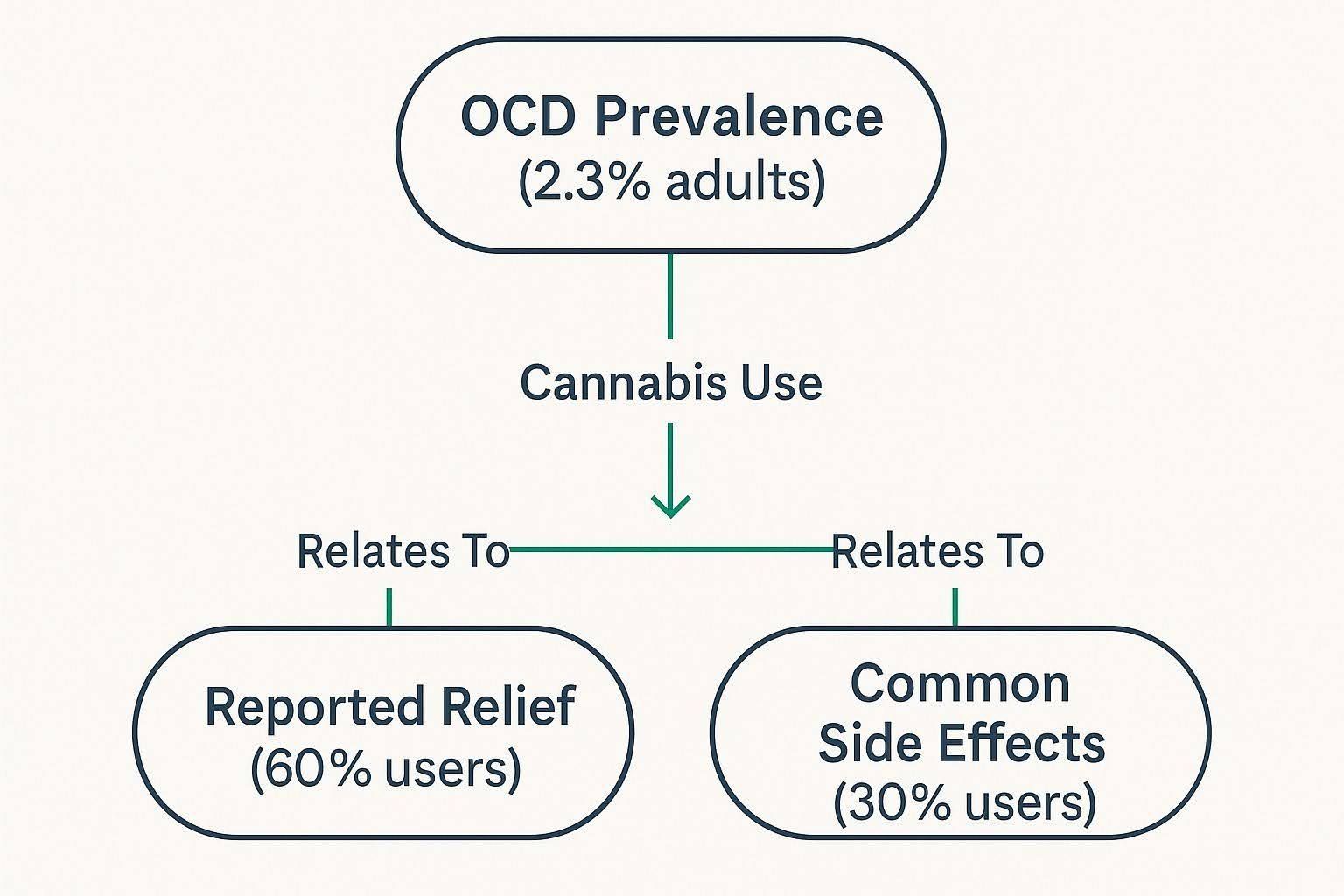
It’s clear from the data that while many users find relief, side effects are a real part of the equation and something to consider carefully.
What the Evidence Says About Symptom Relief
The idea of using medical Marijuana for OCD isn't just wishful thinking; it’s backed by patient stories and a growing body of observational data. The way cannabinoids connect with the ECS isn’t just a theory—for some people, it leads to real, tangible changes in their daily struggle with symptoms.
By plugging into ECS receptors, cannabinoids may help dial down the overactive brain circuits that drive OCD. This interaction could potentially interrupt the vicious cycle of obsession and compulsion, offering a completely different path to relief.
Observational research has started putting numbers to these experiences. A significant 2020 study, for instance, followed people with OCD and found that inhaling Marijuana was linked to immediate, major reductions in their symptoms.
After use, compulsions were reportedly cut by 60%, intrusive thoughts by 49%, and anxiety by 52%. Even more interesting, the findings hinted that products with higher levels of CBD were tied to even greater relief from compulsions. This really underscores how a carefully chosen cannabinoid profile might offer more targeted support for specific OCD symptoms.
What the Clinical Research Actually Says
When you're considering medical Marijuana for OCD in Mississippi, it’s only natural to want to know what the science says. The honest answer? It's a mixed bag. The research we have today shows some real promise alongside some serious red flags, and it's definitely not a simple "yes" or "no" situation.
For some people, Marijuana seems to offer a bit of short-term relief. Think of it like turning down the volume on the mental "noise" that OCD creates. For a little while, the intense distress from intrusive thoughts and the powerful urge to perform compulsions can quiet down, giving them a much-needed break from that relentless cycle.
But that’s only one side of the coin. The scientific community is quick to remind us that these positive effects are far from guaranteed, and for some, the outcome can be the exact opposite.
A Closer Look at the Data
To really get the full picture, we have to look at the numbers. While many people with OCD turn to Marijuana hoping to manage their symptoms, the results are all over the map. This is exactly why getting professional guidance through a program like Mississippi's medical Marijuana system is so critical.
One clinical study, for example, looked at OCD patients who used substances to cope. It found that 10% of them were specifically using Marijuana. But here's the kicker: only a tiny fraction of that group felt it actually helped their OCD.
Even more concerning, 23.3% of those using Marijuana reported that their OCD symptoms and anxiety actually got worse. This data paints a stark picture: what provides relief for one person might be a trigger for another.
The Link Between Marijuana and Anxiety
The relationship between Marijuana and anxiety is a huge piece of this puzzle, especially since anxiety is the fuel that powers the OCD engine. Many people use Marijuana specifically for its calming effects, but this is where it gets tricky. Certain strains or high doses—especially those with a lot of THC—can backfire and ramp up anxiety instead of dialing it down. For anyone with OCD, that’s a significant risk.
The unpredictable nature of Marijuana's effect on anxiety is a major concern. For some, it might be soothing. For others, it can crank up feelings of panic and paranoia, making OCD symptoms feel completely unmanageable.
This is why understanding how different cannabinoids affect you personally is non-negotiable. If you're interested in learning more, exploring the connection between cannabis for anxiety and symptom reduction can offer some valuable context.
Ultimately, the research we have today shows that while Marijuana might offer a temporary escape for some, it carries very real risks of making things worse for others. This complexity is precisely why professional medical oversight isn’t just a good idea—it’s an absolute must.
Medical Marijuana for Treatment-Resistant OCD
For many people in Mississippi living with Obsessive-Compulsive Disorder, standard treatments like SSRIs and therapy can be life-changing. But what happens when they aren't enough?
A significant number of individuals find that these conventional methods just don't provide the relief they need. This is often called treatment-resistant OCD, an incredibly frustrating experience that can leave people feeling stuck and out of options.
When the go-to treatments fall short, it’s natural to start looking for alternatives. This is where medical Marijuana enters the conversation as a potential path forward for those with the most stubborn and challenging symptoms. While it’s not a first-line defense, it offers hope for people who haven't found a breakthrough elsewhere.
A New Avenue for Persistent Symptoms
For anyone with treatment-resistant OCD, the cycle of intrusive thoughts and compulsions can feel absolutely unbreakable. Medical Marijuana may offer a different way to interrupt that pattern.
Some people report that certain cannabinoid profiles help dial down the intense anxiety that fuels their OCD. When that anxiety is lower, it can become easier to resist compulsive behaviors and quiet the noise of obsessive thoughts.
This approach isn’t about replacing established treatments—it’s about adding another tool to the toolkit. For example, combining medical Marijuana with ongoing therapy might help someone engage more deeply and productively in their sessions.
Emerging Evidence and Hopeful Stories
While we're still waiting on large-scale clinical trials, the early findings and case studies are giving us some encouraging insights. This preliminary research is incredibly important because it shines a light on how cannabinoids might help individuals who have already exhausted other treatment paths.
For someone who has tried multiple medications and therapies without success, the potential of medical Marijuana offers a renewed sense of hope. The goal is to find something that can finally break the cycle and improve their quality of life.
A noteworthy case study from 2008 really highlighted this potential. It followed a 38-year-old woman with severe, treatment-resistant OCD whose symptoms improved dramatically after she added a synthetic form of THC to her existing treatment plan.
Within just a few days, her score on a standard OCD assessment scale dropped from 20 to 10—a 50% improvement.
These examples, while small, are significant. They suggest that for the right person, medical Marijuana could be a valuable part of a comprehensive treatment strategy, offering a new sense of control when other methods haven't been enough.
How to Get Your Mississippi Medical Marijuana Card
If you're a Mississippi resident thinking about using medical Marijuana to help with OCD-related symptoms, the first thing to figure out is the legal side of things. The state has a clear, well-defined program to make sure patients can get access safely and legally. Once you know the steps, it’s actually a pretty straightforward process.
It all starts with figuring out if you're eligible. Mississippi law has a specific list of qualifying debilitating medical conditions that allow a resident to get a medical Marijuana card. While OCD isn't explicitly on that list, many people with OCD also deal with other conditions, like chronic pain, which are on the list.

Step 1: Confirming Your Eligibility
Before you do anything else, you need an official diagnosis for one of the state-approved conditions from a qualified medical professional. This is the foundation of your application and there are no shortcuts around it.
It’s a good idea to review the list of conditions carefully to make sure you meet this baseline requirement before you schedule a consultation.
Step 2: The Medical Certification
Once you’ve confirmed you have a qualifying condition, the next critical step is getting a medical certification. This has to come from a practitioner who is licensed to recommend medical Marijuana here in Mississippi. During this appointment, you'll talk through your medical history and the symptoms you're experiencing.
The practitioner will determine if medical Marijuana is a suitable option for you. If they agree it is, they’ll issue your certification—the official medical document you need to apply for your card. This professional assessment is a key part of the state's safety and regulatory framework.
This certification is much more than a simple recommendation; it's a legal requirement that confirms you have a legitimate medical need. It validates that a qualified professional has reviewed your health and believes you could benefit from medical Marijuana.
Step 3: Applying with the State
With your medical certification in hand, the final piece is to complete the application with the Mississippi State Department of Health (MSDH). You'll need to submit your application, your certification, and any required fees through the state’s official online portal.
After your application is reviewed and approved, you'll be issued your official Mississippi medical Marijuana card. This card gives you the legal right to purchase products from licensed dispensaries across the state. For a complete walkthrough, you can learn more about how to get a Mississippi medical marijuana card and navigate each step with confidence.
Choosing the Right Products at the Dispensary
Okay, you’ve got your Mississippi medical Marijuana card. Now what? Walking into a dispensary for the first time can feel a bit like stepping into a new world. With so many options—from flowers and vapes to oils and edibles—it’s easy to feel overwhelmed.
The key is to remember your goal: finding something that helps manage your OCD. This isn't about guesswork. It’s about connecting the right product and the right cannabinoids to your specific symptoms.
Making a smart choice begins with the basics. Products with a higher concentration of CBD are often the go-to for calming general anxiety, which is a major engine for OCD symptoms. For some people, though, a balanced 1:1 ratio of THC to CBD does a better job of silencing those intrusive thoughts without causing any unease. Everyone's body is different, so the golden rule is always to start with a low dose and see how you feel.
Understanding Consumption Methods
How you use medical Marijuana is just as important as what you use. The delivery method changes everything—how fast you feel the effects, how long they stick around, and what symptoms they’re best suited for.
- Inhalation (Vaping): This is the fastest way to feel relief, usually within minutes. It's a great option for those sudden, intense moments of anxiety or when you need to interrupt a compulsive urge right now.
- Tinctures (Sublingual): These are concentrated liquid extracts you place under your tongue. Tinctures kick in faster than edibles (around 15-45 minutes) and give you pinpoint control over your dose, making them perfect for steady, daily support.
- Edibles: Gummies, capsules, and other infused foods offer the longest-lasting relief, often for several hours at a time. The trade-off is the wait time—it can take anywhere from 30 minutes to two hours to feel the effects. Patience is everything here to avoid taking too much.
Think of it like this: choosing the right method is about matching the tool to the job. If you need immediate help with a surge of intrusive thoughts, inhalation might be your best bet. But for keeping anxiety at a low hum all day, a morning edible or a few drops of a tincture could be a much better fit.
How to Make Your Selection
When you walk into a Mississippi dispensary, don’t be afraid to ask for help. The staff, often called "budtenders," are trained to walk patients through the maze of products. They can help you make sense of lab reports and cannabinoid profiles.
Be totally upfront about what you’re trying to achieve. Tell them if you want to dial down anxiety, stop compulsions in their tracks, or simply get a better night’s sleep.
A good starting point is to look for products with a balanced or CBD-dominant ratio to avoid any chance of increasing anxiety. Finding what helps your OCD is a journey of careful, patient experimentation. Try keeping a simple journal to track what you used, how much you took, and how you felt. It’s an incredibly useful tool for figuring out what truly works for you.
Your Questions About Marijuana and OCD, Answered
Stepping into the world of medical Marijuana for OCD can feel overwhelming, and it’s natural to have questions. We hear a lot of the same concerns from patients in Mississippi, so let's clear up a few common ones.
Is OCD a Qualifying Condition in Mississippi?
This is a big one. While Obsessive-Compulsive Disorder isn't specifically listed as a qualifying condition in Mississippi, many people with OCD also deal with other health issues that are on the list, like chronic pain.
The only way to know for sure if your unique health situation qualifies is to sit down and talk with a qualified medical practitioner. They can look at the whole picture and give you a clear, compliant answer.
Can I Just Stop My Current OCD Medication?
Absolutely not, and this is critical. You should never change or stop your prescribed medications without talking to the doctor who prescribed them.
Think of medical Marijuana as a potential addition to your care plan—something that works alongside your current treatment, not as a replacement for it.
What Are the Potential Risks I Should Know About?
Like any treatment, there are things to be aware of. For some people, Marijuana—especially products high in THC—can actually increase feelings of anxiety or paranoia. In some cases, it might even make OCD symptoms worse.
This is exactly why working with a knowledgeable healthcare professional is so important. They can help you navigate these potential risks and find an approach that’s right for you.
Ready to explore your options with a team of compassionate, local experts? At Pause Pain and Wellness, we’re here to provide the personalized guidance you need to navigate Mississippi's medical Marijuana program with confidence.
Learn more and schedule your consultation by visiting us at
https://pausethepain.com.