
Does Marijuana Cause Weight Gain? Mississippi Insights

If you're a Mississippi patient thinking about getting a medical marijuana card, you've probably wondered: does it cause weight gain?
It's a fair question. Marijuana is famous for bringing on "the munchies," so it's natural to connect it with extra pounds. But the relationship between medical marijuana and body weight is way more complicated than you might think. The surprising truth? A lot of scientific research actually points in the opposite direction.
Understanding Marijuana and Weight in Mississippi
When you start your journey with medical marijuana, you’re bound to have questions about how it’ll affect your body. For many people in Mississippi, the biggest worry is whether that famous appetite boost will lead to weight gain. But that common assumption doesn't tell the whole story.
Interestingly, while marijuana can definitely make you want to raid the pantry in the short term, large-scale studies show a very different long-term picture. One huge national study followed 33,000 adults over three years and found that marijuana users actually gained less weight than people who didn't use it. This hints at a much deeper, more complex interaction between marijuana and our metabolism.
A Closer Look at the Contradiction
The idea that eating more could lead to gaining less weight sounds like a complete paradox, right? Yet, this is the exact puzzle researchers are busy piecing together.
This "appetite paradox" is a hot topic in medical science, and it’s offering a lot of reassurance to patients in Mississippi who need marijuana for things like chronic pain or anxiety but don't want to compromise their weight management goals. Digging into the details is key, and you can learn more about what science says about marijuana and weight management in our detailed guides.
To help Mississippi patients get a clearer picture, let's break down how medical marijuana really influences the key factors tied to your body weight.
The table below cuts through the noise, comparing common beliefs with what the science actually shows.
How Marijuana Influences Weight Factors
| Factor | Common Perception | Scientific Findings |
|---|---|---|
| Appetite | Always leads to overeating and weight gain. | Stimulates appetite, but this doesn't always translate to long-term weight gain. For many patients, this is a therapeutic benefit. |
| Metabolism | Slows down the body's functions. | May actually influence metabolic processes, potentially leading to a leaner body composition. |
| Body Mass Index (BMI) | Users are expected to have a higher BMI. | Regular users often have a statistically lower BMI compared to non-users. |
As you can see, the connection isn't as simple as "munchies equal weight gain." The science suggests a more nuanced interaction where marijuana might actually support a healthier metabolic profile for some individuals over time.
How Cannabinoids Interact with Your Body
To get to the bottom of how medical marijuana affects appetite, we have to start with your body’s own internal communication network. It’s an incredible system that works behind the scenes to keep everything from your mood to your hunger signals in balance.
Think of it like a series of locks spread all over your body, with each one waiting for a specific key to unlock an action. Your body makes its own keys, called endocannabinoids, that fit these locks perfectly.
The fascinating part? The compounds in the marijuana plant, known as phytocannabinoids, are so similar that they can also fit into and turn these same locks. This interaction is the very foundation of how medical marijuana works. If you want to dive deeper into this, you can learn more about what the endocannabinoid system is and how it functions.
The Role of THC and Hunger Signals
The most famous cannabinoid, THC (tetrahydrocannabinol), has a special knack for fitting into a specific lock called the CB1 receptor. These receptors are packed into the parts of your brain that manage appetite, smell, and even taste.
When a Mississippi patient uses their medical marijuana, THC essentially acts like a master key for these CB1 receptors. Unlocking them sends a powerful signal to the brain that it's time to eat, cranking up the volume on your natural hunger cues. It can even make food smell and taste way more appealing, which is a huge reason why it’s often recommended for patients struggling with appetite loss.
For many people with qualifying conditions in Mississippi, this isn't some unwanted side effect. It's a primary therapeutic benefit that helps them maintain a healthy weight and get the nutrition they need.
This simple infographic shows you exactly how that pathway works.
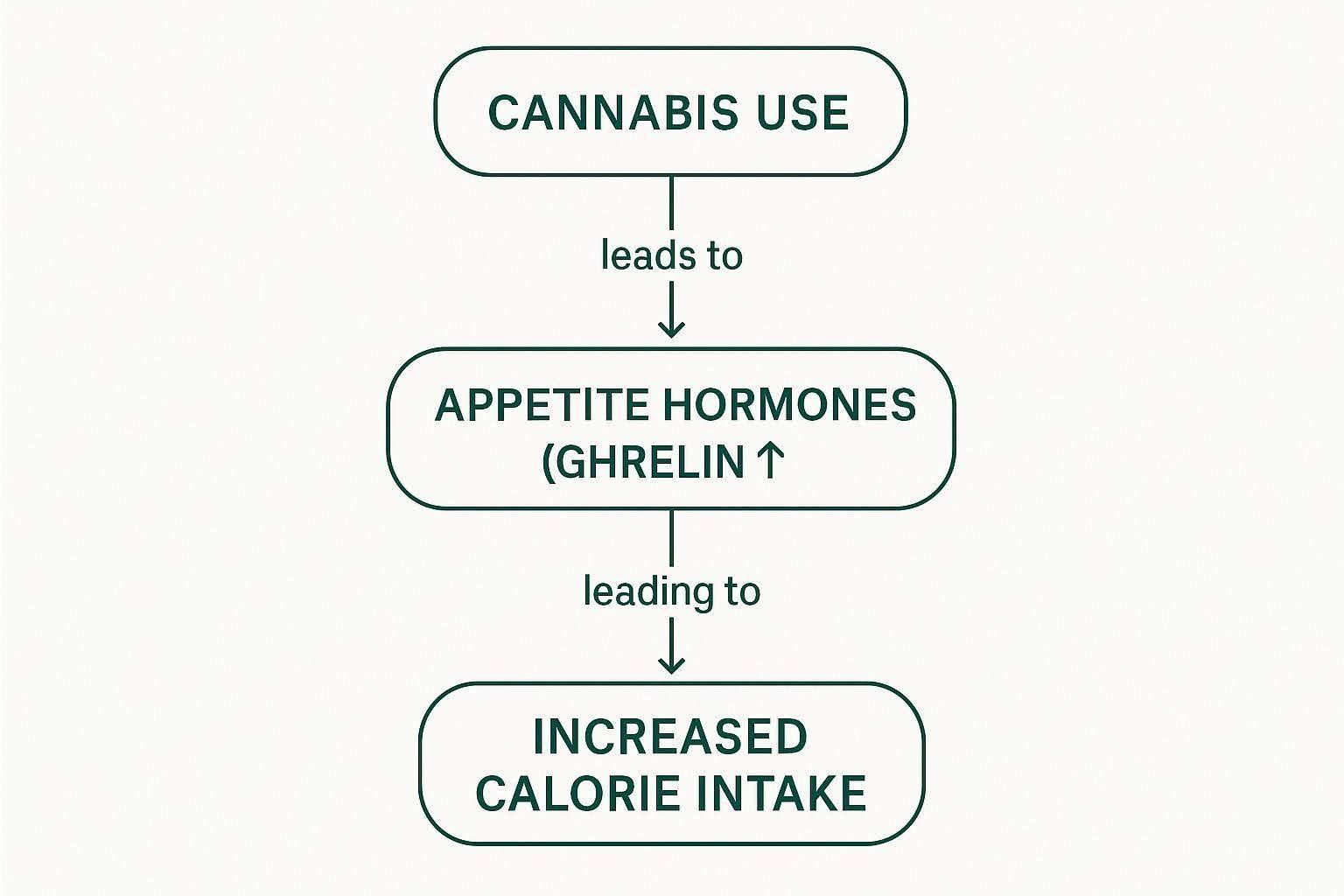
As you can see, cannabinoids can trigger hormonal shifts, like a spike in ghrelin (often called the "hunger hormone"), which gives you that direct urge to eat more.
Understanding this biological process makes it clear why an increased appetite is such a common experience. But this is just one piece of a much bigger puzzle. As the research shows, this temporary boost in hunger doesn't automatically mean medical marijuana causes long-term weight gain. The real story, as we're about to see, is a lot more complex.
The Appetite Paradox and Lower Body Weight
It sounds like simple math: medical marijuana gives you the munchies, you eat more, and you gain weight. Right? Well, one of the most fascinating findings in marijuana research completely flips that logic on its head. For Mississippi patients worried about how their treatment might affect their weight, this scientific puzzle is actually quite reassuring.

This phenomenon is often called the "appetite paradox." Despite consuming more calories on average, regular marijuana users often have a lower Body Mass Index (BMI) and a smaller waist than people who don’t use it. This isn't just a quirky, one-off observation—it’s a consistent pattern that has shown up in multiple large-scale studies over the years, challenging everything we thought we knew.
Unpacking the Scientific Evidence
To get to the bottom of this contradiction, researchers have been digging into huge sets of health data. One landmark analysis from 2014 looked at over 10,000 U.S. adults. It found that long-term marijuana users ate more calories every day—sometimes over 3,300 calories—yet consistently had lower BMIs than non-users.
Another long-term Australian study backed this up. It followed over 2,500 young adults for 21 years and also reported lower rates of both overweight and obesity among those who used marijuana.
This growing pile of evidence makes it clear that something much more complex is going on inside the body. The link between medical marijuana and weight isn't just a simple "calories in, calories out" equation. Instead, it seems to involve deeper metabolic processes that we're only just beginning to understand.
This is a game-changer for patients in Mississippi who need the therapeutic benefits of medical marijuana but are understandably cautious about potential weight gain. The data shows that using marijuana doesn't automatically mean you'll put on extra pounds.
What This Means for Mississippi Patients
If you're in Mississippi using a medical marijuana card, this is incredibly valuable information. It helps shift the conversation from a simple fear of "the munchies" to a more nuanced view of how cannabinoids really interact with our bodies.
And let's be clear: while an increased appetite is a very real effect, it's often a crucial therapeutic benefit. For patients dealing with conditions that cause malnourishment or appetite loss, this is exactly the goal. You can find out more by reading our guide on using medical marijuana for appetite stimulation.
The main takeaway here is that the relationship isn't nearly as straightforward as it seems. There are several theories trying to explain this paradox, which we'll dive into next. These potential mechanisms offer a scientific basis for why medical marijuana users might maintain a leaner physique even with a higher calorie intake—giving you peace of mind as you integrate this treatment into your wellness plan.
How Medical Marijuana May Influence Metabolism
It just doesn’t seem to add up: how could consuming more calories possibly lead to a leaner body? For Mississippi patients with a medical marijuana card, understanding this paradox is key to feeling confident about their treatment. The answer, it turns out, might be found deep within our cells—in the complex world of metabolism and how we store energy.

Emerging research suggests certain cannabinoids, especially THC, can interact directly with the body’s fat tissue, also known as adipose tissue. This isn't just a minor tweak. This interaction could fundamentally change how our bodies manage energy from the ground up.
Think of it like turning up the dial on your body's metabolic engine. Instead of storing extra fuel for later, your body is encouraged to burn it more efficiently right now. This potential metabolic shift gives us a powerful explanation for why so many medical marijuana users tend to maintain a lower body weight.
Reprogramming How Your Body Stores Energy
One of the most exciting theories centers on how marijuana actually talks to our fat cells. Scientists are discovering that THC might be able to alter the very nature of adipose tissue, disrupting its normal job of storing and holding onto energy. If this holds true, it could lead to a body that is naturally less prone to storing excess fat in the first place.
This molecular-level "reprogramming" could be the missing piece of the puzzle. It suggests that while marijuana can certainly increase appetite, it might also make the body less efficient at holding onto those extra calories. The result? A kind of net balancing effect.
This potential metabolic influence provides a scientific basis for the lower BMI observed in many regular users. It indicates that the benefits of medical marijuana for Mississippi patients could extend beyond symptom relief to include positive effects on the body's core physiological processes.
Groundbreaking Research on Adipose Tissue
The science behind this is moving fast. A 2023 study from researchers at the University of California, Irvine, gave us an incredible look into this mechanism. They found that THC prompted significant changes in fat tissue, causing it to produce proteins normally found in muscle and heart tissue.
These changes essentially make the body leaner and less susceptible to obesity, helping to finally explain why frequent users often have a lower BMI despite getting "the munchies." You can dive deeper into these fascinating findings in the full UCI news release.
This research adds serious weight to the idea that marijuana’s influence is far more sophisticated than just stimulating hunger.
What This Means for Patients in Mississippi
If you're in Mississippi using medical marijuana for a qualifying condition, this information is incredibly empowering. It helps demystify the relationship between marijuana and body weight, replacing old myths with solid, evidence-based explanations. Understanding these potential metabolic benefits can provide real peace of mind.
Here are the key takeaways for patients:
- Metabolic Influence: Medical marijuana may do more than just manage your symptoms; it could be positively influencing your metabolism behind the scenes.
- Energy Storage: Cannabinoids might be changing the fundamental way your body stores fat, potentially leading to a leaner body composition over time.
- A Balanced Perspective: This research helps balance the conversation, moving it beyond just "the munchies" to a much deeper understanding of marijuana's full physiological effects.
Ultimately, this science suggests that for many people, medical marijuana is not a direct cause of weight gain and may even support a healthier metabolic profile.
Managing Your Wellness with Medical Marijuana in Mississippi
Using medical marijuana as part of your wellness plan is all about balance. For patients in Mississippi, it's a journey of making mindful choices. When you understand the science behind how marijuana works, you feel empowered. But the real success comes from turning that knowledge into practical, positive daily habits.
The goal isn't just to manage symptoms—it's to use your medication to support your overall health with confidence.
Instead of just reacting when the "munchies" hit, you can get ahead of it. A little proactive planning lets you satisfy your hunger with choices that actually line up with your health goals. This is how you make sure your treatment supports your well-being in every single way.
Strategies for a Balanced Approach
Making smart choices doesn't need to feel like a chore. If you prepare in advance and listen to what your body really needs, you can turn an increased appetite from a concern into an opportunity to nourish yourself well.
A few simple strategies can make a world of difference. They help you feel in control and positive about your health journey. Of course, the very first step is getting into the Mississippi Medical Marijuana Program. If you're just starting out, there are many resources available online to walk you through the entire process.
Here are a few actionable tips for Mississippi patients:
- Plan Your Snacks Ahead: Before you use your medical marijuana, get some nutritious snacks ready. Having fresh fruit, veggie sticks with hummus, Greek yogurt, or a handful of nuts right there makes it easy to grab something healthy when hunger kicks in.
- Stay Hydrated: This one’s a biggie. Drinking plenty of water all day is crucial for your health anyway, but it also helps you feel full and manage cravings. It's surprisingly easy to mistake thirst for hunger.
- Incorporate Gentle Movement: You don't have to run a marathon. Gentle activity like a daily walk, some stretching, or a bit of yoga can give your metabolism a nice boost and improve your overall sense of well-being. It’s a great addition to any wellness plan.
By focusing on preparation and healthy habits, Mississippi patients can confidently use medical marijuana to manage their conditions without compromising their wellness goals. This mindful approach ensures your treatment plan is both effective and supportive of a balanced lifestyle.
These practical steps put you back in the driver's seat. They shift the focus from worrying about potential side effects to actively creating a positive, health-forward experience with your medicine. Embracing these strategies helps ensure your path to relief is also a path to better overall health.
Your Questions About Marijuana and Weight, Answered
Navigating the world of medical marijuana in Mississippi can bring up a lot of questions, especially when it comes to your health and body. Below, we're tackling some of the most common concerns we hear from patients about marijuana and its effects on weight.
Will Using Medical Marijuana in Mississippi Automatically Make Me Gain Weight?
Not necessarily. While it's true some medical marijuana products can rev up your appetite, that doesn't automatically lead to weight gain. It's one of those "it's complicated" relationships.
In fact, a surprising amount of research shows that many regular marijuana users maintain a lower body mass index (BMI) than people who don't use it. The real story involves a mix of factors, like your individual metabolism and how your body processes energy. The best approach is always to be mindful of your diet and lifestyle choices.
Are Certain Medical Marijuana Products Better for Managing Weight?
Absolutely. Different products have different profiles of cannabinoids, which create different effects. THC, for example, is famous for stimulating appetite—which is a huge therapeutic win for many patients in Mississippi. Other cannabinoids, however, might have a more neutral impact on your hunger cues.
When you visit a dispensary here in Mississippi, the staff are there to help. Don't hesitate to discuss your wellness goals with them. They can walk you through the products available under the state's medical program to help you make a choice that feels right for you.
At the end of the day, managing your weight is about a balanced lifestyle. A nutritious diet and regular activity are the cornerstones, whether you use medical marijuana or not.
How Can I Handle the "Munchies" from Medical Marijuana?
Managing an increased appetite is all about preparation. If you can make healthy choices easy and accessible, you can satisfy that hunger in a way that aligns with your health goals. A little planning goes a long way.
- Prep Healthy Snacks: Before you use your medicine, have nutritious options ready to go. Think fresh fruit, veggies with hummus, a cup of yogurt, or a handful of nuts.
- Stay Hydrated: This one's huge. Drinking plenty of water can help you feel full and keep you from mistaking thirst for hunger.
- Listen to Your Body: Try to tune into your body’s signals. This helps you eat when you’re genuinely hungry and stop when you feel satisfied, not stuffed.
Can Medical Marijuana Help with Conditions That Cause Weight Loss?
Yes, this is one of its most powerful therapeutic benefits. For Mississippi patients dealing with conditions that cause severe appetite loss or unintentional weight loss (cachexia)—like those undergoing cancer treatment—medical marijuana can be a game-changer.
Its ability to stimulate appetite is a primary reason it's recommended for these qualifying conditions. By helping patients increase their food intake, it supports them in maintaining a healthier weight, a crucial benefit recognized by the
Mississippi Medical Cannabis Program.
At Pause Pain and Wellness, we're dedicated to giving Mississippi residents the guidance and support they need to confidently integrate medical marijuana into their health plan. If you're ready to explore your options for pain management, wellness, or mental health, we're here to help you take the next step.