Mississippi Chronic Pain Treatment Options Guide
When you're living with constant pain, just getting through the day is a victory. But finding a path to genuine, lasting relief can feel like an even bigger challenge. This guide is your starting point—a clear, straightforward look at the chronic pain treatment options available right here in Mississippi, from trusted, long-standing methods to the state's regulated medical marijuana program.
Your Roadmap to Pain Management in Mississippi
Let's be honest: finding what works for chronic pain isn't a simple, one-size-fits-all process. It's more like navigating a complex map where different routes can all lead to the same destination—a better quality of life. For Mississippians, that map has more options than ever, blending traditional medical care with newer, state-approved alternatives.
Think of this guide as your detailed roadmap. We'll walk through the full spectrum of care, starting with foundational approaches like physical therapy and moving toward more specialized procedures. We'll also take a close look at how medical marijuana fits into a modern, complete pain management plan, offering a new source of hope for so many.
A Growing Field of Hope
The search for better pain solutions is a global mission, and for good reason. It's a reflection of how widespread this struggle is. The worldwide chronic pain treatment market is growing fast, fueled by a deeper understanding of chronic conditions and some incredible progress in the therapies we can offer.
The market was valued at around USD 26.95 billion and is expected to climb to USD 39.37 billion by 2030. This isn't just a business trend; it shows a real, worldwide commitment to finding better ways to manage pain. You can dig into the specifics of these trends in this detailed industry report.
What does this growing field mean for you? More hope. More options. The goal isn't just about masking symptoms anymore. It's about building a sustainable, long-term strategy for wellness.
For many people here in Mississippi, this means creating a personalized treatment plan that pulls from different therapies. The whole point is to find the unique combination that works for your specific condition, whether it's nerve pain, arthritis, or another issue that holds you back.
Integrating Medical Marijuana into Your Plan
One of the most significant developments for pain management in Mississippi is the legalization of medical marijuana for qualifying conditions. This isn't about throwing out traditional treatments. It's about adding a powerful new tool to the toolkit.
Here's how it can fit into a bigger picture strategy:
- A Complement to Your Care: Medical marijuana can work alongside other treatments, like physical therapy, to help manage symptoms that just don't respond to conventional methods alone.
- More Than Just Pain Relief: The benefits often go beyond pain. Many patients experience better sleep and a greater sense of well-being—both of which are absolutely crucial when you're living with a chronic condition.
- A Safe and Regulated Option: Mississippi's program ensures that patients get access to tested, regulated products under the guidance of a qualified practitioner. This gives you a level of safety and reliability that's essential when you're using something for your health.
To help you see all the options clearly, we've put together a quick guide to the main categories of pain treatment available in our state.
At-a-Glance Guide to Pain Treatments in Mississippi
Navigating your options can be overwhelming, so this table gives you a quick summary of the main categories of chronic pain treatments available to Mississippi residents. Use it to get a feel for what might be right for you and to prepare for a conversation with your healthcare provider.
Remember, the most effective plans often combine more than one approach. The goal is to build a strategy that addresses your pain from multiple angles.
Our mission is to provide a clear, hopeful roadmap, showing you how these different treatments can work together. By understanding all the available chronic pain treatment options, you can have more informed conversations about your health and take confident steps toward reclaiming your life from pain.
Exploring Conventional and Interventional Treatments

Before we talk about how medical marijuana fits into the picture, it's important to understand the foundational treatments that form the backbone of modern pain management. For many people here in Mississippi, the road to relief begins with these proven conventional and interventional therapies.
These aren't just band-aids. These methods are designed to tackle pain at its source, improve how your body functions, and give you back a sense of control. Think of them as the first line of defense—building strength, calming inflammation, and directly targeting the nerves sending out pain signals. Getting a handle on these approaches helps you see how all chronic pain treatment options can work together for complete care.
Building Strength and Function
One of the most effective and commonly prescribed starting points is therapy that focuses on movement and daily life. This isn't about just feeling better for an hour or two; it's about making long-term improvements that last.
- Physical Therapy (PT): This is a true cornerstone of pain management. A physical therapist acts as your personal guide, leading you through specific exercises and hands-on techniques. The goal is to strengthen the muscles supporting painful areas, fix your posture, and get you moving more freely. PT is proactive—it helps correct the underlying imbalances that are causing the pain in the first place.
- Occupational Therapy (OT): While PT is all about rebuilding your body's strength and movement, OT is about adapting your world to your body. An occupational therapist is an expert in helping you perform daily tasks without triggering pain. They might show you a better way to lift something, set up your desk, or even do chores, making your environment work for you instead of against you.
Interventional Procedures for Targeted Relief
Sometimes, therapy alone isn't quite enough to break the pain cycle. That's when your practitioner might recommend a more direct procedure. The focus is always on managing symptoms and offering targeted relief where it's needed most.
These procedures can be a game-changer, especially for intense, localized pain that hasn't budged with other treatments.
Key Insight: Interventional treatments are designed to interrupt the pain cycle right at the source. By targeting a specific nerve or joint, they can provide significant relief that allows a patient to engage more effectively in physical therapy and daily life.
Some of the most common interventional treatments include:
- Nerve Blocks: This procedure involves targeting a local anesthetic right near an angry, irritated nerve. The idea is to "block" the pain signals before they can even reach your brain. It's often a go-to for conditions like sciatica, providing relief that can last for weeks or months at a time.
- Epidural Steroid Injections: You've probably heard of these for back and neck pain. These injections deliver a powerful anti-inflammatory compound into the space around your spinal cord. This calms down the swelling and pressure on your nerves, which is often the culprit behind that radiating pain you feel down your arms or legs.
- Radiofrequency Ablation (RFA): For nerve pain that just won't quit, RFA is a minimally invasive but powerful option. It uses heat from radio waves to carefully create a lesion on a specific nerve, disrupting its ability to send pain signals. For some patients, this can provide relief for a year or even longer.
Understanding these foundational and interventional chronic pain treatments is key. It helps you see exactly where a state-regulated program can fit in. For many people, medical marijuana isn't a replacement for these therapies, but a valuable partner. It can help manage the symptoms that stick around despite these efforts, leading to better sleep and an improved sense of well-being. By learning more about using medical marijuana for chronic pain, you can have a much more informed conversation about creating a truly comprehensive plan to get you feeling better.
Medical Marijuana for Chronic Pain Relief

For many Mississippians who are living with persistent pain, medical marijuana is a significant and welcome addition to their treatment toolkit. This isn't about throwing out proven therapies. Instead, it's about adding a powerful, state-regulated option that works in a completely different way. It engages directly with the body's own internal systems to help manage not just the pain, but the symptoms that come with it.
The conversation around medical marijuana has moved firmly into the realm of science. To really grasp its potential, we have to talk about the body's endocannabinoid system (ECS). Think of the ECS as your body's internal regulatory network, a sophisticated system of receptors that helps manage critical functions like pain perception, mood, sleep, and immune response. It's always working to keep things in balance.
Medical marijuana contains natural compounds called cannabinoids, and the two most famous are THC (Tetrahydrocannabinol) and CBD (Cannabidiol). These cannabinoids fit into the ECS receptors like keys into a lock, allowing them to influence the signals being sent throughout your body. This interaction is at the very heart of how medical marijuana can bring relief.
How Cannabinoids Help Manage Pain
When cannabinoids interact with your ECS, they can kickstart several positive effects that are especially helpful for those dealing with chronic pain. The ultimate goal is to restore balance and quiet down an overactive pain signaling system that's been stuck in the "on" position.
- THC (Tetrahydrocannabinol): While THC is known for its psychoactive effects, its medical value goes much deeper. THC binds with receptors in your brain and nervous system, helping to reduce your perception of pain. For someone with shooting nerve pain or severe muscle spasms, it can feel like someone finally turned down the volume on a constant, blaring alarm.
- CBD (Cannabidiol): CBD is the non-psychoactive counterpart, celebrated for its powerful anti-inflammatory properties. For conditions like arthritis, where inflammation is the main culprit behind the pain, CBD can help soothe the underlying irritation and swelling in the joints. This often leads to less stiffness and better mobility.
You'll find that many medical marijuana products are formulated with both THC and CBD because they often work more effectively together. This synergy is a well-known concept called the "entourage effect."
By influencing the ECS, medical marijuana can do more than just put a band-aid on pain. It can help address root causes like inflammation and fundamentally change how your brain processes pain signals, offering a more complete approach to relief.
The sheer scale of chronic pain shows just how badly we need a variety of effective treatments. Chronic pain affects over 20% of the global population, and here in the United States, an estimated 50 million adults live with it daily. This has fueled a global market for pain treatments valued at USD 72.10 billion, which is projected to climb past USD 115.51 billion by 2031.
Beyond Pain Relief: The Positive Side Effects
One of the most compelling reasons patients in Mississippi seek medical marijuana is for the benefits that go far beyond just physical comfort. Let's be honest—living with chronic pain is draining. It takes a huge toll on your overall well-being.
Many patients report a whole host of positive side effects that dramatically improve their overall quality of life:
- Improved Sleep: Chronic pain and insomnia are frequent companions. Certain types of medical marijuana can help the body relax, allowing patients to get the deep, restorative sleep that is so vital for healing.
- A Greater Sense of Calm: It's natural to feel stressed when you're in pain all the time. The calming effects of specific cannabinoids can help quiet a racing mind, making it easier to navigate daily life.
- Decreased Nausea: For people whose pain is tied to conditions that cause nausea, medical marijuana can be incredibly effective at settling the stomach and restoring appetite.
This wider range of benefits is precisely why medical marijuana is seen as such a valuable part of a holistic care plan.
If you're interested in a deeper dive, you can learn more about how medical marijuana helps chronic pain in Mississippi in our detailed article. Understanding all the potential positive outcomes can help you have a more informed conversation about whether this is the right path for you.
Navigating Mississippi's Medical Marijuana Program
For residents living with persistent discomfort, understanding how to legally access every tool in the toolkit is a critical step. While Mississippi now has a regulated Medical Marijuana Program, figuring out how to navigate it for the first time can feel overwhelming.
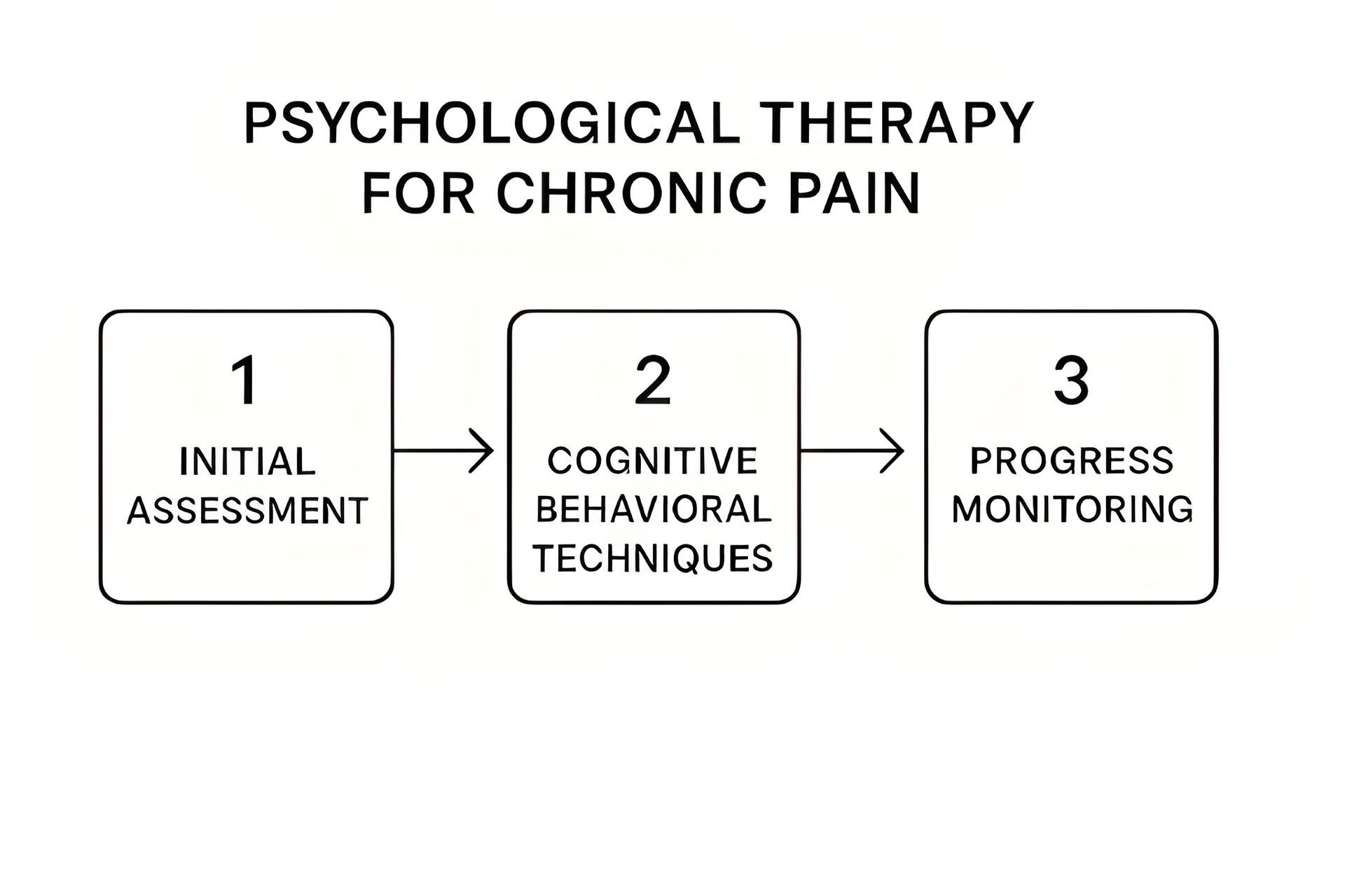
The good news is the system is actually quite straightforward once you know the steps. Let's break down the journey into a clear, easy-to-follow guide, so you can feel confident and informed as you seek access to this treatment option.
Step 1: Confirm Your Qualifying Condition
First things first: you have to confirm that your health issue is recognized under Mississippi law. The state has a specific list of debilitating medical conditions that make a patient eligible for the program.
When it comes to chronic pain, the law is refreshingly clear. It states that a qualifying condition includes "a chronic, debilitating disease or medical condition or its treatment that produces... chronic pain."
Essentially, if you have a documented history of pain that just won't quit and significantly impacts your daily life, you likely meet the first requirement. This covers pain stemming from a wide range of issues, like severe arthritis, fibromyalgia, neuropathy, and many others.
Step 2: The Medical Practitioner Certification
Once you've determined your condition qualifies, your next move is getting a certification from a licensed medical practitioner. This isn't optional—it's a required step that ensures medical marijuana is a suitable part of your overall care plan.
In Mississippi, this certification can come from a doctor (MD or DO), a physician assistant (PA), or a nurse practitioner (NP). The key is they must be licensed in the state and have completed the required training for the program. During your consultation, they will go over your medical history and current health to officially certify that you have a qualifying condition. Think of this certification as the golden ticket you need for the state application.
A key takeaway is that the certification is not a prescription. It's an official confirmation from a qualified professional that your condition makes you eligible for the program. This validation is absolutely essential for moving forward.
Step 3: Navigating the State's Online Application
With your practitioner's certification in hand, you're ready for the next stage: the official application. This is all handled through the Mississippi State Department of Health's online portal, which was set up to make the process as efficient as possible.
You'll need to create an account, fill out the application with your personal details, and upload the certification you received from your practitioner. There's also a non-refundable application fee. It's a good idea to double-check that every piece of information is correct before you hit submit to avoid any potential hiccups.
For a more detailed walkthrough, check out our complete guide on getting started with Mississippi's medical marijuana program.
Step 4: Approval and Registration
After you've submitted your application, the Mississippi State Department of Health has up to 30 days to review it. If they find any missing or incorrect information, don't worry—they'll reach out so you can make the necessary corrections.
Once approved, you'll receive your electronic identification within five business days. This digital credential is your official license to legally purchase products from dispensaries across Mississippi.
This careful, step-by-step process ensures that patients can access medical marijuana safely and legally, adding another important tool to the chronic pain treatment options available here in our state. This is part of a much larger movement, too. The global pain treatment market is projected to skyrocket from USD 96.2 billion to USD 144.2 billion by 2029, reflecting a massive demand for more effective and diverse ways to manage pain.
Choosing the Right Medical Marijuana Products for Pain

Getting registered in Mississippi's medical marijuana program is a huge first step toward taking back control of your health. The next part of the journey—walking into a dispensary for the first time—can feel a bit overwhelming. With so many options, how do you know which products are right for your specific pain?
Don't worry, it's simpler than it looks. The goal is to match the product to your lifestyle, symptoms, and what you want to achieve. Different forms of medical marijuana work in different ways, affecting how fast you feel relief and how long it lasts. Thinking about these factors ahead of time helps you build a pain management routine that's both effective and predictable.
Product Types Available in Mississippi
When you visit a licensed Mississippi dispensary, you'll see a few main types of medical marijuana products. Each one offers a unique experience, and understanding the differences is the key to tailoring your own approach to pain relief.
- Flower: This is the classic dried bud of the marijuana plant, which can be vaporized. It offers the fastest effects—often within minutes—which is a game-changer for sudden, sharp pain flare-ups. The trade-off is that the relief might not last as long as with other methods.
- Tinctures: These are liquid marijuana extracts that you place under your tongue. Because they are absorbed directly into the bloodstream, tinctures offer a fairly quick onset (usually 15-45 minutes) but provide longer-lasting relief than inhalation. They are also fantastic for precise, measurable serving sizes.
- Edibles: From gummies to chocolates, these are food products infused with marijuana. Since edibles have to pass through your digestive system, they take the longest to kick in, often 60-120 minutes. The major benefit? The relief is typically the most long-lasting, making edibles a great choice for steady, all-day or all-night pain management.
Understanding Indica, Sativa, and Hybrids
Beyond the product type, you'll also hear words like Indica, Sativa, and Hybrid. These terms classify different strains of the marijuana plant that are known to produce distinct effects. While the science is always evolving, these categories give patients a really helpful starting point.
Indica: Strains labeled as Indica are widely known for their relaxing and sedating effects. Patients often use them in the evening to tackle pain that gets in the way of sleep, calm muscle spasms, and promote a sense of deep relaxation. An easy way to remember it is: Indica puts you "in-da-couch."
Sativa: On the other hand, Sativa strains are generally linked to more energizing and uplifting effects. They are a popular choice for daytime use because they can help manage pain without causing drowsiness, allowing you to stay active and focused while still getting relief.
Hybrid: Just like the name implies, Hybrid strains are created by cross-breeding Indica and Sativa plants. The goal is to offer a balanced blend of effects, giving you pain relief with less sedation than a pure Indica or less stimulation than a pure Sativa.
The most important rule when trying any new medical marijuana product is to "start low and go slow." This simply means beginning with the smallest amount possible and waiting to see how it affects you before even thinking about taking more. This method helps you find your "sweet spot"—the minimum effective amount that gives you pain relief without unwanted side effects.
This careful, patient approach is the foundation of using medical marijuana safely and effectively as one of your chronic pain treatment options. It puts you in the driver's seat, allowing you to fine-tune your routine until it works perfectly for your body and your needs. Finding the right product and serving size is a personal journey, and patience is your best ally.
Frequently Asked Questions About Pain Treatment in Mississippi
Taking the first step into the world of pain management can bring up a lot of questions, especially when you're exploring newer chronic pain treatment options like medical marijuana. We get it. Below, we've answered some of the most common questions we hear from Mississippi residents every day.
Our goal is to give you clear, straightforward information so you can move forward with confidence and make informed decisions about your health journey.
What Types of Chronic Pain Qualify in Mississippi?
This is probably the most important question for anyone seeking relief. While the state has specific legal language, it's written to be inclusive for people dealing with legitimate, persistent pain.
Mississippi law is very direct on this. A qualifying condition is defined as "a chronic, debilitating disease or medical condition or its treatment that produces one or more of the following: cachexia or wasting syndrome, chronic pain, severe or intractable nausea, seizures, or severe and persistent muscle spasms."
What does that mean for you? For your pain to qualify, a certified medical practitioner needs to formally document that it's both chronic and debilitating—in other words, it significantly gets in the way of your daily life. This broad definition is designed to cover a wide range of conditions that cause lasting pain.
Where Can I Legally Use Medical Marijuana in Mississippi?
Knowing the rules around use is just as critical as understanding how to access the program. Mississippi has put strict guidelines in place to make sure medical marijuana is used responsibly and safely.
The law is simple: medical marijuana is intended for use in the privacy of your own home. It is illegal to use it in any public place, like a park, sidewalk, or public building. You also cannot use it inside a motor vehicle, regardless of whether you are the driver or just a passenger.
Adhering to these regulations is crucial. Following the rules doesn't just keep you compliant with state law—it also helps maintain the integrity and public trust in Mississippi's medical marijuana program.
What Is the Difference Between Dispensary Marijuana and Store-Bought CBD?
It's easy to see CBD products next to medical marijuana and think they're the same, but there are huge differences in their makeup, how they're regulated, and what they're used for. Knowing these distinctions is key to picking the right product for your needs.
The biggest difference comes down to THC content and government oversight.
- Medical Marijuana: Products you get from a licensed Mississippi dispensary are part of a state-regulated medical program. They contain specific, lab-tested levels of THC, the compound that provides most of the pain-relieving and psychoactive effects. These products go through strict testing for purity and potency.
- Store-Bought CBD: Products sold in regular retail stores are usually made from industrial hemp. By law, they must contain 0.3% THC or less, which means they don't have the significant therapeutic THC levels found in medical-grade products. Their focus is almost entirely on CBD.
At the end of the day, medical marijuana is a state-overseen product, while store-bought CBD is more of a general wellness supplement.
How Long Does the Mississippi Application Take?
Patience is definitely part of the process, but the state has set up clear timelines to keep applications moving efficiently. Knowing what to expect can help reduce any stress while you wait.
After your medical practitioner certifies your qualifying condition, your next move is to submit your application to the Mississippi State Department of Health. Once they have your complete application, the department has 30 days to review it and issue an approval or denial.
Once you're approved, you'll get your electronic identification via email. This usually happens quickly—typically within five business days of approval—so you can legally access dispensaries across the state.
If you're exploring chronic pain treatment options in Mississippi and want to see if you qualify for a medical marijuana program, please visit us for more information on how we can help guide you through the process at
https://pausethepain.com.