Accessible Mental Health Treatment Without Insurance in Mississippi
Trying to figure out mental health care without insurance can feel like hitting a brick wall. But in Mississippi, there are clear, established pathways to get the help you need, even if you don't have coverage.
The most direct route often starts with your local Community Mental Health Center (CMHC). These centers are the backbone of public mental health services in our state, specifically designed to support residents no matter their financial situation. Financial stress shouldn't be the reason you don't get support, and this guide will show you that it doesn't have to be.
Your First Steps to Care Without Insurance in Mississippi
Let's be honest: facing a mental health issue is hard enough. Layering on the stress of finding care you can afford can feel downright impossible.
It's a frustrating reality that many people in this exact situation put off getting help because they're worried about the cost. High treatment prices are a massive barrier, and a person's insurance status is often the single biggest factor determining whether they receive care at all. This isn't just a feeling; it's a well-documented gap in our healthcare system.
But it's a gap that Mississippi has systems in place to bridge. You are not the first person to walk this path, and there are dedicated resources waiting for you.
To help you get started, here's a quick look at the main low-cost options available to you as an uninsured resident in Mississippi.
| Resource Type | Who It Serves | Typical Cost Structure |
|---|---|---|
| Community Mental Health Centers (CMHCs) | All Mississippi residents, regardless of income or insurance status | Sliding-scale fees based on income; may be free for those with no income |
| Private Practices with Sliding Scales | Individuals seeking private therapy who cannot afford standard rates | Fees adjusted based on your income, making care more affordable |
| Free Support Groups & Digital Tools | Anyone needing immediate support, community, or self-help resources | Free to access, offering peer support and digital wellness tools |
These options form the foundation of accessible care in our state, ensuring that help is available when you need it most.
Understanding Your Primary Options
Before you start making calls or searching online, it helps to know what kind of support is actually out there. For Mississippians without insurance, the system is built on a few core pillars that create a crucial safety net.
These include:
- State-Funded Centers: As mentioned, Community Mental Health Centers are the foundation of public mental health care here. They are your first and best stop.
- Sliding-Scale Services: Beyond the public system, many private therapists and counselors offer to adjust their fees based on what you can afford. You just have to ask.
- Support and Digital Tools: Don't overlook the power of free resources. Things like support groups and mental health apps can provide immediate assistance and connect you with a community that understands.
Just recognizing that you might need some help is a huge first step. If you're not sure what you're feeling is "bad enough," it's important to know that your feelings are valid and help is available. Our guide on the signs you should seek treatment for anxiety can offer some clarity.
The most important thing to remember is that taking the first step—no matter how small it feels—is an act of strength. Your financial situation does not define your worthiness of receiving high-quality mental health support.
The journey to feeling better starts with knowing where to look. By focusing on these resources right here in Mississippi, you can build a practical plan to get the treatment you deserve, without the financial burden of insurance.
Using Mississippi's Community Mental Health Centers
If you're looking for mental health treatment in Mississippi without insurance, the state's network of Community Mental Health Centers (CMHCs) is hands-down the most powerful resource available. These centers aren't just clinics; they are community pillars, state-supported and mandated to provide care to people in their service areas, no matter their ability to pay.
Getting to know this system is your key to unlocking professional, truly affordable care. There's a dedicated CMHC serving each of Mississippi's 82 counties, which means there's a center ready to support you.
They all operate on a sliding-scale fee model. This simply means the cost of services is adjusted based on your household income and family size. For many people with little to no income, this makes care extremely low-cost or even free.
What Services Do CMHCs Offer?
These centers offer a surprisingly broad range of care that goes way beyond basic counseling. They're designed to be a one-stop shop for mental wellness, providing a solid set of services to meet different needs.
You can almost always expect to find:
- Individual and Group Counseling: Professional therapy for a wide variety of challenges, including depression, anxiety, and trauma.
- Psychiatric Services: Access to psychiatrists or nurse practitioners who can handle evaluations, diagnoses, and medication management.
- Crisis Intervention: Immediate, 24/7 support for anyone experiencing a mental health crisis.
- Case Management: Practical help with navigating social services, finding housing, and getting connected with other community resources.
The struggle to find care isn't just a local issue. A recent report highlighted that over 21% of U.S. adults (that’s about 53 million people) experience mental illness. That number has been on the rise, yet getting affordable help remains a huge hurdle for the nearly 27.4 million uninsured, non-elderly individuals in the country. To get a better sense of the bigger picture, you can learn more about these barriers to mental health care from the AAMC.
This graphic breaks down how you can start accessing low-cost therapy in your own community.
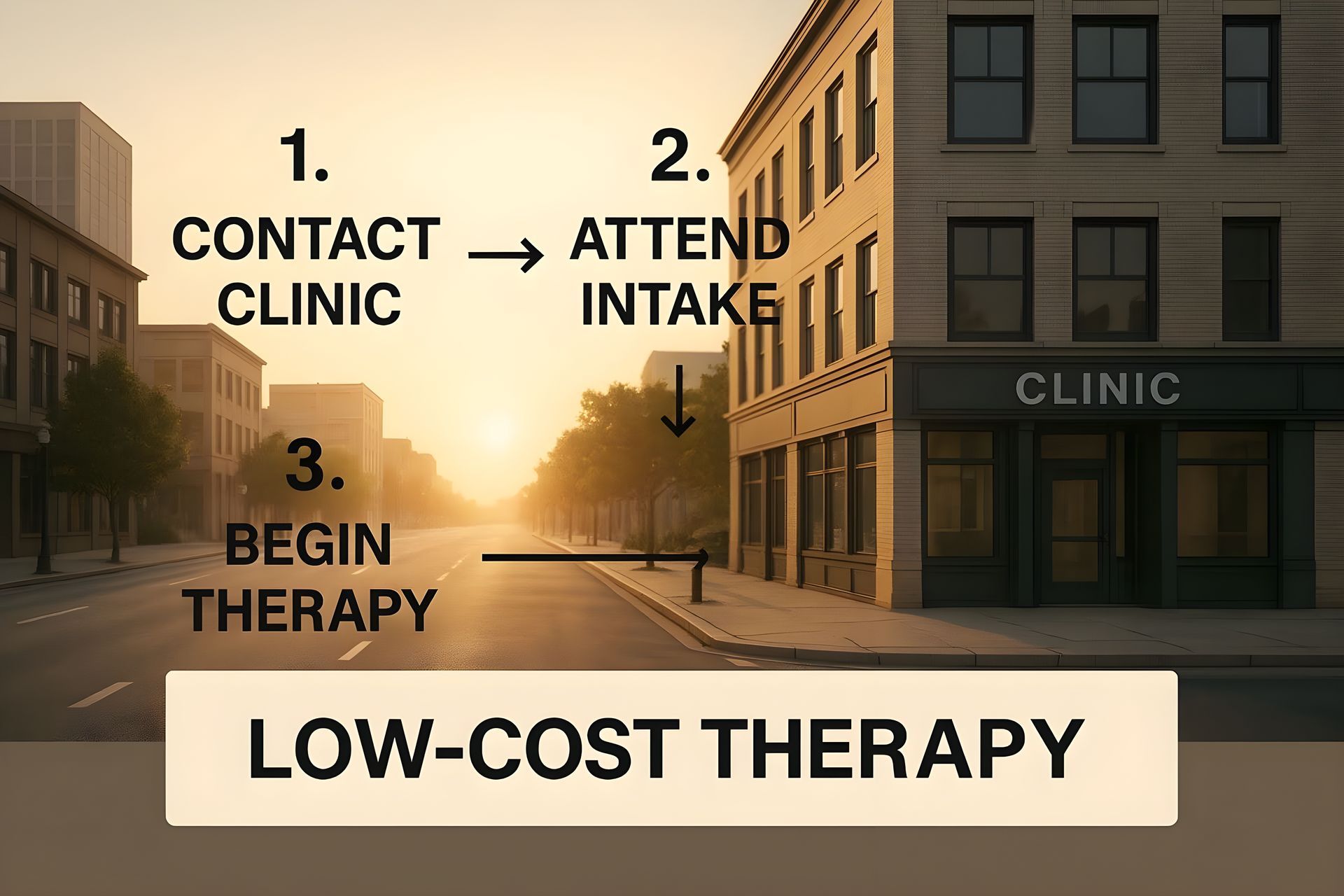
As the image shows, accessible clinics are often much closer than you think, serving as a beacon of hope for those who need support.
How to Connect With Your Local CMHC
Taking that first step is often the hardest part, but the good news is that connecting with your local CMHC is pretty straightforward. You don't need a formal diagnosis or a doctor's referral to reach out. The initial phone call is just to get information and schedule an intake appointment.
When you call, be ready to explain your situation briefly. You can say something as simple as, "I'm calling to learn about your mental health services. I don't have insurance and would like to schedule an intake appointment to see how you can help."
Remember, the person on the other end of the line is trained to help people in your exact situation. Their job is to guide you through the process, not to judge you. Be open and honest about your needs and your financial situation.
To qualify for the sliding-scale fee, you will need to provide some documentation. It's always a good idea to ask what specific items they need when you schedule your appointment, but you should generally plan on bringing:
- Proof of residence in the county (like a utility bill).
- Proof of household income (such as recent pay stubs or a tax return).
- A form of personal identification.
Getting these documents ready ahead of time will make your first visit much smoother, putting you on the fast track to getting the support you deserve.
Finding Sliding Scale and Pro Bono Therapy in Mississippi
Beyond Mississippi's state-supported centers, a strong network of private therapists, non-profits, and training clinics is committed to providing mental health treatment, even if you don't have insurance.
These options help bridge the gap for those who need support but fall outside the public system or simply prefer a private practice. It takes a little strategic searching, but you'll often find that affordable care is much closer than you think.
How to Locate Sliding Scale Therapists
The key is knowing what to look for. Many counselors in Mississippi offer what’s called a sliding-scale fee. This isn't just a simple discount; it's a flexible fee structure that adjusts the cost of therapy based on your income.
For someone without insurance, this can take the price of a session from over a hundred dollars down to something far more manageable.
Finding a professional who offers a sliding scale is more straightforward than you might think. Therapists who provide this option are usually proud of their commitment to community wellness and often advertise it openly.
A few simple strategies can make your search much more effective:
- Use Specific Search Terms: When you're searching online, go beyond "therapists near me." Try phrases like "sliding scale counseling Mississippi" or "affordable therapy in [Your City]." This will point you directly to practitioners who explicitly offer income-based pricing.
- Check Online Directories: Websites like Psychology Today or Therapy for Black Girls have built-in filters that let you search specifically for therapists offering sliding-scale fees. This is one of the fastest ways to build a list of potential counselors.
- Just Ask: Found a therapist who seems like a good fit? Don't hesitate to call or email their office. A simple question like, "I don't have insurance and was wondering if you offer a sliding scale?" is all it takes to find out.
Many independent therapists dedicate a certain number of slots in their schedule for sliding-scale clients. Even if their own slots are full, they can often refer you to a colleague who has openings, making that first call a valuable step no matter what.

Exploring Pro Bono and University Clinics
Another great avenue for finding mental health treatment without insurance is through pro bono services—professional services provided completely free of charge. While less common in private practices, they are a cornerstone of university training clinics right here in Mississippi.
Major universities with psychology or counseling graduate programs often run community clinics. In these centers, graduate students provide therapy under the direct supervision of licensed, experienced professors.
This setup provides high-quality, evidence-based care at a very low cost—and sometimes, for free. For individuals navigating conditions like anxiety, these clinics can be an excellent resource. You can explore more about what might be the best therapy for anxiety disorders to better understand what to look for.
The biggest benefit here is receiving cutting-edge care from passionate, supervised clinicians. The trade-off might be a waiting list or a set number of sessions, but for many, it's an incredible opportunity to access professional support that would otherwise be out of reach.
Medical Marijuana for Qualifying Health Conditions in Mississippi
In Mississippi, the state’s medical marijuana program can be another tool in the wellness toolkit, especially for residents managing complex health challenges. While it's not a direct, standalone solution for mental health care, it often becomes a vital part of the bigger picture for those navigating the tough overlap between physical and mental well-being.
It’s crucial to understand how the system works. This program provides a legal, structured path for Mississippians with a specific list of diagnosed, debilitating conditions. It wasn't designed as an open door for general mental health treatment without insurance.
But here’s where it gets interesting: many of the qualifying conditions, like chronic pain or PTSD, carry a heavy mental health burden, frequently causing severe anxiety and depression. Medical marijuana can have positive side effects that help alleviate these related symptoms.
Qualifying Conditions and Mental Wellness
The entire Mississippi Medical Cannabis Program is built on a specific list of "qualifying debilitating medical conditions." You absolutely must have a diagnosis for one of these state-approved conditions to even be considered for eligibility.
Some of the key conditions that have a direct line to mental health struggles include:
- Chronic Pain: This is a major qualifying condition, and anyone living with persistent pain knows it's deeply connected to anxiety, stress, and depression.
- Post-Traumatic Stress Disorder (PTSD): As a primary mental health diagnosis, PTSD is explicitly included on Mississippi's list of qualifying conditions.
- Cancer or Multiple Sclerosis: Patients fighting these and other serious illnesses often face immense anxiety and emotional distress tied directly to their diagnosis and treatment.
For many people, getting help for the primary physical issue brings incredible secondary benefits for their mental health. It’s common to hear patients report that managing their pain with medical marijuana also helped reduce their anxiety or finally allowed them to get a good night's sleep. To learn more, check out our detailed article on how medical marijuana helps chronic pain in Mississippi.
The struggle to find care isn't just a local issue. The World Health Organization estimates that between 35% and 50% of people with severe mental disorders in high-income countries get no treatment at all. The barriers are very real, and you can read more about these profound gaps in treatment access from this research.
The Process of Getting a Medical Marijuana Card in Mississippi
Getting a medical marijuana card in Mississippi isn’t something you can do on your own. It’s a clear, state-regulated process that requires certification from a qualified practitioner to ensure everything is above board.
Here’s a breakdown of the basic steps involved:
- Get Certified by a Practitioner: Your first move is to see a Mississippi-licensed physician, physician assistant, or nurse practitioner. They will need to evaluate you and confirm that you have a qualifying debilitating medical condition.
- Apply Online: With your certification in hand, the next step is to create an account on the Mississippi Medical Cannabis Program’s online portal and submit your application.
- Receive Your Card: Once the Mississippi State Department of Health reviews and approves your application, they’ll issue your electronic medical marijuana ID card.
It is critical to remember that under current Mississippi law, a medical marijuana card cannot be issued solely for a diagnosis of general anxiety or depression. The certification must be based on one of the specific conditions outlined by the state program.
Free Support Groups and Digital Health Tools in Mississippi
Real, effective support for your mental well-being isn't just found inside a therapist's office. When you're trying to navigate mental health care without insurance, some of the most powerful resources are completely free—and you can access them right now from your own home in Mississippi.
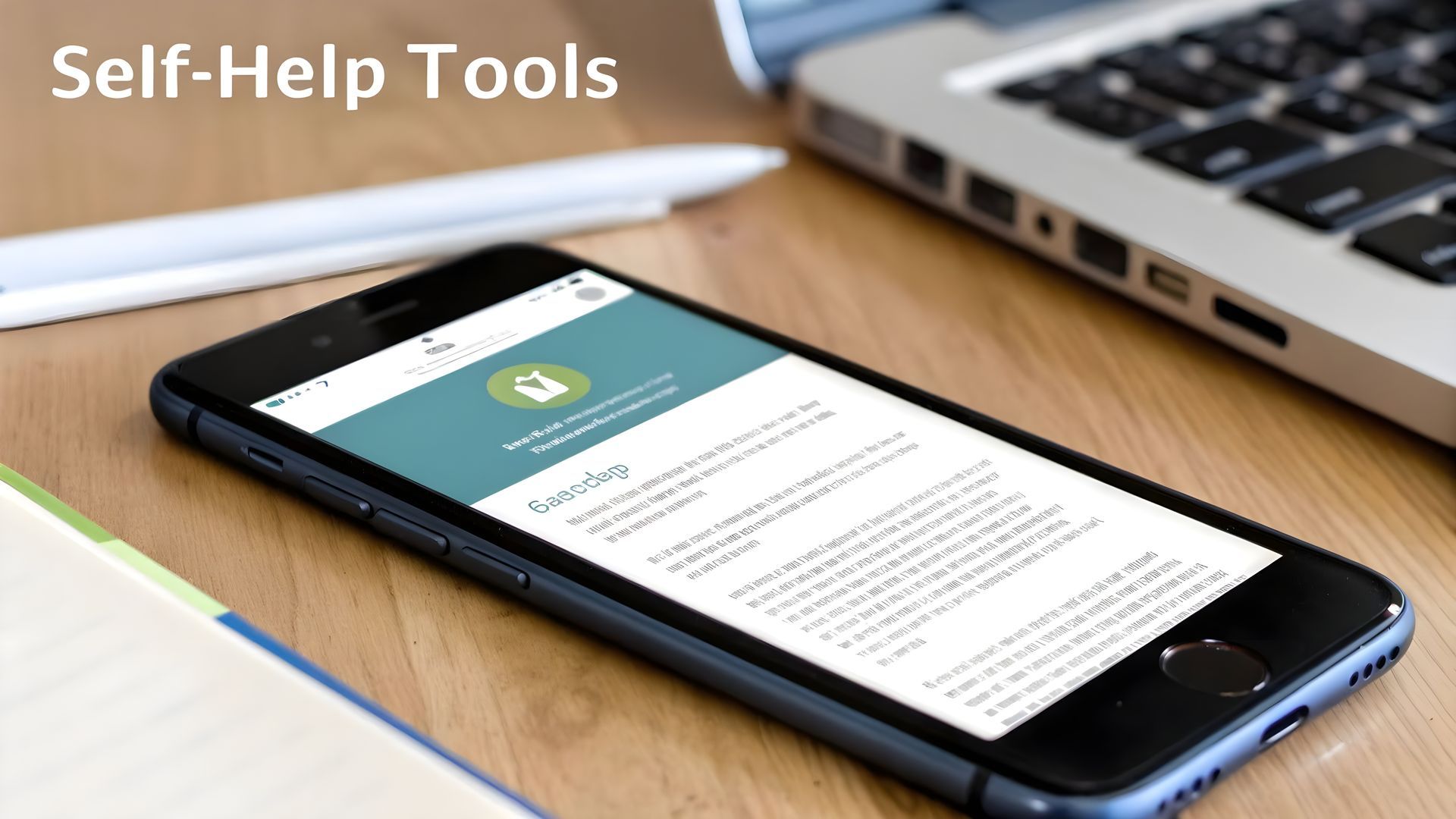
These community groups and digital tools can be an incredible first step, a way to supplement professional care, or simply a consistent lifeline when you need it most. They prove that connection and support are always within reach.
Finding Your Community with Peer Support
Peer support groups offer something truly unique: a sense of shared understanding from people who genuinely get what you’re going through. You don't have to explain everything from the beginning; they've been there.
In Mississippi, organizations like NAMI (National Alliance on Mental Illness) host local chapters with free, confidential meetings for everything from depression to anxiety. Connecting with others in a similar boat chips away at feelings of isolation and gives you a safe space to share experiences and coping strategies that actually work. It’s a powerful reminder that you aren’t alone on this journey.
The simple act of being heard by someone who has walked a similar path can be incredibly validating. It builds community and resilience, proving that shared strength makes a real difference.
Leveraging Digital Health Resources
Beyond in-person groups, the digital world is filled with tools designed to provide immediate, no-cost support. The best part? They’re available 24/7, right when you need them.
Consider exploring these options:
- Crisis Hotlines: For immediate, urgent help, the 988 Suicide & Crisis Lifeline is available anytime, day or night. Trained counselors provide confidential support for anyone in emotional distress.
- Mental Health Apps: Many great apps offer guided meditations, mood tracking, and exercises based on cognitive behavioral therapy (CBT). These tools can help you build healthy habits and manage symptoms day-to-day.
- Online Forums: Moderated online communities, like those on Reddit or dedicated mental health sites, can provide a sense of connection and peer advice whenever you need to talk.
These digital tools empower you to take an active role in managing your mental health on your own terms. For those exploring different avenues for well-being, our article on how a plant can help you find your calm offers additional perspectives on finding peace in everyday life. By combining community support with accessible digital aids, you can build a strong, personalized support system without spending a dime.
Got Questions? We’ve Got Answers.
When you're trying to figure out mental health care without insurance, it’s completely normal to feel a little lost. Where do you even begin? What’s actually available? Let’s clear up some of the most common questions people have right here in Mississippi so you can move forward with confidence.
Can I Get a Medical Marijuana Card Just for Anxiety or Depression in Mississippi?
This is a big one we hear a lot. The short answer is no—under current Mississippi law, a medical marijuana card cannot be issued solely for a primary diagnosis of anxiety or depression. The state program has a very specific list of "qualifying debilitating medical conditions."
However, the story doesn't always end there. Many patients who do have an approved condition, like chronic pain or PTSD, also struggle with anxiety or depression as a direct result. For them, using medical marijuana to manage their main qualifying illness often brings an incredible positive side effect: a noticeable reduction in anxiety and a real improvement in their overall well-being.
What Is the Absolute First Thing I Should Do?
If you need help and don't have insurance in Mississippi, your best and most effective first move is to contact the Community Mental Health Center (CMHC) that serves your county. Think of them as the state's main hub for accessible care.
These centers are specifically funded to help all residents, regardless of insurance status or ability to pay. They use a sliding-scale fee based on your income, which makes them the most direct and practical starting point for getting professional mental health treatment.
The most important thing to remember is that a path to care exists. By starting with the resources designed for uninsured Mississippians, you can find the support you need without the crushing financial weight.
Are There Any Truly Free Mental Health Services in Mississippi?
Yes, absolutely. Mississippi has several completely free resources that are perfect for immediate support or to use alongside other care.
- Crisis Hotlines: The 988 Suicide & Crisis Lifeline is available 24/7. It's free, confidential, and connects you with trained counselors who can help you through any emotional crisis. It's an invaluable resource for immediate help.
- Peer-Led Support Groups: Organizations like NAMI Mississippi host free support groups. These meetings are a safe place to connect with others who truly get what you’re going through.
- Pro Bono Services: Check with local universities. Sometimes their psychology or counseling clinics offer a set number of pro bono (free) therapy sessions with graduate students, who are always supervised by licensed professionals.
What Paperwork Do I Need for a Sliding-Scale Fee?
To get a price adjusted for your income (the sliding-scale fee), you'll need to show proof of your household income. This is just to make sure they can set a fair cost based on what you can genuinely afford.
The best move is to call the clinic ahead of your appointment to ask exactly what they need. But generally, you should be ready to bring one or more of these:
- Recent pay stubs
- Your latest tax return
- A Social Security statement
- A benefits letter if you're currently unemployed
Having these documents ready will make your intake process much smoother, letting you focus on what really matters—getting the care you need.
At
Pause Pain and Wellness, we know that finding affordable, effective care is the key to your well-being. We provide a supportive path to managing qualifying health conditions with medical marijuana, helping you find relief and improve your quality of life, no insurance required. Learn more about how we can help at
https://pausethepain.com.