How to Feel Less High: Safe Tips for Mississippi's Medical Marijuana Patients
For Mississippi medical card holders, Marijuana offers a world of therapeutic benefits, bringing much-needed relief and improving day-to-day life. But it’s common for both new and experienced patients to occasionally find the effects a little stronger than planned.
If you ever feel overwhelmed, knowing how to feel less high can turn a challenging experience into a manageable one. This ensures your journey with medical Marijuana stays positive, safe, and genuinely beneficial, helping you achieve the positive side effects you seek.
Your Guide to a Comfortable Medical Marijuana Experience in Mississippi
Here in Mississippi, the medical Marijuana program was designed to give patients safe access to effective treatments. The primary goal is to harness the positive side effects—like pain relief, reduced anxiety, and better sleep—while minimizing any discomfort.
Feeling "too high" can be unsettling, but it is always temporary. Think of it as a learning opportunity on your path to wellness with your Mississippi medical marijuana card.
This guide is focused on practical, supportive steps to help you feel grounded again. Learning how your body responds is a crucial part of using medical Marijuana responsibly. The more you know, the more confident you'll be in managing your dosage and achieving consistent, therapeutic results.
Taking Control of Your Medical Marijuana Treatment
For any medical Marijuana patient in Mississippi, knowledge is your most powerful tool. Success comes down to a few key principles:
- Understand Different Methods: How you consume Marijuana (edibles vs. vaping, for example) drastically changes the experience.
- Know the Potency: Always check the THC percentage and start with a small dose, especially with a new product.
- Recognize Your Tolerance: Everyone’s body is different. What works for another patient might be too much for you.
Remember, your Mississippi medical card is your key to improving your well-being. An overwhelming experience is counterproductive, but it’s also preventable with the right approach and information.
For those just starting out or looking for more foundational knowledge, understanding Mississippi's process is the perfect first step. You can learn more about how to get a Mississippi medical marijuana card to ensure you’re starting on the right foot. When you arm yourself with good information, you can navigate your treatment with confidence and turn each experience into a positive step toward better health.
Immediate Grounding Techniques That Actually Work
Sometimes, the effects of medical Marijuana can feel a little stronger than you intended. When that happens, the first thing to do is find a quiet, safe spot where you can get comfortable. Your main goal is to reconnect your mind with your body, and one of the best ways to do that is surprisingly simple: just breathe.
Taking slow, deep breaths is a powerful signal to your nervous system to calm down. It’s an incredibly effective anchor to the present moment, helping ease that feeling of being overwhelmed. This is a core principle behind many relaxation techniques that can help when you're anxious, and it works just as well here.
Engage Your Senses to Re-Center
Another fantastic way to pull your focus away from uncomfortable thoughts is to engage your senses. You don’t need anything special for this; many Mississippi medical Marijuana patients find exactly what they need right in their own kitchens.
Ever heard of chewing on black peppercorns? It's not just an old tale. The terpene caryophyllene in pepper is known to interact with THC and can genuinely help take the edge off. Sniffing or tasting a fresh lemon works wonders, too, thanks to its high concentration of the terpene limonene.
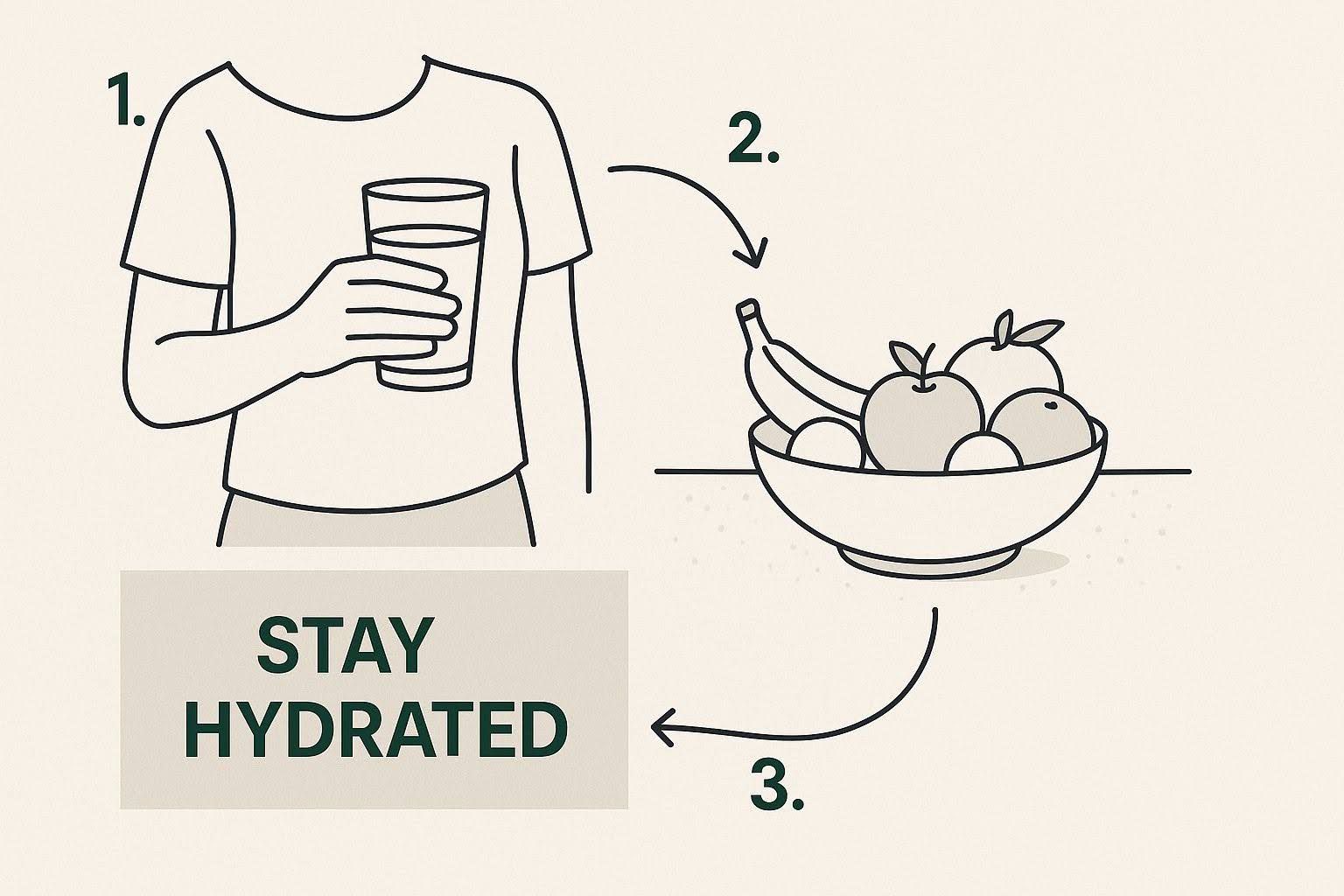
As this image shows, even something as basic as staying hydrated can make a huge difference in how grounded you feel. Just the simple act of sipping cool water is both comforting and stabilizing.
Other physical comforts can also work wonders. Try wrapping yourself in a soft, heavy blanket to create a sense of security. The gentle pressure can be incredibly calming.
Remember, the goal isn't to slam the brakes on the effects. It's about making yourself feel safe and comfortable while they naturally fade. This feeling is temporary, and these techniques are just here to help you ride it out.
By keeping these grounding strategies in your back pocket, you can confidently manage your experience. These simple methods empower you to stay in control and continue benefiting from your medical Marijuana treatment plan.
Using CBD and Other Methods to Find Balance
Grounding techniques are fantastic for getting your feet back on the floor in the moment, but Mississippi medical Marijuana patients have other tools in their toolkit for managing an overly intense experience. One of the most reliable strategies is simply keeping a CBD-only product on hand.
Unlike THC, CBD is non-intoxicating and is known for its own set of therapeutic benefits. It works with your body’s endocannabinoid system, and many people find it helps take the edge off THC's more powerful effects. This interaction can gently guide you back to a more comfortable, balanced state without canceling out the medical relief you’re looking for.

A few drops of a CBD tincture held under the tongue or even a simple CBD edible can make a world of difference. Getting familiar with understanding THC:CBD ratios from the start is a game-changer, empowering you to pick products that align with your wellness goals and help you find that perfect therapeutic window right away.
Simple Steps for Greater Comfort
Beyond CBD, a few other common-sense methods can help you feel less high. These are simple, accessible actions that put you back in the driver's seat when you feel overwhelmed.
- Have a Light Snack: Eating a small, healthy snack can help ground you and stabilize your system. Think fresh fruit, a handful of nuts, or some simple crackers.
- Stay Hydrated: Sipping on cool water is incredibly calming. Plus, it keeps you hydrated, which is always a good thing for your overall well-being.
- Avoid Caffeine and Alcohol: You might instinctively reach for a coffee to "sober up," but stimulants like caffeine can sometimes ramp up anxiety. It's much better to stick with water or a soothing herbal tea.
The goal isn't to slam the brakes on your medical Marijuana's effects but to gently dial down the intensity. These small, intentional actions give your body and mind something else to focus on, making the whole experience far more manageable.
Engaging in a low-key, familiar activity is another brilliant way to shift your focus. Put on some calming music, watch a comfort movie you’ve seen a dozen times, or just find a quiet room to sit in for a bit. This lets you gently redirect your attention, allowing the intensity to fade naturally while you stay in a relaxed, secure environment. It’s all about ensuring your experience with medical Marijuana remains a positive one.
Why You Might Feel Overly High Sometimes
It happens. Even experienced users sometimes find themselves in a bit deeper than they intended. Understanding what causes that overly intense experience is the best way to keep it from happening again.
For many new Mississippi medical Marijuana patients, the culprit is usually dosage. The most reliable piece of advice you'll ever get is to start with a low dose and go slow, especially when you're trying a new product. This isn't just a catchy phrase—it's the golden rule that puts you in control and helps you find that sweet spot for therapeutic relief without going overboard.
How you consume it matters, too. Inhaled products, like from a vaporizer, tend to kick in quickly and then fade out within a couple of hours. Edibles are a completely different ballgame. They have to work their way through your digestive system first, meaning it can take up to two hours to feel anything. But once they do hit, the effects are often much stronger and can last for a very long time.

It's Not Just the Marijuana—It's You
Beyond the product itself, a handful of personal factors can dramatically change how you feel. Your own body is a huge variable in the equation.
- Metabolism: Someone with a faster metabolism might process cannabinoids differently, affecting how quickly the effects come on and how long they last.
- Tolerance: If you use Marijuana regularly, you’ll likely build a tolerance. This means you may need a higher dose over time to achieve the same therapeutic benefits.
- Your Mindset: Your mood and stress levels before you even use your medical Marijuana can absolutely shape the experience that follows.
Being aware of these variables is empowering. It helps you make smarter choices, ensuring your medical Marijuana use remains a positive and healing part of your wellness routine. As usage becomes more common—with 47% of Americans having tried Marijuana—the risk of accidental overconsumption is real, especially with all the new, potent products hitting the market. You can dive deeper into these cannabis usage trends on payboticfinancial.com.
By paying attention to dosage, method, and your personal state, you transform your medical Marijuana journey from one of guesswork to one of informed, confident self-care. This mindful approach is key to consistently achieving the positive side effects you seek.
Proactive Strategies for a Consistent Experience
The best way to manage your medical Marijuana experience is to prepare before you even take your medicine. Honestly, knowing how to feel less high really starts with simple, proactive steps that prevent you from feeling overwhelmed in the first place.
For patients in Mississippi, this journey can be enhanced with information from your licensed dispensary. The staff there are a helpful resource—they can help you make sense of product labels, understand what different potency levels mean, and explain various cannabinoid and terpene profiles. This kind of guidance is invaluable for making smart choices that align with your health goals.
Documenting Your Journey for Success
Another powerful tool for making sure things go smoothly is keeping a simple journal. It doesn’t have to be anything fancy; a small notebook or even a note on your phone works perfectly.
For each session, try to jot down these key details:
- Product Used: Note the name and what kind it was (flower, tincture, edible, etc.).
- Dosage Taken: Be specific. How much did you actually use?
- How You Felt: Briefly describe the positive side effects and your overall comfort level.
Over time, this log will start to show you clear patterns. You'll figure out what works best for your body and your specific wellness goals, which lets you move from just guessing to having a predictable and effective routine. A great way to put this into practice is by learning about the benefits of microdosing THC, a method that focuses on using tiny amounts to get therapeutic benefits without the intense high.
Your environment plays a huge role, too. Creating a comfortable, safe, and familiar setting for your sessions is crucial. A calm space can dramatically lower the chances of feeling anxious or overwhelmed.
These prep steps aren't just about avoiding a bad time; they're about unlocking the full therapeutic potential of your medical Marijuana. This proactive mindset is key, especially as more people explore its benefits. As of 2025, about 15% of adults in the U.S. say they're current users, yet there’s a major gap in research around harm reduction. You can read more about these cannabis industry growth trends on cannabismdtelemed.com. Taking these small, preparatory actions helps ensure your experience stays positive and consistent.
Got Questions? We've Got Answers
When you're new to medical Marijuana, a few questions are bound to come up, especially if an experience feels more intense than you expected. Think of this as your go-to guide for navigating those moments and keeping your journey positive.
Does CBD Really Help You Feel Less High?
Yes, it really does. This is probably one of the most effective tools in your toolkit. Think of CBD as the yin to THC's yang—it's a non-intoxicating cannabinoid that can help smooth out the psychoactive edges of THC.
Many patients in Mississippi keep a trusted, high-quality CBD-only product on hand for this very reason. A few drops of a CBD tincture or a simple edible can help you feel more grounded and in control without erasing the therapeutic benefits you’re seeking. It’s a smart, simple strategy for ensuring your medical Marijuana use has positive side effects.
How Long Is This Going to Last?
That’s the million-dollar question, and the honest answer is: it depends. The duration of any high is shaped by a few key things—your personal metabolism, the dose you took, and, most importantly, how you consumed it.
- Vaping or Smoking: If you inhaled it, the effects come on fast, but they also fade faster. You'll typically feel the peak effects start to taper off within 1-3 hours.
- Edibles: These are a different story. They take a while to get going because they have to be digested, but their effects stick around for much longer—often 4-8 hours, and sometimes even more.
Remember, the goal here isn't to hit an "off" switch. It's about making yourself feel safe and comfortable while the effects naturally wind down. The feeling is always, always temporary.
Should I Eat or Drink Something?
Both are great ideas. Simple actions can be incredibly grounding. Sipping on some cool water is a fantastic way to stay hydrated and give your nervous system a chance to relax.
Pairing that with a light, simple snack can also work wonders to bring you back to center. Think fresh fruit, a handful of nuts, or some plain crackers—nothing too heavy. It's probably best to steer clear of caffeine or alcohol, as they can sometimes ramp up anxiety or cause dehydration, which is the last thing you need.
What If I Still Feel Anxious?
If you've tried deep breathing and a few other tricks but your mind is still racing, it's time for a change of scenery. You’d be surprised how well this works.
Just moving to a different room can shift your whole perspective. If you can do it safely, stepping outside for a minute of fresh air is even better. You could also put on some familiar, soothing music or a comfort movie—anything that gently pulls your focus away from the intensity.
And if you ever feel genuinely overwhelmed, don't hesitate to call a friend or family member you trust. Just hearing a familiar voice and talking it through can make all the difference in the world.
At
Pause Pain and Wellness, we're committed to giving Mississippi patients the support and resources they need for a successful therapeutic journey. Find out more about
our services and how we can help you manage your wellness.