What Is Integrative Medicine in Mississippi
Integrative medicine is a patient-first approach, one that looks at the big picture of your health. It combines the very best of science-backed medical care with proven, complementary therapies. Think of it as creating a complete wellness plan that treats you as a
whole person—mind, body, and spirit—instead of just chasing a set of symptoms.
A New Perspective on Your Health Journey
Imagine your health is a high-performance vehicle. Conventional medicine is the master mechanic, an expert at diagnosing engine trouble and fixing specific, broken parts. But what is integrative medicine? It's the rest of the pit crew—the specialist who fine-tunes the suspension, the expert who recommends the right fuel, and the technician who ensures the chassis is perfectly aligned.
Each professional brings a unique skill set to help you achieve peak performance and long-term reliability. This approach acknowledges that true health is about far more than just managing a disease. It's about building a solid foundation for vitality. For residents in Mississippi, this means crafting a personalized wellness plan that goes beyond the standard approach to address all aspects of your well-being.
The goal is to use every appropriate tool at our disposal—both conventional and complementary—to support your body's incredible, natural ability to heal. It's a collaborative model that puts you back in the driver's seat of your own care.
The Three Pillars of Integrative Care
This visual breaks down how different elements come together under the integrative medicine umbrella.
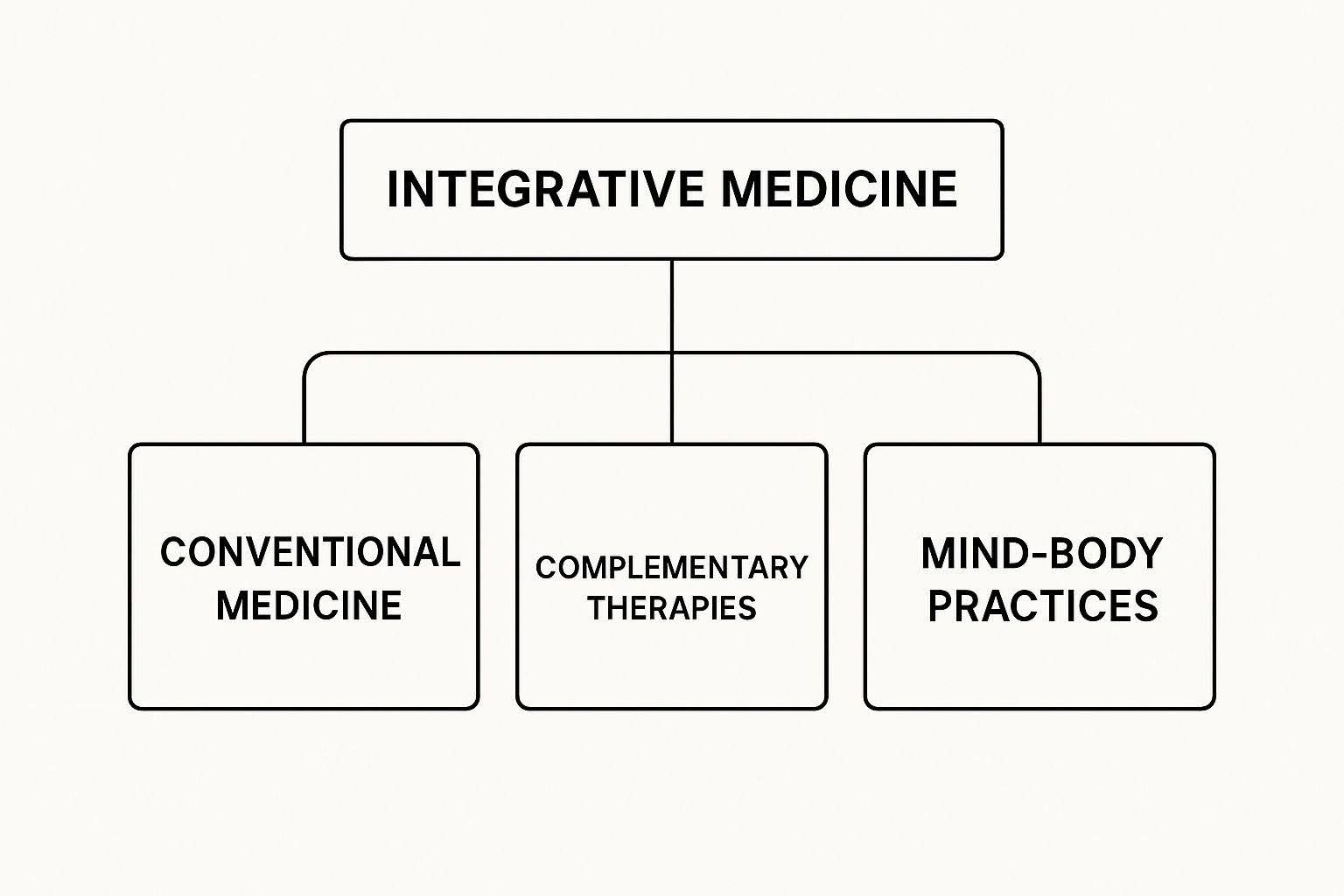
As you can see, the strategy blends conventional care with complementary therapies and mind-body practices to create a single, unified plan tailored to you.
This patient-centered method is gaining serious traction worldwide for one simple reason: it works. The World Health Organization even notes that about 80% of the world's population uses some form of traditional, complementary, or integrative medicine. You can explore more data on this global healthcare trend to see just how widespread it's become.
Instead of seeing symptoms in isolation, we look for the interconnected patterns. For example, chronic pain isn't just a physical sensation; it can be deeply influenced by stress, diet, and your overall outlook. An integrative plan addresses all these factors at once, offering a more complete and sustainable path to relief and recovery in Mississippi.
To make the distinction clearer, let's compare the two approaches side-by-side.
Conventional vs Integrative Medicine At a Glance
| Aspect | Conventional Medicine | Integrative Medicine |
|---|---|---|
| Focus | Treats specific conditions and symptoms | Treats the whole person: mind, body, and spirit |
| Approach | Primarily uses standard interventions | Uses all appropriate therapies, both conventional and complementary |
| Patient Role | Patient is often a passive recipient of care | Patient is an active partner in the healing process |
| Goal | Manage or address a specific condition | Achieve optimal health and prevent future illness |
| Example | Standard care for high blood pressure | Combining standard care with nutrition counseling, stress reduction, and exercise |
This table shows how integrative medicine doesn't replace conventional care but expands it, creating a richer, more comprehensive roadmap for your health.
The Core Principles of Integrative Care

Integrative medicine isn't just a different set of tools; it's a whole new way of looking at health. It's built on a few key ideas that set it apart from a strictly conventional approach. At its heart, this philosophy is about partnership, personalization, and using the least invasive methods possible to get the best results.
Think of it as a shift in perspective. We're moving away from simply managing a condition and toward actively building a foundation for lifelong wellness.
Understanding integrative medicine means recognizing that you are the main character in your health story. This model is built on a strong patient-practitioner relationship where decisions are made
together, not for you. Your preferences, your values, and your goals are crucial parts of the plan, ensuring your care actually aligns with what matters to you.
Fostering Natural Healing
A core belief here is that the body has a powerful, innate ability to heal itself. Our job is to support and clear the path for that natural process. Instead of immediately reaching for aggressive options, the focus is on finding and removing barriers to self-healing while introducing therapies that strengthen your body's own recovery systems.
A Mississippi resident dealing with persistent back pain is a perfect example. Rather than starting with the most intensive approach, an integrative plan would first explore less invasive, evidence-based options to get to the root cause of the pain.
The integrative mindset prioritizes using the safest and most effective interventions available. It's about creating a care hierarchy that starts with gentle, supportive therapies before considering more intensive ones.
This patient-first strategy might include:
- Nutritional Counseling: Focusing on an anti-inflammatory diet to calm the systemic inflammation that makes pain worse.
- Physical Therapy: Using targeted exercises to strengthen core muscles, improve flexibility, and restore proper movement.
- Stress Management: Introducing mindfulness or simple breathing techniques to calm the nervous system, since we know stress is a major amplifier of pain.
A Whole-Person Approach
This method refuses to view symptoms in isolation. Chronic pain isn't just a physical sensation—it's tangled up with your overall state, your lifestyle, and even your sense of well-being. By looking at every aspect of your life, a practitioner can build a plan that addresses all the interconnected factors contributing to your condition.
This complete view ensures the plan is more than just a temporary fix. For instance, after exploring these foundational therapies, a practitioner might discuss incorporating other physician-guided options if they're still needed, such as participating in Mississippi's medical marijuana program for qualifying conditions.
This step-by-step process empowers you to take back control of your wellness journey. You get to use a full spectrum of safe and effective tools to build lasting health and improve your quality of life, right here in Mississippi.
Integrative Therapies Available in Mississippi

Understanding the philosophy of integrative medicine is one thing, but seeing how it works in the real world is where it all clicks. For residents here in Mississippi, a whole range of therapies can be woven together into a plan that's built just for you.
These aren't just random, disconnected treatments. The goal is to move beyond simply chasing symptoms and instead build a stronger foundation for your health from the ground up.
This way of thinking is part of a huge shift in wellness. In fact, the global market for complementary and alternative medicine was valued at a staggering USD 154.69 billion in 2024 and is only expected to grow. You can read the full research about this market growth. People are actively seeking out natural, supportive therapies that can work hand-in-hand with their conventional medical care.
Foundational Wellness Strategies
Most integrative plans built in Mississippi start by addressing the core pillars of health—the things that impact almost every function in your body. The focus is on these first because they put the power back in your hands, letting you make daily choices that have a massive impact on your well-being.
- Nutritional Counseling: This is so much more than a generic diet plan. It's a personalized roadmap for eating that helps lower inflammation, supports your gut health, and gives your body the exact fuel it needs to function at its best.
- Personalized Weight Management: A guided weight program isn't about the number on the scale. It's about boosting your metabolic health, taking the strain off your joints, and giving you the energy you need to truly live your life.
- Wellness Support: Techniques like mindfulness and stress-reduction are non-negotiable. The mind and body are deeply connected, and learning to manage stress can have a direct, positive effect on physical symptoms like chronic pain.
When these foundational pieces work together, they create an environment where your body can finally start to heal itself more effectively.
The Role of Medical Marijuana in Mississippi
One of the most important physician-guided tools available in Mississippi's integrative medicine framework is medical marijuana. For people with qualifying conditions, it offers a way to manage difficult symptoms that haven't responded to conventional care alone, showcasing its positive side effects as a therapy.
Think of medical marijuana not as a cure-all, but as a specific tool in a much larger strategy. Its job is to provide relief and improve your day-to-day function, which in turn allows you to engage more fully with other parts of your wellness plan, like physical therapy or just getting through your daily routine.
Under the guidance of a qualified practitioner, medical marijuana is used to help with a range of conditions. The benefits often include real pain reduction, a greater sense of calm, and better sleep—all of which are absolutely crucial for recovery. The process for participating in Mississippi's medical marijuana program ensures its use is safe, regulated, and right for your specific health needs.
By easing those persistent symptoms, it can open the door to a much better quality of life. To dive deeper, you can learn how medical marijuana helps chronic pain in Mississippi through our detailed guide.
Medical Marijuana in a Holistic Plan
In Mississippi, medical marijuana isn't treated as a magic bullet. Instead, for many patients, it's a powerful and legitimate tool within a broader integrative medicine plan. Think of it less as a standalone fix and more as a supportive therapy, always used under a practitioner's guidance to help manage the symptoms of specific qualifying conditions.
The goal here is to improve a person's ability to engage with their entire wellness plan. When other approaches have failed to bring relief, medical marijuana can be a game-changer. Its job is to ease persistent symptoms like chronic pain, debilitating nausea, or overwhelming stress.
By turning down the volume on those symptoms, it opens up the space for patients to focus on other vital parts of their health—things like physical therapy, nutritional changes, or wellness practices that were too difficult to even consider before.
Participating in Mississippi's Medical Marijuana Program
The state of Mississippi has laid out a clear, regulated path for patients who could benefit from medical marijuana. To participate, you must first be diagnosed with at least one of the state-approved debilitating medical conditions. This critical step ensures that its use is reserved for those with genuine, documented medical needs.
The entire process requires certification from a qualified practitioner, which is a cornerstone of any conversation about what is integrative medicine. It highlights the non-negotiable role of professional oversight. It's not about just getting a product; it's about carefully and safely integrating a therapy into a patient's existing care strategy.
A few of the many qualifying conditions in Mississippi include:
- Cancer
- Parkinson's disease
- Huntington's disease
- Muscular dystrophy
- Glaucoma
- Spastic quadriplegia
- Positive status for human immunodeficiency virus (HIV)
- Acquired immune deficiency syndrome (AIDS)
- Hepatitis
- Amyotrophic lateral sclerosis (ALS)
- Crohn's disease
- Ulcerative colitis
- Sickle-cell anemia
- Autism with aggressive or self-injurious behaviors
- Spinal cord disease or severe injury
- Intractable nausea
- Severe muscle spasticity
How It Supports Your Overall Wellness
So, how does it actually work? The therapeutic power of medical marijuana comes from compounds called cannabinoids. These cannabinoids interact with your body's own endocannabinoid system, a vast network that helps regulate crucial functions like pain perception, mood, and appetite.
By influencing this system, medical marijuana can help restore a sense of balance and deliver significant symptom relief. This is where you can really see its value in an integrative plan.
For someone battling chronic pain, that relief might finally make it possible to fully participate in physical therapy. For a person struggling with severe stress, it can help calm the nervous system enough to benefit from mindfulness or other stress-reduction techniques.
Medical marijuana's primary benefit in an integrative plan is its ability to improve a patient's quality of life. By managing challenging symptoms, it empowers individuals to reclaim daily function and actively participate in their own healing journey.
Ultimately, medical marijuana often acts as a bridge. It helps manage the symptoms that are holding you back, giving you the stability to build foundational health habits—like better nutrition, consistent movement, and mental peace—that lead to true, lasting wellness. It's one important tool among many, used thoughtfully to support the whole person.
Who Can Benefit from an Integrative Approach

It's a common misconception that integrative medicine is only for a certain type of patient or a single, specific condition. The truth is, its flexibility makes it a powerful option for anyone in Mississippi who wants to take a more active role in their health.
This approach is especially helpful for people with chronic conditions who have that nagging feeling that all their symptoms are connected. It gives them a way to address the whole person, not just a list of separate problems.
Think about someone here in Mississippi dealing with nagging joint pain. A purely conventional route might zero in on one approach and call it a day. An integrative plan, on the other hand, digs deeper. It looks at how nutrition, stress, and gentle physical therapy can work together to lower inflammation and bring back mobility. It's a complete strategy for a better life.
Personalized Scenarios in Mississippi
To really grasp what integrative medicine looks like in practice, let's consider a few real-world examples of how Mississippi residents might use it. These stories show just how different therapies can be woven together to create a plan that fits the individual.
- Managing Chronic Pain and Regaining Mobility: Imagine someone whose daily life has been hijacked by chronic pain. They might pair targeted physical therapy to rebuild strength with a physician-guided medical marijuana plan to keep symptoms in check. This approach allows them to participate more fully in their own recovery, helping them get back to the things they love.
- Addressing Stress with Mind-Body Techniques: For another person struggling with persistent stress, an integrative strategy could start with nutritional counseling to support overall health and stabilize their mood. This could be combined with mindfulness practices to calm the nervous system, building a foundation of resilience that goes far beyond what any single approach can do alone.
This kind of patient-centered care isn't just a niche idea—it's part of a growing global movement fueled by the rise of chronic conditions. As more people seek out complete solutions, the worldwide integrative medicines market is expanding. You can read the full research about this market growth to see just how much it's changing healthcare.
A Proactive Path to Wellness
An integrative approach is also perfect for anyone who wants to get ahead of health problems before they start. Someone concerned about their future wellness could work with a practitioner to create a personalized weight management program that focuses on metabolic health and preventing issues down the road.
By looking at lifestyle, nutrition, and mental wellness, integrative medicine helps you build a strong defense against future health issues. It's about creating vitality for the long run, not just reacting to illness.
For Mississippians exploring these options, particularly those considering participation in the state's medical marijuana program for a qualifying condition, the first step is understanding the state's requirements. Going through the proper process ensures every part of your wellness plan is handled correctly, safely, and effectively within Mississippi's legal framework.
Common Questions About Integrative Medicine in Mississippi
Diving into a new way of thinking about your health always brings up a few questions. As more people in Mississippi get curious about what integrative medicine is and how it can help them, it's totally normal to wonder about the specifics.
This section is all about giving you direct, clear answers to the most common questions we hear. Our goal is to make sure you feel confident and informed as you take the next steps on your wellness journey.
Is Integrative Medicine Covered by Insurance in Mississippi?
This is one of the first questions on everyone's mind, and the answer really comes down to your specific insurance plan. While conventional services like a visit with a practitioner or a physical therapy session are often covered, many complementary therapies might not be.
Your best first step is to call your insurance provider directly. Ask them for a clear list of covered services. It's also a great idea to ask the practitioner's office for the specific billing codes they use—this little piece of information helps your insurer give you a straight answer before you start care.
How Is Chronic Pain Treated Differently?
A conventional approach often zeroes in on one method to manage or mask pain symptoms. An integrative strategy, on the other hand, digs much deeper to understand the root causes and all the factors contributing to your pain. From there, a multi-layered plan is designed to do far more than just quiet the symptoms.
An integrative plan for chronic pain is all about improving your quality of life, not just managing symptoms. It gets to the root of the problem with a combination of therapies that support your body's own ability to heal.
For instance, a comprehensive plan for a Mississippi patient might bring together:
- Anti-Inflammatory Nutrition: To calm the systemic inflammation that so often fuels chronic pain.
- Targeted Physical Therapy: To restore proper movement, improve mobility, and build supportive strength.
- Stress-Reduction Techniques: To quiet the nervous system, which can act like a major amplifier for pain signals.
- Medical Marijuana: For qualifying conditions, this can help manage persistent symptoms with a practitioner's guidance, making it easier to participate in other healing therapies.
This holistic view is especially powerful for conditions like migraines, and seeing how all these pieces fit together is key to understanding the benefits of an integrative pain management strategy.
What Should I Expect from My First Appointment?
Get ready for a conversation that's much longer and more detailed than your typical doctor's visit. That first appointment is designed to build a complete picture of your health, so the discussion will cover more than just your main complaint.
You can expect a thorough discussion about your medical history, your diet, lifestyle, stress levels, and even how you're sleeping. This in-depth chat is crucial for understanding how all the pieces of your health are connected. From there, you and your practitioner will work together to build a personalized plan that pulls in the right therapies for your unique needs and helps you reach your goals in Mississippi.
At Pause Pain & Wellness, we are committed to providing Mississippians with a clear path to better health through patient-centered integrative care.
https://pausethepain.com