How to Cope with Burnout in Mississippi
Dealing with burnout means first learning to spot the signs—that constant exhaustion, the growing cynicism—and then taking real, concrete steps to get your life back. It all starts with a simple but powerful shift in mindset: burnout is a natural response to way too much stress for way too long. It is not a personal failing. From there, it's about setting boundaries and making your own well-being a priority again.
What Burnout Actually Looks Like in Mississippi

Before you can tackle burnout, you have to know what it actually feels like day-to-day. Forget the textbook definitions for a minute. Let’s talk about how it shows up right here in Mississippi, from the Pine Belt to the Delta.
It’s that bone-deep exhaustion where even a simple trip to the grocery store in Jackson feels overwhelming. It’s that slow-creeping detachment at a family cookout in Biloxi, where you’re physically there but your mind is a million miles away. You might notice your patience is shot, making the usual traffic jam on I-55 feel like a personal attack.
The Three Core Signs of Burnout
Burnout isn’t just about feeling tired. It’s a specific combination of three feelings that can seep into every corner of your professional and personal life. Recognizing them is the first real step toward feeling better.
- Emotional Exhaustion: This isn't just stress. It's the feeling of being completely and utterly drained, like you have nothing left to give another day. You might feel irritable, on edge, or unable to focus on even simple things.
- Cynicism and Detachment: This is when you start feeling negative and disconnected from your job and maybe even life in general. Things that used to feel meaningful now just feel like a chore. You might find yourself pulling away from colleagues, friends, and family.
- Reduced Sense of Accomplishment: This is that nagging voice in your head telling you that your work doesn’t matter or that you’re just not effective anymore. No matter how hard you work, you feel like you’re failing, which just chips away at your confidence and drive.
If this sounds familiar, our detailed guide on the signs of workplace burnout can help you dig deeper.
It's Not Just a Personal Problem
Burnout has become a massive, widespread issue with real consequences. On a global scale, workplace stress and burnout are costing the economy over $1 trillion every single year in lost productivity and healthcare expenses.
With nearly half of all employees around the world saying they feel burned out, it's impossible to ignore. This is a collective problem, not an individual weakness.
Here’s the key takeaway: Burnout is a signal. It’s your mind and body screaming that the current pace and pressure just aren't sustainable. Listening to that signal—instead of trying to push through it—is how you truly start to heal.
Practical Steps for Immediate Burnout Relief
When you’re in the thick of burnout, the thought of making big, life-changing moves can feel completely overwhelming. It’s paralyzing. The secret isn't a massive overhaul; it's about starting with small, immediate actions that carve out little pockets of relief.
This isn’t about fixing everything overnight. It's about taking back just a tiny piece of control, right now, to give yourself the space you need to breathe and begin healing.
One of the simplest yet most effective things you can do is grounding yourself when that wave of anxiety hits. When you feel overwhelmed, try the '5-4-3-2-1' method. Just pause and name five things you can see, four things you can touch, three things you can hear, two things you can smell, and one thing you can taste. It sounds almost too simple, but this exercise yanks your focus back to the present moment, interrupting that runaway train of stressful thoughts.
Another game-changer is embracing the "micro-break." You don't need a week-long vacation to feel the benefits of rest. Stepping away from your screen for just five minutes to walk outside, listen to a song, or do a quick stretch can reset your focus and stop tension from building up.
Reclaim Your Time with Firm Boundaries
One of the fastest ways to start pushing back against burnout is by drawing a clear, bright line between your work life and your personal life. Being constantly connected is a massive drain on your mental energy. You don't have to build a fortress overnight; setting just one or two non-negotiable rules can make a huge difference.
- Silence Notifications: Make a pact with yourself to turn off all work-related pings and alerts on your phone after a certain time, like 6 PM. Seriously, just do it.
- Protect Your Lunch Break: Start treating your lunch break like it's a critical meeting with your most important client (which is you). Step away from your desk to eat, even if it's only for 20 minutes.
- Define "Done" for the Day: Before you even start working, decide what a successful, completed day looks like. Once you've hit that mark, give yourself permission to stop.
When you set these boundaries, you’re sending a powerful message to yourself and everyone around you: your well-being is a top priority. This isn’t selfish—it's absolutely necessary for sustainable performance and your long-term health. Learning how to manage stress is the foundation for keeping burnout from taking over your life.
Prioritize Your Foundational Needs
When you're running on empty, it’s so easy to let basic self-care go right out the window. You skip meals, stay up too late, and stop moving. But that just digs the hole deeper. Focusing on the absolute fundamentals of physical health is what gives you the energy for mental and emotional recovery.
This infographic breaks down a simple, sequential flow for getting those core habits back on track so you can start to cope with burnout.
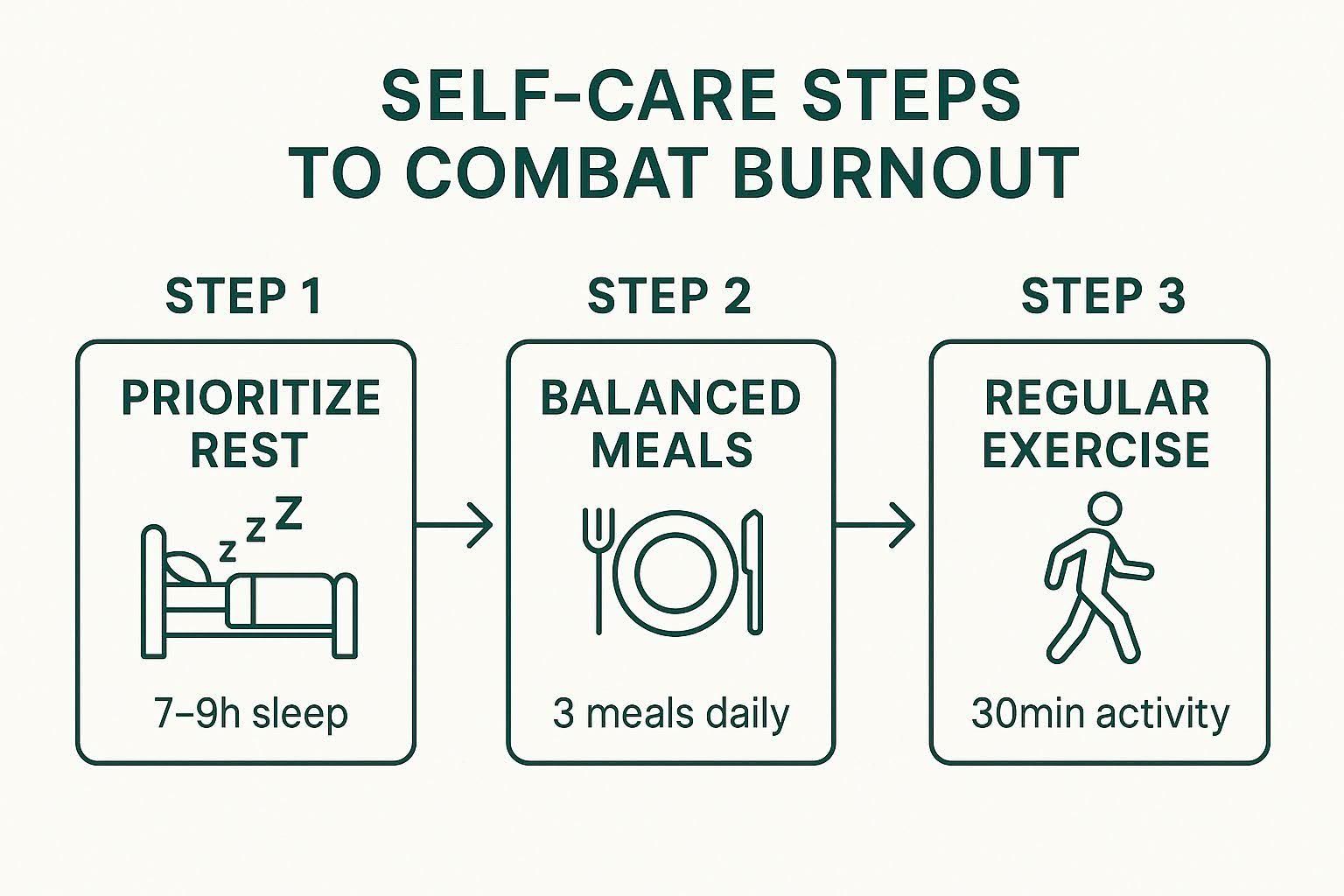
As you can see, it all starts with prioritizing rest. From there, you can focus on balanced nutrition and gentle movement. These three pillars work together, creating a stable foundation for your recovery. Each one makes the next a little easier, helping you build momentum toward feeling like yourself again.
Building Long-Term Resilience to Prevent Burnout

True recovery from burnout isn’t about just putting out the immediate fires—it’s about fireproofing your life so they have a much harder time starting again. This means moving past the quick fixes and getting serious about building sustainable, long-term resilience. The goal is to create a life where chronic stress simply has less room to take hold.
This whole process starts with you becoming a detective in your own life. You have to get honest about the specific situations, thought patterns, and responsibilities that consistently drain your battery. These are your personal burnout triggers.
Identify Your Personal Burnout Triggers
Think back to the last time you felt completely underwater. What was really going on? Was it a truly unreasonable deadline at work? A difficult family obligation you couldn't get out of? Or maybe just the constant, low-grade pressure of a cluttered home? Getting specific is everything here.
A simple but powerful exercise is to keep a log for a week. Just jot down when you feel most stressed, anxious, or exhausted, and what was happening in that moment. You might be surprised to find that your burnout isn't from one big problem, but the slow accumulation of a dozen small stressors.
Once you can see the patterns, you can finally start creating proactive strategies to manage them instead of just reacting when it's already too late.
Create Your Resilience Toolkit
It helps to think of resilience not as some innate trait you either have or don't, but as a collection of tools you can actively use to recharge and protect your well-being. Your personal "resilience toolkit" should be filled with things that genuinely restore your energy, not just distract you from the stress.
What works for your friend might do nothing for you, and that’s fine. The key is to find activities that consistently leave you feeling better than when you started.
- Restorative Activities: These are the quiet, calming practices. Think reading a book, listening to music without doing anything else, spending a few minutes in nature, or doing some gentle stretching.
- Energizing Activities: This is about getting your body moving and boosting your mood. It could be a brisk walk, digging into a hobby you love, or just playing with a pet.
- Social Connection: Real, meaningful time with supportive friends and family—the ones who listen without judgment—is one of the most powerful buffers against stress we have.
Try to weave a mix of these into your weekly routine. Even just 15-20 minutes dedicated to one of these can make a huge difference in how you handle stress over time.
Building resilience is all about being intentional with your energy. It’s about consciously choosing to invest in activities that replenish your reserves before they hit empty. This isn't an indulgence; it's a fundamental part of a healthy, sustainable life.
Foster a Mindset of Self-Compassion
This might be the most critical tool in the entire toolkit. Burnout absolutely thrives on self-criticism and that nagging feeling that you're failing. Learning to treat yourself with the same kindness you’d offer a struggling friend is a powerful antidote.
This means acknowledging your limits without judging yourself for having them. It means giving yourself permission to be imperfect. It’s about recognizing that your "best effort" looks different from day to day, and that’s perfectly okay.
When you start practicing self-compassion, you’ll find it’s easier to set healthier boundaries because you truly believe you are worthy of rest and respect. This shift in mindset is the foundation for everything else, protecting your long-term well-being and helping you finally break the cycle of exhaustion for good.
Can Medical Marijuana Help with Burnout in Mississippi?

For many in Mississippi, burnout isn't just a buzzword. It's the relentless stress, the sleepless nights, and the crushing anxiety that just won't quit. When deep breathing and weekend breaks aren't cutting it anymore, it can feel like you’re out of options.
That’s when it might be time to look at other tools to support your wellness plan. One avenue gaining ground is medical Marijuana, and the goal here is to offer some real insight into how it might help manage the toughest parts of burnout—all within Mississippi’s legal medical framework.
How Medical Marijuana Could Fit into Your Recovery
The potential of medical Marijuana is linked to how it interacts with the body’s endocannabinoid system—the network that helps regulate our mood, sleep, and stress levels. For someone stuck in a burnout cycle, this is significant.
Think about the crippling anxiety that often comes with being completely fried. Some research suggests that certain cannabinoids can have a calming effect, helping to turn down the volume on that constant feeling of being on edge. Getting a handle on anxiety is often the first real step toward breaking free from burnout. You can dive deeper into how this works by exploring medical marijuana for anxiety and depression.
Then there’s the insomnia. Your mind is racing with deadlines and self-doubt, making restorative sleep impossible. But quality sleep is absolutely non-negotiable for recovery. Certain medical Marijuana products are known for their sedative properties, which could potentially help you finally get the deep, restful sleep your body and mind are crying out for. These are some of the positive side effects that patients may experience.
The Reality of Workplace Stress
The need for better coping strategies is more urgent than ever. The numbers don't lie: a recent report showed that a staggering 75% of employees felt at least moderate work-related stress in 2023. Heavy workloads were the number one cause, and more than half of all American workers reported feeling burned out. You can find more on these
global workplace stress and burnout trends.
For anyone dealing with the severe end of this spectrum, medical Marijuana isn't about ignoring what's causing the burnout. It's about finding a way to manage the symptoms so you have the mental space and energy to actually address the root problems.
Getting a Medical Marijuana Card in Mississippi
Accessing medical Marijuana in Mississippi is a regulated process designed for patient safety. It's a legitimate medical path for Mississippi residents with specific qualifying conditions.
The first step is figuring out if your symptoms or condition line up with the state’s approved list. To get a medical Marijuana card, a Mississippi resident needs to be certified by a qualified practitioner who can confirm they have a debilitating medical condition.
While "burnout" itself isn't on the list, its severe symptoms—like chronic pain, intense anxiety, or even PTSD, which can absolutely stem from prolonged burnout—often do qualify.
The process involves a formal consultation, submitting an application to the Mississippi State Department of Health, and paying the necessary fees. It's a system that ensures medical Marijuana is used responsibly and under professional guidance as part of a structured wellness approach.
Finding Your Support System in Mississippi
Trying to navigate the crushing weight of burnout on your own is a recipe for more exhaustion. In fact, one of the most powerful things you can do is build a strong support system right here in Mississippi. Isolation feeds burnout, making it feel like a personal failure, but genuine connection is the antidote.
It all starts with honest conversations with the people already in your life—your family, your closest friends, even your boss. Opening up about what you're going through isn't a sign of weakness; it's an act of strength. Try to frame it around how you're feeling and what you need, rather than just listing off complaints.
For instance, instead of just saying, "I'm so burned out," you could try, "I've been feeling completely drained and overwhelmed lately, and I could really use some help with..." This approach makes it much easier for people to understand and offer real, practical support.
Identifying Energizing Relationships
As you start to share what’s going on, pay close attention to how you feel after you talk to different people. Some conversations will leave you feeling even more exhausted, while others will feel genuinely uplifting and supportive. It’s so important to recognize that difference.
- Energizers: These are the people who listen without judgment, offer encouragement, and respect your boundaries. Time with them actually feels restorative.
- Drainers: These individuals might add to your stress without meaning to—by offering unsolicited advice, downplaying your feelings, or making demands on your already limited energy.
Your goal here is to consciously invest more of your time and energy into those energizing relationships. It might mean politely saying no to a few invitations or setting firmer boundaries with the people who consistently leave you feeling depleted.
Burnout has become a full-blown crisis, and you are far from alone in feeling its effects. A recent analysis found that a staggering 82% of employees are at risk of burnout. This just highlights how critical it is to build strong support networks. You can read more about these workplace burnout research findings.
Reconnecting with Your Community
Beyond your inner circle, reconnecting with your local Mississippi community can do wonders for the profound isolation that burnout creates. Something as simple as getting out in nature is a proven way to lower stress, so think about a quiet walk through one of Mississippi's beautiful state parks, like Tishomingo or Percy Quin.
Joining a local hobby group, a book club, or even a volunteer organization helps you build new connections based on shared interests, not obligations. These low-pressure social settings can give you a much-needed sense of belonging and purpose outside of whatever is causing your stress.
Finding these connections is a key part of building a sustainable path back to feeling like yourself. And for those who need more structured support, exploring options for affordable mental health care can add a vital professional layer to your support system.
Your Burnout Questions, Answered
When you’re staring burnout in the face, a million questions can start swirling. It’s easy to feel lost in the what-ifs and how-tos. We hear these questions all the time, so let’s cut through the noise with some direct, practical answers to guide your next steps.
Our goal here is simple: to give you the clarity you need to move forward with confidence.
What’s the Very First Thing I Should Do If I Think I'm Burned Out?
Before you do anything else, just stop and acknowledge what you’re feeling. No judgment, no panic. Give yourself a moment for a quiet self-check-in and see if the signs are there—maybe it’s that bone-deep exhaustion, a growing cynicism toward your work, or a nagging sense of ineffectiveness.
Your immediate next move is to carve out a tiny pocket of breathing room for yourself. Seriously, even 15 minutes a day dedicated to something that has nothing to do with your stressors can start to break the cycle. This isn’t about fixing everything at once; it’s about hitting the pause button and giving yourself permission to start.
How Do I Even Begin to Talk to My Boss About This?
The key here is to frame the conversation around problem-solving, not just complaining. Instead of walking in and declaring, "I'm burned out," try focusing on the specific challenges you’re facing and come prepared with a few potential solutions.
For example, you could say something like, "I’m fully committed to my work here, but I've noticed my current workload is starting to affect the quality of my output. I was hoping we could discuss how to prioritize my key projects or see if there's any room to delegate a few smaller tasks?" This shows you're invested in finding a solution that works for both you and the company, turning it into a collaborative dialogue rather than a confrontation.
Is This Just Stress, or Is It Actually Burnout?
This is a huge—and crucial—distinction. Think of stress as a state of over-engagement. You feel a constant sense of urgency and hyperactivity, and there’s often a belief that if you can just get everything under control, you'll feel better. It’s a feeling of “too much.”
Burnout, on the other hand, is defined by disengagement. It's a feeling of emptiness, a lack of motivation, and a sense that nothing you do will make a difference. While chronic stress is often the road that leads to burnout, burnout itself is a much deeper state of emotional, physical, and mental depletion. It's a feeling of "not enough."
Can I Really Recover from Burnout Without Quitting My Job?
Yes, absolutely. In many cases, it’s entirely possible to recover from burnout right where you are. It all comes down to identifying the root causes within your current role and then making strategic, targeted changes to fix them.
Recovering at your current job isn't passive; it involves taking real action, like:
- Setting Firm Boundaries: This means creating tangible rules you can stick to, like not checking work emails after 6 PM or always taking your full lunch break away from your desk.
- Redefining Your Relationship with Work: Intentionally shifting your mindset to see your job as just one part of your life, not your entire identity.
- Asking for Support: This is a big one. Actively asking your team or manager for help when your plate is too full isn't a sign of weakness—it's a sign of strength.
- Prioritizing True Restoration: Committing to activities outside of work that genuinely fill your tank, whether that's a hobby, exercise, or time with loved ones.
Making these shifts can help you reclaim your well-being. But it’s also important to be honest: if your work environment is fundamentally toxic and unwilling to change, exploring a new role might be the healthiest long-term solution.
If you're in Mississippi and the symptoms of burnout feel like too much to handle alone,
Pause Pain and Wellness is here to help. We can work with you to create a personalized care plan to address chronic stress, anxiety, and sleeplessness, guiding you toward recovery. Take the first step and
learn more about our services.