Neuropathy Symptoms And Causes: A Mississippi Guide
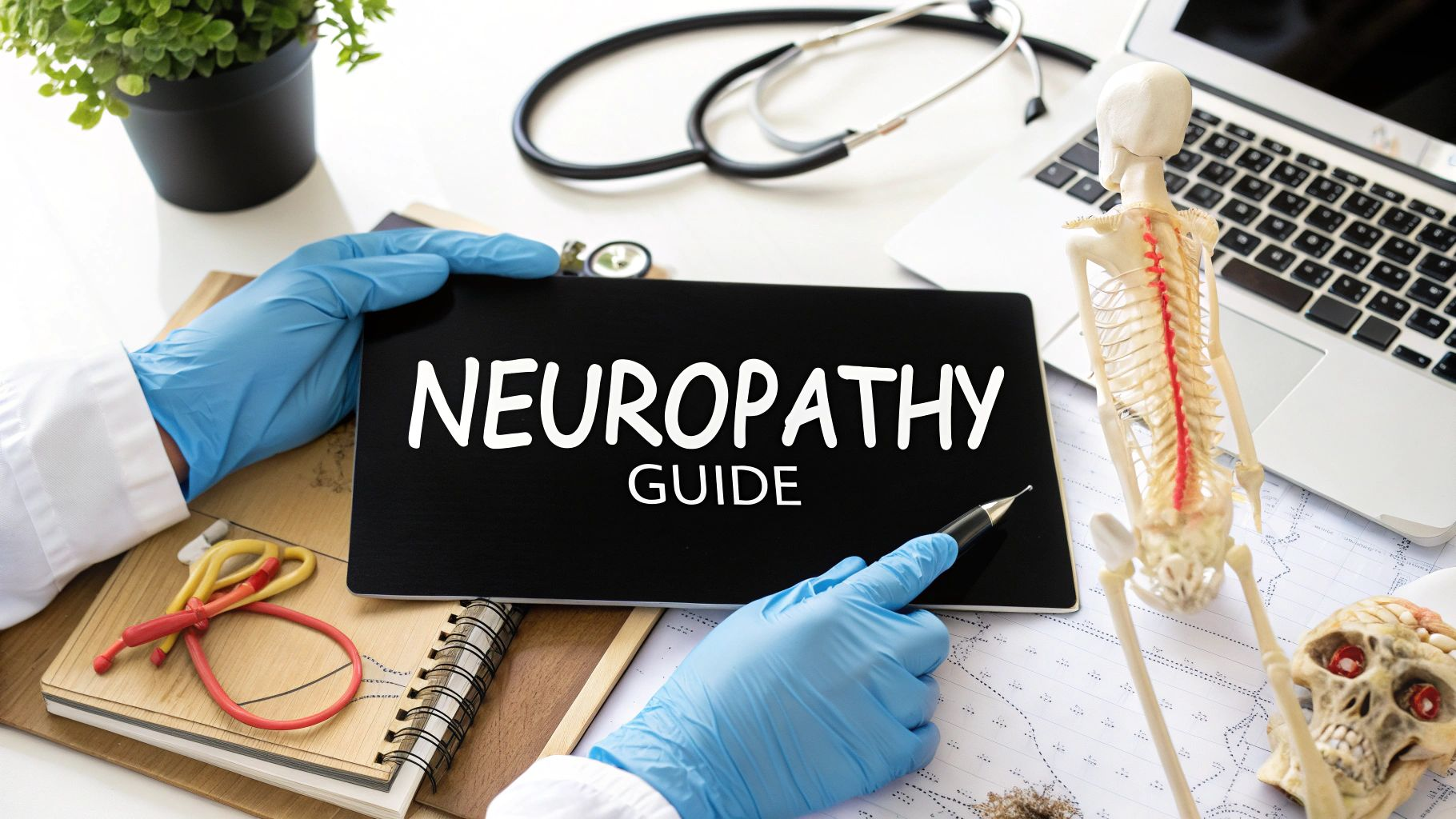
If you’ve ever felt a strange tingling, numbness, or a sharp, pins-and-needles pain for no apparent reason, you might be experiencing neuropathy. This often-confusing condition is more common than you’d think, and understanding what’s really going on is the first step toward finding relief.
What Is Neuropathy? A Guide For Mississippi Residents
Think of your nervous system as a massive, intricate network of electrical wiring. This network, known as the peripheral nervous system, is responsible for sending messages between your brain and spinal cord and the rest of your body—from your arms and legs to your fingertips and toes.
Neuropathy happens when this delicate wiring gets damaged. When the wires are frayed or broken, the signals can get crossed, delayed, or lost entirely.
This nerve damage can trigger a wide range of confusing and often painful sensations. For many people in Mississippi, it might start subtly, maybe as a bit of numbness or that "pins and needles" feeling in your feet. For others, it can feel like a sharp, burning pain that makes even the lightest touch from a bedsheet feel unbearable.
Understanding the Scope of Nerve Damage
Neuropathy isn't a single disease but rather a general term for damage to peripheral nerves. The impact it has on your life really depends on which nerves are affected and how severe the damage is.
This condition is surprisingly widespread. It affects an estimated 2.4% of the general population and that number jumps to nearly 8% in older adults.
Globally, the issue has seen a dramatic increase, especially linked to the rise in diabetes. The number of people with diabetic neuropathy more than tripled worldwide between 1990 and 2021, now affecting around 206 million individuals. Neurological conditions are now the leading cause of illness and disability around the globe. You can read the full analysis from the World Health Organization to see just how big the impact has become.
At its core, neuropathy is a communication breakdown. When nerves can't send reliable messages, the body can't respond correctly. This can affect everything from your sense of touch to your muscle control.
Types of Neuropathy and Their Effects
To get a better handle on the condition, it helps to know how it is classified. Neuropathy can be categorized based on how many nerves are involved or which type of nerve is damaged.
- Mononeuropathy: This is when a single peripheral nerve is damaged. A classic example is carpal tunnel syndrome, which affects a nerve in the wrist.
- Polyneuropathy: This is the most common form, affecting multiple nerves throughout the body. It often starts in the hands and feet and works its way inward.
For those in Mississippi experiencing these persistent symptoms, exploring every available management option is key. Many are now turning to complementary approaches to find relief. In fact, you can learn more about how medical marijuana may help neuropathy in our detailed guide.
Getting a grasp on the fundamentals of neuropathy is the first step toward recognizing the signs, seeking a proper diagnosis, and finding a path to a better quality of life.
Recognizing The Common Symptoms Of Neuropathy
Figuring out if you have neuropathy starts with listening to your body, but the signals it sends can be confusing. It’s not always a straightforward pain. Instead, you might notice strange sensations, like a foot that’s “fallen asleep” for no reason at all.
The experience is deeply personal, and it looks different for everyone. For some Mississippians, it begins with a stubborn tingle in their toes. For others, it’s a sudden, sharp jolt in their hands that feels like an electric shock. Recognizing these early warnings is the first step toward getting answers and finding the right care.
The infographic below gives a great visual overview of the different types of neuropathy, helping connect the dots between symptoms and their root causes.
This chart helps show how so many different conditions can lead to nerve damage, which is why getting a thorough diagnosis is so important.
The symptoms of neuropathy really depend on which nerves—sensory, motor, or autonomic—are being affected. To make it clearer, we've organized the most common signs into a table based on nerve type.
Common Neuropathy Symptoms by Nerve Type
| Nerve Type | Common Symptoms | What It Might Feel Like |
|---|---|---|
| Sensory | Tingling ("pins and needles"), numbness, burning or sharp pain, extreme sensitivity to touch (allodynia) | "My feet are constantly buzzing," or "Even the bedsheets hurt my legs at night." |
| Motor | Muscle weakness, loss of coordination or balance, muscle cramps or twitching, difficulty with fine motor skills | "I feel unsteady on my feet," or "My hands feel weak, and I'm dropping things more often." |
| Autonomic | Dizziness upon standing, excessive or reduced sweating, digestive issues (bloating, constipation), bladder control problems | "I get lightheaded every time I stand up too fast," or "My digestion just feels completely off for no reason." |
This breakdown can help you better identify what you're feeling and have a more productive conversation with your healthcare provider about what’s going on.
Sensory Symptoms: The Most Common Warnings
Your sensory nerves are your body's information messengers, carrying signals about touch, temperature, and pain. When they're damaged, those messages get scrambled, leading to some of the most classic neuropathy symptoms.
You might experience things like:
- Tingling or a "pins and needles" sensation, often starting in the hands or feet.
- Numbness, which can make it hard to feel injuries and lead to other problems.
- Burning, jabbing, or freezing pain that seems to come out of nowhere.
- Extreme sensitivity to touch (allodynia), where even light pressure from clothing is painful.
These symptoms aren't just annoying; they can seriously disrupt your life. One study found that a staggering 73.1% of patients with diabetic neuropathy reported a low quality of life. In fact, their risk of having a poor quality of life was nearly four times higher. You can discover more insights about these neuropathy findings and see just how significant the impact can be.
Motor Symptoms: Affecting Movement and Control
While sensory issues get more attention, neuropathy can also hit your motor nerves—the ones that tell your muscles what to do. When these signals get interrupted, you’ll start to notice physical challenges.
Motor symptoms can include:
- Muscle weakness, especially in the feet and legs, sometimes causing "foot drop."
- Loss of coordination and balance, leading to stumbling or feeling unsteady.
- Muscle cramps or twitching that happen without warning.
The loss of muscle control can creep up on you, making it easy to dismiss at first. But paying attention to subtle changes in your strength and balance is key to catching it early.
Autonomic Symptoms: The Hidden Disruptions
Your autonomic nervous system is the silent operator, managing all the things you don't think about, like your heart rate, digestion, and blood pressure. Damage here can cause confusing symptoms that don’t immediately scream "neuropathy."
Common autonomic symptoms include:
- Digestive problems like bloating, constipation, or diarrhea.
- Blood pressure drops that make you feel dizzy or lightheaded when you stand up.
- Sweating too much or not at all.
Because these symptoms overlap with so many other conditions, it's easy to miss the connection. For anyone in Mississippi dealing with a mix of these sensory, motor, or autonomic issues, it's crucial to talk to a healthcare provider about all of your symptoms. This is the only way to get an accurate diagnosis and explore every option for managing your health.
Investigating The Primary Causes Of Nerve Damage

To really get a handle on managing neuropathy, you first have to figure out what's causing the nerve damage. It’s a bit like detective work. The symptoms are your clues, and the goal is to track down the culprit that’s messing with your body’s internal communication lines. For most people, that trail leads back to one very common suspect.
The single biggest cause of peripheral neuropathy, here in Mississippi and across the U.S., is diabetes. In fact, it’s estimated that about half of all people with diabetes will eventually develop some kind of nerve damage.
This happens because high blood sugar is essentially toxic to your nerves over the long run. It damages the tiny blood vessels that are supposed to deliver oxygen and nutrients, slowly starving the nerves. Over time, that starvation leads to the tingling, numbness, and pain that often starts in the feet and hands. This specific condition, diabetic neuropathy, is why managing blood sugar is so incredibly important.
When Diabetes Is Not The Culprit
But what if diabetes isn't the issue? While it's the leading cause, it’s by no means the only one. Nerve damage can pop up from a whole host of other health conditions, each creating its own set of problems. Pinpointing these other potential causes is a critical step toward getting the right diagnosis.
Some of the other major players include:
- Autoimmune Diseases: Conditions like lupus, rheumatoid arthritis, or Guillain-Barré syndrome can trick the body’s immune system into attacking its own healthy nerve tissues.
- Vitamin Deficiencies: Nerves need the right fuel to function. A serious lack of B vitamins—especially B12, B6, and B1—can lead to significant nerve damage over time.
- Physical Injury or Trauma: A bad fall, a car accident, or even repetitive stress from a job can crush, sever, or damage nerves, causing neuropathy in a specific area.
- Infections: Certain viruses and bacteria are known to attack nerve tissue directly. Shingles, Lyme disease, and HIV are a few well-known examples.
- Toxins and Medications: Exposure to heavy metals like lead or mercury can be poisonous to nerves. The same goes for certain medications, particularly some powerful chemotherapy drugs used to treat cancer.
Understanding this wide range of possibilities is key, because neuropathy is a massive global health issue. Polyneuropathy symptoms affect about 7% of adults globally, making it one of the main reasons people see a neurologist. The financial burden is staggering, too. In the U.S. alone, nearly $11 billion is spent each year just on complications from diabetic polyneuropathy.
The Role of Alcohol and Inherited Conditions
Beyond diseases and injuries, lifestyle and genetics can also be part of the story. Chronic, heavy alcohol use is a direct cause of what’s known as alcoholic neuropathy. Alcohol itself is toxic to nerve tissue, and it often goes hand-in-hand with poor nutrition, leading to the vitamin deficiencies we just talked about. It's a double whammy for nerve health.
On top of that, some people are simply born with a genetic predisposition. Inherited neuropathies, like Charcot-Marie-Tooth disease, are passed down through families and directly impact how peripheral nerves are built and how they function. While these are less common, they are an important piece of the diagnostic puzzle for some individuals.
For many individuals, finding relief involves a multifaceted approach that addresses the underlying cause while managing the day-to-day symptoms. This often requires exploring various treatment avenues to improve quality of life.
The bottom line is that there’s no single, one-size-fits-all explanation for what causes neuropathy. For Mississippi residents trying to make sense of their symptoms, a thorough medical evaluation is the only way to pinpoint the root cause. This understanding is what paves the way for a truly effective management plan. For those looking into alternative ways to handle nerve pain, it's worth taking the time to explore what research says about marijuana for neuropathy treatment to see if it might be a good fit.
How Healthcare Providers Diagnose Neuropathy In Mississippi
Walking into a practitioner's office with confusing symptoms like tingling, numbness, or a strange, persistent pain can be unsettling. If you're a Mississippian trying to get to the bottom of what might be neuropathy, understanding how a diagnosis is approached can make a world of difference. When you know what to expect, you can have a much more productive conversation with your provider and take the mystery out of the process.
Think of it like a detective building a case. The investigation doesn't start with fancy equipment; it starts with a simple, thorough conversation.
The First Steps: A Conversation and a Physical Exam
Your journey to a diagnosis begins with a detailed discussion about your health. Your provider will want to know everything—when your symptoms started, what they feel like, and anything that seems to make them better or worse. They’ll also take a close look at your medical history for clues, like a history of diabetes, autoimmune issues, or even a family history of nerve disorders.
Next comes a hands-on physical and neurological exam. This is a critical step where your provider looks for the tell-tale signs of nerve damage.
During this exam, your provider will likely check your:
- Tendon reflexes, using a small rubber hammer on your knees and ankles to see if the nerve pathways are firing correctly.
- Muscle strength and tone, checking for any weakness or muscle loss that might point to motor nerve issues.
- Sensation, testing how you respond to light touch, different temperatures, or vibrations to see how your sensory nerves are functioning.
- Balance and coordination, often by just asking you to walk a straight line or perform a few simple movements.
This initial check-up provides a surprising amount of information. It helps narrow down the possibilities and points the healthcare provider toward the next logical steps.
A Closer Look: Unpacking Nerve Function Tests
If the physical exam strongly suggests neuropathy, your provider will likely order more specific tests to confirm it and figure out the type and extent of the nerve damage. These tests are designed to measure exactly how well your nerves are communicating.
You can think of these tests like an electrician checking the wiring in a house. They send small, controlled signals through the circuits to find out where the connection is weak, slow, or completely broken. It pinpoints where the problem really is.
The two most common tests you’ll hear about are:
- Nerve Conduction Study (NCS): This test measures how fast an electrical signal zips through a nerve. Small electrodes are placed on your skin, and a mild electrical pulse is sent down the nerve pathway. If that signal moves slower than it should, it often means the nerve's protective coating is damaged.
- Electromyography (EMG): Often done right after an NCS, an EMG looks at the health of your muscles and the nerve cells that tell them what to do. A very fine needle electrode is inserted into a muscle to record its electrical activity, both at rest and when you flex it. This helps determine if muscle weakness is coming from the nerve itself or a problem within the muscle.
Digging Deeper with Additional Tools
Sometimes, the story isn't complete even after nerve function tests. Depending on those results, your provider might need to dig deeper to find the root cause of the neuropathy. This could mean running blood tests to check for things like vitamin B12 deficiencies, diabetes, or markers of an autoimmune disorder.
In more complex cases, a provider might recommend a skin biopsy to count the number of nerve endings in a small sample of skin or order an MRI to look for a physical cause, like a pinched nerve or a tumor. For Mississippi residents, this methodical, step-by-step approach ensures all the bases are covered, leading to an accurate diagnosis and, most importantly, a clear path toward managing your symptoms.
Using Medical Marijuana For Neuropathy In Mississippi

For many Mississippians caught in the daily struggle of nerve pain, finding a way to manage it is everything. When the usual treatments don't bring enough relief, it makes sense to look at other legal, professionally-guided options. Medical marijuana is now a real consideration for people in Mississippi with qualifying conditions, offering a completely different way to handle the tough symptoms of neuropathy.
The idea isn't to reverse the nerve damage itself, but to improve daily life. Many patients find it helps dial down the sharp, burning sensations that define neuropathy. That relief can lead to better sleep, less anxiety, and a genuine improvement in quality of life, allowing people to get back to the activities they love.
Qualifying For Medical Marijuana In Mississippi
At first glance, navigating the state's medical marijuana program can seem a bit intimidating. But it's really a structured process designed to keep patients safe and ensure everything is compliant. The key is simply having a state-recognized qualifying condition.
Now, you won't find "neuropathy" listed by name. But the law was written to include broader categories that often cover it. Specifically, Mississippi law allows certification for a "chronic, terminal or debilitating disease or medical condition" that causes symptoms like chronic pain or muscle spasms. Since severe neuropathy almost always involves chronic pain, it fits perfectly under this umbrella, making countless neuropathy patients eligible.
It's a critical point to understand. You can learn more by checking out our guide on using medical marijuana for chronic pain.
The first, most important step is always talking to a certified practitioner. Only a qualified professional can look at your specific health situation and confirm if your neuropathy symptoms meet the state's requirements for a medical marijuana card.
A Step-By-Step Guide To Getting Your Card
Getting a medical marijuana card in Mississippi follows a clear set of steps. Knowing what to expect takes the guesswork out of the process and helps you prepare for your appointment and application. It's a straightforward path from your initial consultation to holding your card.
To make it even clearer, we've broken down the journey for Mississippi residents into a simple table.
Steps to Obtain a Medical Marijuana Card in Mississippi
| Step Number | Action | Key Consideration |
|---|---|---|
| Step 1 | Consult with a Certified Practitioner | Your evaluation must be done by a practitioner who is certified by the state to recommend medical marijuana. |
| Step 2 | Receive Your Medical Certification | If you qualify, the practitioner issues an official certification that confirms your debilitating medical condition. |
| Step 3 | Register with the State | You'll use that certification to apply for your card through the Mississippi Department of Health's online portal. |
| Step 4 | Obtain Your Card and Visit a Dispensary | Once approved, you get an electronic ID card that lets you legally buy from licensed dispensaries across the state. |
This regulated process ensures that patients get safe, guided access to the products that are right for their needs. For anyone wrestling with neuropathy, this pathway offers a legitimate and structured way to explore an alternative for relief—all under the care of a healthcare professional.
Practical Strategies For Managing Daily Life
Living with neuropathy isn't just about managing the pain—it’s about adapting your daily life to stay in control. When you first get a diagnosis, it can feel like a lot to take on. But focusing on small, practical strategies is the key to managing your symptoms and keeping your independence.
These consistent, day-to-day efforts really do add up, making a huge difference in your comfort and overall well-being. It all starts with building a personal toolkit of self-care routines that protect your nerves and prevent complications down the road.
Essential Self-Care For Neuropathy
When neuropathy affects your feet, diligent care is non-negotiable. Numbness can easily mask minor injuries like cuts or blisters, which can quickly become serious problems if you don't catch them early.
Think of these simple daily habits as your first line of defense:
- Daily Foot Checks: Make it a habit to inspect your feet every single day for cuts, sores, or redness. A mirror can be a huge help for seeing the bottoms of your feet.
- Protective Footwear: Always choose comfortable, well-fitting shoes. Walking barefoot is a risk you don’t need to take, as it’s an open invitation for injuries you might not feel.
- Keep Skin Healthy: Use a good lotion to prevent your skin from getting dry and cracked, but be sure to avoid putting it between your toes where moisture can cause issues.
Gentle movement is another incredibly powerful tool in your kit. Low-impact exercises like swimming, walking, or hopping on a stationary bike get your circulation going, build muscle to help with balance, and even trigger your body’s natural pain-fighting endorphins. Just remember to start slow and listen to your body.
Managing neuropathy is an active process. It’s not just about what you avoid, but also what you actively do each day to support your body's health and resilience.
Building Your Support System
Living with chronic pain isn’t just a physical battle; it’s an emotional one, too. Feeling understood is just as important as any physical treatment. That’s why connecting with friends, family, or even local Mississippi support groups can be a game-changer, giving you a safe space to share what you’re going through.
What you eat also plays a surprisingly big role. A diet packed with B vitamins, antioxidants, and anti-inflammatory foods can help nourish your nerves from the inside out. This means loading your plate with more leafy greens, colorful fruits, lean proteins, and healthy fats.
For those in Mississippi who are looking at every possible option for relief, it’s important to stay informed. Many people find that medical marijuana, when used under a healthcare professional's supervision, can become a valuable part of their management plan. To learn more about this approach, you can read our guide on how medical marijuana helps chronic pain in Mississippi.
By combining diligent self-care, gentle exercise, a supportive diet, and a strong network of people who have your back, you build a powerful framework for living a full life, even with the challenges of neuropathy.
We're Here to Answer Your Questions
When you're dealing with something as complex as neuropathy, it's natural to have questions. Trying to understand the symptoms, causes, and your options here in Mississippi can feel overwhelming, but getting clear, straightforward answers is the first step toward making a confident decision about your health.
We’ve gathered some of the most common questions we hear from folks looking for relief. Let's walk through them together.
What Are The First Signs Of Neuropathy I Should Watch For?
Neuropathy often sneaks up on you, starting so subtly that it’s easy to dismiss. The very first signs usually appear in the hands and feet.
You might notice a slow, gradual onset of numbness or a tingling, prickling feeling. Many people describe it as that “pins and needles” sensation you get when a limb falls asleep. Another early sign can be a sharp, jabbing, or burning pain that seems to come out of nowhere. For some, it’s an extreme sensitivity to touch, where even the light pressure from a bedsheet can feel painful. If these feelings persist, it's a good idea to talk to a healthcare provider, especially if you have other risk factors.
Is Nerve Damage From Neuropathy Reversible?
This is the big question, and the answer really depends on what’s causing the nerve damage and how far it has progressed.
In some cases, yes, the damage can be reversed. If your neuropathy is caused by something like a vitamin deficiency, fixing that root cause can give your nerves a chance to heal and regenerate over time.
But for nerve damage caused by a chronic condition, like long-standing diabetes, the changes are often permanent. In those situations, the goal of a management plan shifts. The focus becomes controlling your symptoms, stopping the damage from getting worse, and helping you get back to a better quality of life.
When possible, the aim is to treat the source of the nerve damage. But when that's not possible, the focus turns to managing the symptoms effectively to restore comfort and function.
Can I Get A Medical Marijuana Card For Neuropathy In Mississippi?
Yes, it’s a strong possibility. While Mississippi’s list of qualifying conditions doesn't say "neuropathy" by name, the law was written to cover the most challenging symptoms that come with it.
The law specifically includes any "chronic, terminal or debilitating disease or medical condition" that results in symptoms like
chronic pain. So, if your neuropathy is causing severe, persistent pain that gets in the way of your daily life, you may be eligible. The key is getting a formal diagnosis from a certified practitioner who can certify that your condition meets the state's criteria.
At
Pause Pain and Wellness, our local Mississippi healthcare providers are here to help you make sense of it all. We offer compassionate guidance and can help determine if you qualify for a medical marijuana card to manage your neuropathy symptoms. Visit us at
https://pausethepain.com to schedule a consultation and take the first step toward relief.