Mental Health Services Without Insurance Mississippi Guide
Finding mental health support without insurance can feel like an impossible task, but in Mississippi, affordable and compassionate care is closer than you think. The key is knowing where to look.
Your best starting points are often state-funded Community Mental Health Centers (CMHCs), non-profit groups that offer sliding-scale fees, and even some surprisingly accessible telehealth platforms. This guide is designed to give you clear, actionable steps to get the help you need, right now.
Finding Your Starting Point for Care in Mississippi
When you’re already dealing with mental health challenges, the last thing you need is the stress of figuring out how to pay for care. That financial roadblock is exactly what stops many people from even trying to get help, creating a frustrating cycle of untreated conditions and mounting pressure.
But here’s the good news: Mississippi has a support structure built specifically for residents in this exact situation. Many people just don't know it exists.
The first step is simply understanding what's available. State-funded and non-profit options were created to bridge the gap for people without insurance. Most of these services work on a sliding-scale basis, which just means the cost is adjusted to fit your income. You pay what you can actually afford.
The data below shows that while out-of-pocket costs can be a real concern nationwide, many providers are set up to offer affordable alternatives.
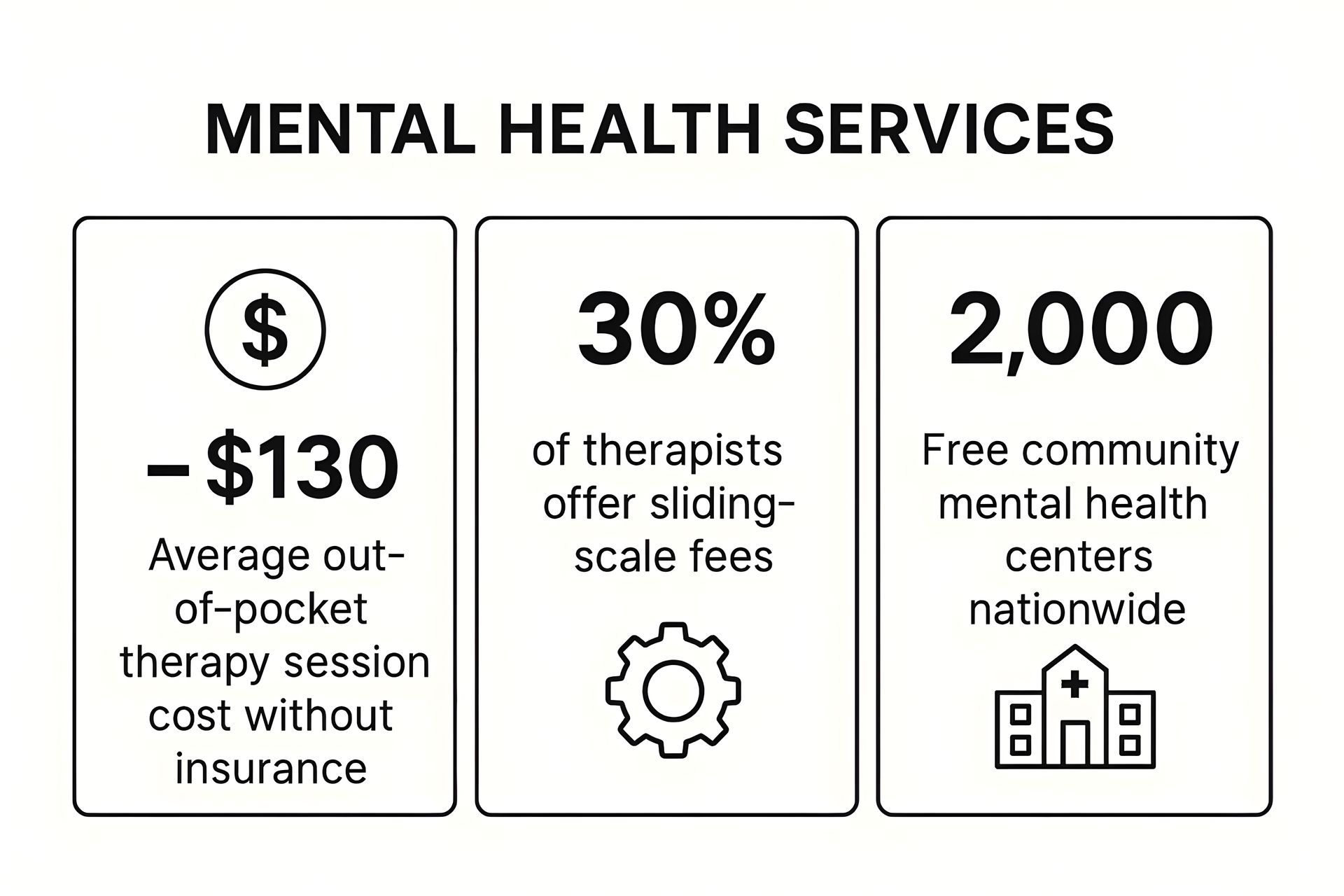
This isn't just a national trend; these options are available right here in our communities.
Navigating the Uninsured Care System
The number of people who need mental health support without having insurance is a growing reality. Projections from KFF.org suggest that by 2034, policy shifts could lead to 8.2 million more people losing their insurance, with over a million of them having a mental health diagnosis. This makes it more critical than ever to know how to find care outside the traditional insurance system.
The key is to shift your focus from what you don't have (insurance) to what you can access (community resources). Mississippi's network of CMHCs and non-profits is designed to be your entry point into the system.
To help you see the landscape clearly, here’s a quick overview of the main options available in Mississippi for uninsured residents seeking mental health care.
Mississippi Mental Health Options for the Uninsured at a Glance
| Service Type | Typical Cost Structure | Best For | How to Find Them |
|---|---|---|---|
| Community Mental Health Centers (CMHCs) | Sliding scale based on income; often very low-cost or free. | Comprehensive care, including therapy, psychiatry, and crisis services. | Mississippi Department of Mental Health website; local county resource lists. |
| Non-Profit Organizations | Sliding scale fees; some offer grant-funded free services. | Individual counseling, support groups, and specialized therapy. | NAMI Mississippi, local United Way chapters, and online searches for "non-profit counseling near me." |
| Telehealth Platforms | Subscription models or per-session fees, often with lower-cost tiers. | Convenient access to therapy from home, flexible scheduling | Reputable online therapy directories and platforms that list their self-pay rates upfront. |
| University Training Clinics | Very low-cost sessions with graduate students under supervision. | Affordable individual therapy for less acute, non-crisis situations. | Psychology or counseling departments at major Mississippi universities. |
This table should give you a solid starting point for figuring out which path makes the most sense for your situation and budget.
As you explore all the avenues, it's worth noting that some people also look into alternative approaches as part of a wider wellness plan. For example, for certain qualifying conditions in Mississippi, obtaining a medical Marijuana card can offer benefits. Understanding the full scope of what's out there is a huge part of finding the right mental health treatment without insurance.
Your Guide to Community Mental Health Centers
For Mississippi residents trying to find mental health services without insurance, the state's network of Community Mental Health Centers (CMHCs) is the single most important resource you need to know about. These centers are the bedrock of public mental healthcare in our state. They were established specifically to provide accessible and affordable support to every resident, no matter what their financial situation looks like.
Think of your regional CMHC as a central hub for care. They offer a huge range of services all under one roof—everything from individual and group therapy to crisis intervention and case management. Their primary mission is to serve the community, which means they are built to help you navigate the system and get the support you need, even if you’re starting from square one.
This community-focused approach is so important, especially when you look at the bigger picture. The World Health Organization has pointed out that massive accessibility gaps leave many without care. In some countries, up to
90% of people with severe mental health conditions get no treatment at all. Mississippi's CMHCs are a direct countermeasure to this problem. You can
read the full report on global mental health policy to get a sense of just how big this issue really is.
How to Connect With Your Local CMHC
Finding your designated center is pretty straightforward. Each of Mississippi's 82 counties is assigned to a specific regional CMHC. The easiest way to find yours is by searching online for "Mississippi Department of Mental Health" or by calling a local health department and asking for a referral.
Once you’ve found your center, the first move is to call their intake line. Be ready to answer some basic questions about your situation and your income. This isn't to be nosy—this information helps them figure out if you're eligible for a sliding-scale fee, making sure your costs are based on what you can genuinely afford.
Real-World Scenario: Picture someone living in a rural Mississippi county, feeling completely overwhelmed by anxiety and having no idea where to turn. They find their local CMHC online and make one phone call. The intake coordinator walks them through the process, schedules an initial assessment, and explains that the cost will be minimal because of their income. Within a week, they have a care plan and their first therapy session is on the books.
This is exactly how the system is designed to work. It's a direct path to getting professional help. For those who want to learn more about different therapeutic approaches for specific conditions, you can check out our guide on the best therapy for anxiety disorders.
Tapping Into Sliding-Scale and Non-Profit Services
Beyond the state-funded system, Mississippi has a strong network of private therapists and non-profit groups committed to making mental health care available to everyone, regardless of insurance status. The key to unlocking these resources is something called a sliding-scale fee.
It’s a straightforward concept: the amount you pay for a therapy session is adjusted based on your income. This isn't a special favor; it's a standard, respectful way that many providers structure their fees to ensure that finances aren't a barrier to getting help. You don't need an insurance card to qualify—you just have to ask.

Many of us feel awkward talking about money, but therapists who offer a sliding scale expect these conversations. They want you to ask. Remember, you have to be your own best advocate here, and simply asking is the first step toward finding care you can actually afford.
How to Find Providers and Start the Conversation
Finding these therapists often starts with a simple online search. Try terms like "sliding-scale therapy Mississippi" or "non-profit counseling near me." Once you have a short list of potential providers, it's time to pick up the phone. A little preparation can make this call feel much less intimidating.
When you call, you can keep it simple and direct. Here’s a script that works well:
- The Opener: "Hello, I'm looking for a new therapist and saw your practice online. I don't have insurance right now and was wondering if you offer a sliding-scale fee or a self-pay discount?"
- The Follow-Up: "That's great to hear. Could you tell me a bit about how your sliding scale works? What kind of information would I need to provide to figure out my rate?"
This approach is professional and gets right to the point. Most office managers will be happy to walk you through their policies and let you know if you need to bring any documentation, like a recent pay stub.
Remember, you aren't asking for a handout. You're asking about a payment structure that the therapist intentionally created to serve people in the community just like you.
There are a couple of other great resources people often forget about. University psychology departments are one. Major universities in Mississippi with psychology or counseling programs often run their own clinics. In these settings, graduate students provide excellent, low-cost therapy while being closely supervised by their licensed professors. It's a fantastic way to get high-quality, evidence-based care for a fraction of what you'd typically pay.
Faith-based organizations can also be a valuable option. Many churches and religious groups offer professional counseling services on a sliding scale, providing another solid avenue for affordable support.
Using Telehealth for Convenient and Affordable Support
Getting to a therapist's office just isn't practical for everyone, especially in a state like Mississippi with so many rural communities. This is where telehealth and digital mental health platforms have become a game-changer. They completely bridge that physical distance, bringing support right into your home.
The best part? These services are often far more affordable than traditional in-person visits, particularly if you're paying without insurance.
Online options have exploded, giving you everything from full-service therapy platforms and subscription counseling apps to free, confidential crisis text lines. This variety means you can find a level of support that fits exactly what you need right now, without the added stress of travel time and costs. Many of these platforms even offer financial aid or have special pricing tiers for people paying out-of-pocket.
Finding Credible Online Care
While the convenience is a huge plus, you have to do your homework to make sure you're getting quality care. Before signing up for anything, look for platforms that are upfront about the credentials of their counselors and therapists. Reputable services are transparent about their pricing, privacy policies, and who they have on staff.
Let's be honest, cost is a massive barrier for most people. Recent data from 2023 really drives this home: among people with moderate depression, a staggering 59.2% of uninsured individuals didn't get care because they couldn't afford it. This is precisely why accessible options like telehealth are so vital.
Finding the right digital platform can feel like a lifeline. It makes consistent mental health support a realistic goal rather than a luxury and puts the control back in your hands, allowing you to get help on your own terms.
Taking care of your mental well-being means exploring every avenue available. For some Mississippians, this might include state-regulated programs. For instance, certain qualifying conditions may make someone eligible for a medical Marijuana card, which can be part of a much broader wellness strategy.
Medical Marijuana in Mississippi: What You Need to Know
While therapy and counseling are the cornerstones of mental health care, some Mississippians are looking at state-regulated programs to complement their wellness plans, especially when navigating care without insurance. One of these is Mississippi’s medical Marijuana program, which can offer an alternative path to relief for people with specific qualifying conditions that often come with heavy mental and emotional burdens.

It’s crucial to understand right away that this program is very specific. Conditions like generalized anxiety or major depression are not currently on the list of standalone qualifying diagnoses in Mississippi. The program is built around debilitating medical conditions defined by state law.
That said, many of these qualifying conditions can bring on significant mental and emotional distress. For some patients, medical Marijuana has been reported to help reduce anxiety or improve sleep, which can be a game-changer for overall well-being.
Qualifying Conditions and the Official Process
The state keeps a precise list of health issues that can make a resident eligible for a medical Marijuana card. To get started, you must be diagnosed by a certified practitioner who can properly review your medical history and symptoms.
- Examples of Qualifying Conditions: The list is specific and includes conditions like cancer, Parkinson's disease, PTSD, and other chronic issues that cause severe symptoms like intractable pain or seizures.
- Practitioner Consultation: It all starts with an official consultation. A certified practitioner is the only one who can legally determine if your medical situation meets the criteria for the program.
Getting a medical card isn’t like picking something up over the counter. It's a structured, official process built to ensure patient safety and compliance with Mississippi state law. It all hinges on a formal medical certification from an approved practitioner based on a qualifying diagnosis.
The Mississippi Medical Marijuana Program was created to give patients with serious health conditions a regulated and safe option. For those who do qualify, it can be a valuable part of managing their symptoms and improving their quality of life, working alongside other forms of care they're receiving. Knowing the facts helps you make an informed decision about all the health resources available to you in Mississippi.
Questions on Uninsured Mental Health Care
Trying to figure out the healthcare system without insurance can feel overwhelming, and it's natural to have a lot of questions. This section is designed to give you direct, practical answers to some of the most common things people ask when looking for mental health services in Mississippi without insurance.
Finding support shouldn't be a puzzle. Knowing what to ask—and who to ask—is a huge part of feeling empowered in your search for care.
Your First Steps and Financial Questions
What is the absolute first step if I have no insurance and need help in Mississippi?
Your best first move is to contact your regional Community Mental Health Center (CMHC). Mississippi’s system is set up so that every single county is served by a specific CMHC, and they are required to provide care regardless of your ability to pay.
To find your local center, just search online for "Mississippi Community Mental Health Center" plus the name of your county. Call their intake line; they are set up to guide you from there.
How do I ask a therapist about a sliding-scale fee in Mississippi?
A sliding-scale fee, which adjusts the cost of therapy based on your income, is a very common practice. Don't be hesitant to ask about it.
When you call a therapist's office, you can say something simple like, "I'm interested in your services but don't have insurance. Do you offer a sliding-scale fee or a self-pay rate?" Most offices are completely prepared for this question. Just be ready to provide proof of income, like a recent pay stub, so they can determine your rate.
For many, online platforms have become a solid alternative. If you're wondering if that approach might work for you, you can learn more about if online treatment for depression is right for me and see how it compares.
Immediate Support and Alternative Options
Are there free crisis support options available right now in Mississippi?
Yes, absolutely. For immediate, urgent support, you can call or text 988 anytime. This connects you to the National Suicide & Crisis Lifeline, which is completely free, confidential, and available 24/7.
Additionally, Mississippi's regional CMHCs operate their own local crisis lines, which you can find on their websites. These are excellent resources for immediate help from professionals who are familiar with local services.
Remember, reaching out for crisis support is a sign of strength. These services are in place specifically to provide a safe, non-judgmental space for anyone who needs it, at any time of day.
Can I get a medical marijuana card for anxiety in Mississippi?
Currently, generalized anxiety and depression are not explicitly listed as standalone qualifying conditions in Mississippi's medical Marijuana program.
However, the law
does cover conditions like
PTSD and other "debilitating medical conditions" that cause severe symptoms. A state-certified practitioner is the only one who can determine if your specific symptoms and medical history meet the legal criteria. An official consultation is required to assess your eligibility.
At Pause Pain and Wellness, we provide clear guidance and support for Mississippians exploring their wellness options. If you're considering how a medical Marijuana card or other personalized treatments might fit into your health plan, we are here to help. Find out more about our services at https://pausethepain.com.