Can I Get a Medical Card for Anxiety in Mississippi

Navigating Mississippi's medical marijuana laws can feel tricky, especially when you're dealing with something as personal as anxiety. Let’s clear things up right away: in Mississippi, you cannot get a medical card for anxiety as a standalone diagnosis.
But that’s not the end of the story. If your anxiety is a tough, debilitating symptom tied to another approved condition—like chronic pain or PTSD—you may still find relief through the state's program.
Anxiety and Mississippi's Medical Marijuana Program

The key to eligibility is understanding the difference between a qualifying condition and a debilitating symptom. While anxiety disorders aren't on Mississippi's official list of qualifying medical conditions, many conditions that are on the list often bring severe anxiety along for the ride.
This connection is what matters most. For example, people living with chronic pain often deal with intense anxiety stemming from their physical discomfort and limitations. In the same way, Post-Traumatic Stress Disorder (PTSD), which is a qualifying condition, has anxiety as one of its primary symptoms.
Understanding the Symptom-Based Approach
Your eligibility really comes down to having a certified practitioner document how your anxiety is directly connected to an approved primary diagnosis. This ensures everything stays within Mississippi's legal lines while still addressing the very real symptoms you're facing every day.
The focus for patients in Mississippi should be on how anxiety impacts and worsens their primary qualifying condition. This perspective is crucial for a successful consultation and evaluation.
The goal is to offer a safe, regulated path for people looking for alternative ways to manage their health. Many patients find that when they treat their main condition with medical marijuana, they experience the positive side effect of reducing their anxiety, too. You can learn more about how using cannabis for anxiety can help reduce symptoms.
Here's a quick summary of how anxiety symptoms fit into the bigger picture in Mississippi.
Eligibility for Anxiety Symptoms in Mississippi at a Glance
| Eligibility Factor | What This Means for Mississippi Residents |
|---|---|
| Primary Diagnosis Required | Anxiety alone is not a qualifying condition. |
| Symptom-Based Qualification | Anxiety must be a debilitating symptom of an approved primary condition (e.g., PTSD, chronic pain). |
| Practitioner Certification | A certified practitioner must document the link between your primary condition and your anxiety. |
| Focus on Overall Impact | The evaluation centers on how anxiety worsens your qualifying condition and affects your daily life. |
Ultimately, a practitioner needs to see this clear link to provide a certification. When you come in for a consultation, be ready to talk about how your anxiety shows up as part of your main health issue. This ensures your recommendation is fully compliant with state law while focusing on what really matters: your overall well-being and symptom relief.
Getting to Know Mississippi's Qualifying Conditions

Before you can figure out if you can get a medical card for anxiety symptoms in Mississippi, you first have to get familiar with the state's official list of qualifying conditions. The law is very specific here, and your eligibility really comes down to having one of these primary diagnoses on record from a certified practitioner.
This legal framework is there for a reason—to make sure medical marijuana is available for people facing serious health battles. It's not just a random list of illnesses. Think of it as a clear pathway for patients to find relief from the kinds of debilitating symptoms that can turn daily life upside down. Getting a handle on this list is your first real step toward having a productive conversation.
How Anxiety Fits In with Approved Conditions
Now, here’s a common point of confusion: anxiety itself isn't a standalone qualifying condition in Mississippi. However, severe anxiety is an incredibly common—and draining—symptom of many diagnoses that are on the list. A practitioner can absolutely certify you if your anxiety is clearly tied to an approved primary condition.
Here are a few of the state-approved conditions where anxiety is often a major component:
- Cancer: It's completely understandable that patients experience significant anxiety related to their diagnosis, the rigors of treatment, and what the future holds.
- Post-Traumatic Stress Disorder (PTSD): Anxiety is a core, defining symptom of PTSD. For many people, this creates a direct and clear link for getting a medical card.
- Chronic Pain: Trying to live with severe, unrelenting pain is a recipe for heightened anxiety and stress, which takes a huge toll on a person's overall well-being.
- Parkinson's Disease: This neurodegenerative disorder brings on both motor and non-motor symptoms, and significant anxiety is a frequent and challenging part of the diagnosis.
- Multiple Sclerosis (MS): The unpredictable nature of MS and its physical toll often lead to chronic anxiety for those living with the condition.
The most important thing to remember is this: your primary diagnosis has to be on the state's official list. Once that's established, the conversation shifts to how symptoms like anxiety are connected to that condition and impacting your quality of life.
By starting with your primary, state-approved condition, you can build a strong and clear case for how medical marijuana could help you manage the anxiety that comes with it. This approach keeps you aligned with Mississippi's regulations and puts you on the right path toward getting the relief you need.
Getting Your Medical Card: A Straightforward Guide
Getting your medical marijuana card in Mississippi is a clear, state-regulated process. It can seem like a lot at first glance, but when you break it down, it's actually pretty manageable. The whole journey really kicks off with preparing for your consultation with a certified practitioner.
That first meeting is the most important part. Your main job here is to pull together any and all medical records that show your qualifying condition. This could be anything from diagnostic reports and treatment histories to notes explaining how your symptoms—like anxiety—are impacting your day-to-day life. Having all this ready to go helps the practitioner make a quick and accurate assessment.
From Your Consultation to State Certification
Once the practitioner looks over your records and confirms you're eligible, they'll issue a written certification. Think of this document as your official green light to move forward with the state. Just remember, the certification has to tie your symptoms directly back to one of Mississippi’s approved primary conditions.
With that certification in hand, the next part is just paperwork. You’ll need to fill out an online application directly with the Mississippi State Department of Health. This is where you want to be extra careful—double-check every field before you hit submit. Simple typos can cause annoying delays. For a more detailed walkthrough, you can check out our guide on how to apply for a medical card.
This infographic gives you a quick visual of the three main phases of your journey.
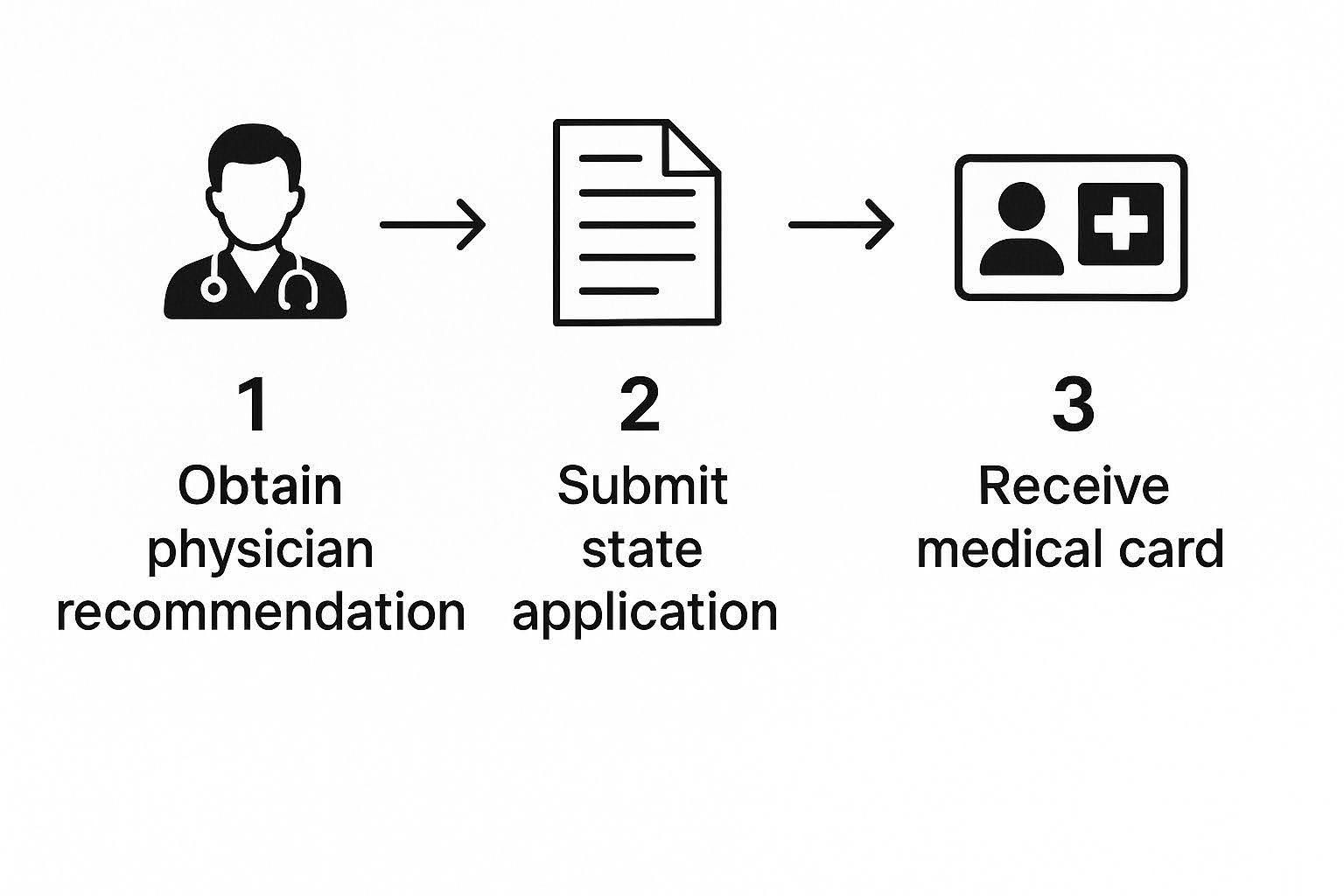
As you can see, once you have the practitioner's recommendation, the state application is the final hurdle.
Receiving Your Medical Card
After your application is submitted, the state takes it from there. The Mississippi Department of Health usually processes applications within 30 days. Once you’re approved, they’ll issue your electronic ID card within five business days.
This card is your key to legally purchasing medical marijuana from any licensed dispensary in Mississippi, letting you finally start your state-approved treatment plan. The entire system is built to be efficient, ensuring patients who qualify can get the relief they need without jumping through endless hoops.
The Growing Need for Accessible Anxiety Treatments
To really get why so many people are asking if they can get a medical card for anxiety, you have to look at the bigger picture. This isn't just a personal struggle—it's a massive public health issue that affects millions in Mississippi and beyond. The need for effective, accessible treatments has never been more urgent.
Just how big is this issue? In 2019, anxiety disorders impacted an estimated 301 million people worldwide, cementing them as the most common mental health condition on the planet. The pandemic only poured fuel on the fire, causing a sharp spike in cases and revealing major gaps in traditional care.
It's no surprise, then, that people are looking for other options. When conventional methods don't bring the relief they need, it's only natural to explore other state-approved avenues for managing the weight of daily symptoms.
A Shift Toward More Options
The Mississippi Medical Marijuana Program is a direct response to this need, giving patients more say in their own wellness journey. It's a recognition that tough, debilitating conditions often demand more than a one-size-fits-all solution.
For many, medical Marijuana isn't about replacing traditional care—it's about complementing it. Think of it as another tool in the toolbox for managing symptoms that can seriously impact your quality of life.
This patient-first mindset is crucial. When you're grappling with a qualifying condition, the anxiety that comes with it can be just as difficult to handle as the primary diagnosis. Pairing state-regulated programs with research into the best therapy for anxiety disorders can create a much stronger, more complete support system.
The goal is simple: provide safe, accessible, and effective paths to relief. It's about empowering you to find what truly works for your health needs, all within Mississippi's legal framework.
Why Access to Mental Health Care Is a Global Challenge
If you're struggling to find good, accessible mental health care, you're not alone. This isn't just a local Mississippi issue—it's a problem that reaches every corner of the globe. It's more than just an individual's battle; it's a massive public health concern that carries heavy personal and economic costs when people can't get the help they need.
The World Health Organization estimates that over one billion people are living with a mental health condition right now. These conditions cause immense personal suffering, and they're also the second-leading cause of long-term disability worldwide, putting a huge strain on families and our healthcare systems.
A Worldwide Shift Toward Better Options
The sheer scale of this problem is forcing governments and health organizations to rethink old approaches. There's a growing understanding that we have to give patients more state-approved, effective treatment options.
The global conversation is finally changing. We're starting to treat mental healthcare not as a luxury, but as a fundamental human right. This mindset pushes us to explore every safe, regulated path to improve a patient's quality of life.
This is exactly where Mississippi's medical marijuana program fits in. By creating a regulated pathway for patients with qualifying conditions, the state is acknowledging the need for a wider variety of care options to help people manage debilitating symptoms.
When you consider getting a medical card, you’re not just making a choice for yourself. You’re taking part in a much larger movement that prioritizes patient access and recognizes medical marijuana as a legitimate part of modern health strategy.
Got Questions About Anxiety and Medical Cards in Mississippi? We've Got Answers.
Even after you've looked over the rules, it's completely normal to have a few more questions pop up. When you're trying to figure out if you can get a medical card for anxiety in Mississippi, the small details are what really matter. This section tackles some of the most common questions we hear from patients just like you.
Our goal is to arm you with clear, straightforward information. Feeling prepared for your consultation makes the whole process smoother and a lot less stressful.
Can I Qualify If My Only Diagnosis Is Anxiety?
This is a big one. The short answer is no, an anxiety disorder by itself isn't on Mississippi's official list of qualifying conditions.
Here's the crucial part: to be eligible, a certified practitioner must document that your anxiety is a debilitating symptom of another approved condition you have. Think of things like PTSD, chronic pain, or cancer. The state’s focus is always on that primary, qualifying diagnosis first.
What Medical Records Should I Bring To My Consultation?
While not required, it’s always a smart move to bring any records that back up your primary qualifying condition. This helps paint a complete picture for the practitioner.
Helpful documents include:
- Diagnostic reports from other medical professionals
- A list of current and past treatments you’ve tried (especially those that didn't work)
- Your prescription history
- Any personal notes detailing how your symptoms interfere with your daily life
These records give the practitioner a full understanding of your health challenges, which helps them accurately evaluate your eligibility for the program.
Keep in mind, solid documentation is your best friend in this process. It creates a clear, factual basis for the practitioner’s certification and helps ensure your application lines up perfectly with Mississippi's requirements.
How Long Does The Mississippi Application Process Take?
The timeline is actually pretty straightforward. Once a registered practitioner issues your certification, the Mississippi Department of Health typically processes online applications within 30 days.
After your application gets the green light, you should receive your electronic ID card within five business days. You can use that digital card at any licensed dispensary in the state. Getting your paperwork in order ahead of time is the best way to avoid any delays. While you wait, exploring some of the top anxiety management strategies can also be a helpful step.
Are There Limits On How Much Medical Marijuana I Can Buy?
Yes, Mississippi definitely regulates how much medical marijuana a patient can buy. This is all about ensuring safe and responsible use.
The state uses a tracking system called
Medical Marijuana Equivalency Units (MCEUs). Your practitioner will recommend a dosage, and there are specific legal limits on what you can purchase over
7-day and
30-day periods.
At Pause Pain & Wellness, we provide the guidance and support you need to navigate Mississippi's medical marijuana program with confidence.
Schedule your consultation today.