Seizure and Marijuana Medical Insights for Mississippi
For anyone in Mississippi living with a seizure disorder, the search for a treatment that truly works can feel like a full-time job. It's a constant, often frustrating, process. So when conversations about seizure and marijuana come up, it’s natural to wonder if this could be a real source of relief. The simple answer is yes—certain compounds in medical marijuana are showing incredible promise for calming the chaotic brain activity that triggers seizures, but it's a path that requires expert medical guidance.
The Relationship Between Seizures and Medical Marijuana

When you're trying to manage a seizure disorder, stability is everything. Here in Mississippi, the legalization of medical marijuana has sparked new hope for patients looking for alternative ways to find that stability. To really get what’s happening, we need to look at a powerful network in our own bodies: the endocannabinoid system (ECS).
Think of the ECS as your body's master regulator. It’s constantly working behind the scenes to keep everything in balance, or what scientists call homeostasis . This system helps manage your mood, sleep, appetite, and, crucially, your brain's electrical activity. In a seizure disorder, that balance is gone. Your brain is dealing with an electrical storm of disorganized signals.
How Medical Marijuana Can Influence Brain Harmony
This is where medical marijuana comes in. The plant contains compounds called cannabinoids , which can interact directly with your ECS to help restore order. The two most important cannabinoids you'll hear about are CBD (cannabidiol) and THC (tetrahydrocannabinol), and they have very different jobs.
CBD is the compound that’s gotten the most attention for seizure management, and for good reason. It's non-psychoactive, meaning it won’t make you feel "high." Instead, it’s thought to help calm the excessive electrical firing in the brain, which can lead to fewer, less severe seizures for many people. It’s like a gentle hand helping to dial down the noise.
THC, on the other hand, is the compound that does cause a "high." While it can have therapeutic benefits, its role in seizure control is much more complicated. For some, it might help. For others, it could actually lower their seizure threshold, making a seizure more likely.
The key takeaway is that the effectiveness and safety of medical marijuana for seizures come down to the specific cannabinoid profile. A product high in CBD and low in THC is almost always the starting point for seizure management.
To better understand the differences between these two compounds and why a specific, medically guided choice is so important, let's break it down.
CBD vs THC: A Quick Guide for Seizure Management
| Feature | CBD (Cannabidiol) | THC (Tetrahydrocannabinol) |
|---|---|---|
| Primary Role | The main focus for seizure control; has demonstrated anti-seizure properties in clinical studies. | Not a primary anti-seizure agent; its effects can be unpredictable and vary widely between individuals. |
| Psychoactivity | No, it does not produce a "high." | Yes, this is the compound responsible for the euphoric and intoxicating effects of marijuana. |
| Common Medical Approach | Often recommended in high-CBD, low-THC formulations to maximize therapeutic effects and minimize side effects. | Typically used in very small amounts, if at all, for seizure patients. High doses may increase seizure risk for some. |
| FDA-Approved Medication | Yes, a purified form of CBD ( Epidiolex® ) is FDA-approved for treating specific rare seizure disorders. | No FDA-approved THC-based medication exists specifically for seizures. |
This comparison makes it clear that not all medical cannabis is created equal, especially when it comes to something as delicate as brain health.
The Importance of a Guided Approach
This is not a journey you should ever take alone. Using medical marijuana for seizure control isn't as simple as picking a product off the shelf. Everything matters: the dose, the ratio of CBD to THC, and how it might interact with the anti-seizure medications you're already taking.
For anyone in Mississippi, the first and most important step is getting your medical marijuana card. This ensures you're following state law, but more importantly, it puts your care in the hands of a professional who can design a safe, structured treatment plan. Trying to self-medicate with products from the recreational market is a huge risk—you have no guarantee of purity or potency, which could have devastating consequences for seizure control.
You can learn more in our detailed article about how medical cannabis may help with epilepsy.
How Cannabinoids Interact with Brain Activity

To really grasp how marijuana might help with seizures, it helps to picture the brain as a complex electrical grid. For someone with a seizure disorder, that grid is prone to overloads—sudden, chaotic bursts of energy.
This state is called neuronal hyperexcitability . It’s as if the brain’s volume knob gets cranked all the way up, leading to a seizure. The goal of nearly all seizure treatments is to find a way to turn that volume back down. This is where cannabinoids, the active compounds in marijuana, enter the picture, interacting with our body’s own regulatory network to restore balance.
The Calming Effect of CBD on the Brain
When we talk about medical marijuana for seizures, the conversation almost always starts with Cannabidiol, or CBD. It’s the cannabinoid that has shown the most promise, largely because it has anticonvulsant properties but is completely non-psychoactive.
A good way to think about it is this: if a seizure is like a fire starting in the brain's wiring, CBD acts like a fire suppressant. It works to calm the storm, helping to prevent the electrical chaos from spreading. It appears to do this in a couple of key ways:
- Balancing Brain Chemicals: CBD can influence the levels of neurotransmitters, the chemical messengers that either excite or inhibit brain cell activity, encouraging a state of calm.
- Engaging Multiple Receptors: It interacts with a variety of receptors in the brain, including some outside the endocannabinoid system that are known to play a role in controlling seizure thresholds.
This is why, for many patients in Mississippi, high-CBD products are the primary focus. They offer the potential to manage symptoms without the high associated with THC, making the connection between seizure and marijuana a viable therapeutic avenue.
Cannabinoids like CBD are believed to help "turn down" the excessive brain activity that leads to seizures by interacting with the systems that control neuronal excitability. This calming influence is the primary reason it's a focal point of medical marijuana research for seizure disorders.
The Complex Role of THC and Brain Activity
Now, what about THC? Tetrahydrocannabinol, the compound that causes marijuana’s "high," has a much more complicated relationship with seizure activity. Its impact on the brain is less predictable and can vary dramatically from person to person.
In some cases, a small, carefully managed dose of THC combined with CBD might enhance the overall therapeutic outcome. This is often called the "entourage effect." For many others, however, THC can do more harm than good. It has the potential to disrupt the brain's delicate electrical balance and may actually lower the seizure threshold, making a seizure more likely.
This is precisely why medical guidance isn't just recommended—it's essential. A knowledgeable provider can help figure out if any amount of THC is safe or beneficial for your unique body chemistry and condition. Trying to self-medicate with high-THC products from an unregulated market is a gamble that could easily worsen the very condition you hope to treat.
Of course, the interaction between cannabinoids is just one part of the story. The marijuana plant also contains aromatic compounds called terpenes, which add another layer to its effects. You can get a better sense of how they work by exploring our guide on what terpenes are. Understanding this science gives patients in Mississippi a clear view of both the potential benefits and the critical need for professional oversight.
Understanding the Positive Impact of Regulated Medical Marijuana
When you’re looking for options to manage seizures, safety and precision are everything. While medical marijuana has shown real promise, where you get it from matters immensely. It’s crucial for anyone in Mississippi considering this path to understand the benefits of using regulated medical marijuana from a licensed dispensary—the difference between a tested, legal product and a substance from an unknown source is night and day.
Using a Mississippi medical marijuana card provides access to a system built on quality control, lab reports, and guarantees about what you're actually getting. This certainty is critical for creating a safe and effective treatment plan, ensuring you can manage seizure control and protect your overall health.
The Benefit of Consistent Potency
One of the biggest advantages of regulated medical marijuana is its predictable strength. The product you buy from a licensed dispensary is lab-tested, so you know it is as potent as the label claims and has a consistent chemical profile from one batch to the next. For someone managing a seizure disorder, that consistency is a cornerstone of effective treatment.
Think of it like baking a cake where every ingredient is precisely measured every single time. One day is just like the next, and the recipe comes out perfectly. That’s what it’s like using regulated medical marijuana for a medical condition. A predictable dose of CBD, for example, allows you to find your optimal therapeutic window and stay there.
This complete control makes achieving therapeutic benefits possible. For the relationship between seizure and marijuana to be managed effectively, treatment must rely on consistent, repeatable dosing. Only products from a licensed Mississippi dispensary can give you that peace of mind.
Lab-Tested, Clean Ingredients
Beyond potency, regulated products are guaranteed to be free from harmful contaminants. You know they do not contain:
- Pesticides and Herbicides: Chemicals from the growing process that are not meant for human consumption.
- Heavy Metals: Toxins like lead or mercury that can be absorbed from the soil.
- Mold and Bacteria: Microbes that can thrive in poorly grown or stored marijuana.
Edibles from regulated sources offer the same layer of safety. With proper oversight, you can be sure what’s really in that brownie or gummy. It will contain predictable cannabinoid levels and no undisclosed ingredients, making it a reliable choice for anyone—especially someone with a sensitive neurological condition.
The entire premise of using medical marijuana for seizure control is built on one thing: safety through regulation. Your official medical marijuana card in Mississippi is the key to getting products that are lab-tested, accurately labeled, and clean. It ensures your treatment is both safe and predictable.
The Real-World Impact of Regulated Products
The positive side effects of using medical marijuana through a regulated program are well-documented. We’ve seen a clear pattern in research where regulated, CBD-dominant marijuana use is linked to less seizure activity, not more.
For example, a major 2022 review of 11 different studies found that while unregulated use presented risks, medically supervised use with known cannabinoid profiles offered a path to better outcomes. Two of those studies went even further, directly connecting recreational use with more frequent seizures and a greater number of hospitalizations. The stories from real life are just as stark: a 25-year-old with no prior history of epilepsy had a seizure after taking a high-dose THC edible from an unregulated source, and a 40-year-old woman suffered multiple seizures from a product that was inaccurately labeled. You can explore more about these findings and the hidden risks involved.
These accounts drive home a critical point for Mississippi residents: the regulated system is the only safe way to explore medical marijuana. The potential for positive side effects, from fewer seizures to an improved quality of life, is best realized through the legal, regulated system, under the care of a qualified provider who knows your health history.
A Look at the Clinical Evidence for Seizures and Marijuana
When you're considering medical marijuana for seizures, personal stories of success are powerful, but they don't tell the whole story. To make a truly informed choice, we have to look at the clinical data. Many people do find relief with medical marijuana, and research increasingly supports its positive side effects when used under a doctor's guidance. For patients here in Mississippi, understanding this evidence is the first step toward using medical marijuana safely and effectively.
A huge part of this conversation comes down to one thing: the source of the product. There's a world of difference between regulated medical marijuana and something from an unknown source. This isn't just a legal distinction—it's about safety, predictable effects, and consistent quality.
Use Patterns, Seizure Types, and What the Research Shows
Some studies have flagged a concerning link between certain patterns of unregulated marijuana use and an increased risk of a specific, severe seizure type called a generalized tonic-clonic seizure (GTC) . This is the kind of seizure most people imagine—it involves a sudden loss of consciousness and violent muscle convulsions as abnormal electrical activity overtakes the entire brain.
One retrospective study of 86 people with epilepsy found a stark contrast. Among those who used unregulated marijuana, 47.61% experienced GTCs. In the group of non-users, that number was only 18.46% . That's a statistically significant jump, and it highlights a potential risk of unguided use.
The same study also revealed how other lifestyle choices can cloud the picture. For example, 33.33% of the marijuana users also smoked cigarettes, while only 4.62% of the non-users did. This shows why a practitioner needs to see your whole health profile, not just a single piece of it. You can read more about this study's findings on cannabis and epilepsy to see the data for yourself.
The Critical Difference Between Medical and Recreational Use
How and why you use marijuana seems to make all the difference. A French pharmacovigilance study drove this point home, finding that when seizures were connected to marijuana use, the problem was overwhelmingly concentrated among recreational users.
The study reported that a staggering 77% of marijuana-related seizures happened in people using it recreationally, compared to just 23% in medical patients. What’s more, 81.1% of the seizures in the recreational group were severe, and more than half of those individuals had to be hospitalized.
This really highlights the safety net that a medical marijuana program provides. When a patient in Mississippi gets a medical card, they aren't just buying a product. They are gaining access to medicine with a known chemical profile and working with a healthcare professional who can offer guidance. Those critical safeguards are what lead to positive side effects and better health outcomes.
The infographic below breaks down the specific dangers that come with unregulated, "off-the-street" products.

As you can see, the risks of unregulated products are real: unknown potency, contamination with pesticides or heavy metals, and unpredictable (and often dangerously high) THC levels. Any of these can throw seizure control completely off track.
The takeaway is clear. For anyone managing a seizure disorder, the regulated medical marijuana route is fundamentally safer. The potential benefits are best achieved under professional medical oversight, with precise dosing and lab-tested products. That's exactly the framework Mississippi's medical program was designed to provide—ensuring treatment is tailored to your specific needs, maximizing the good while minimizing the risks.
How to Get a Medical Marijuana Card in Mississippi
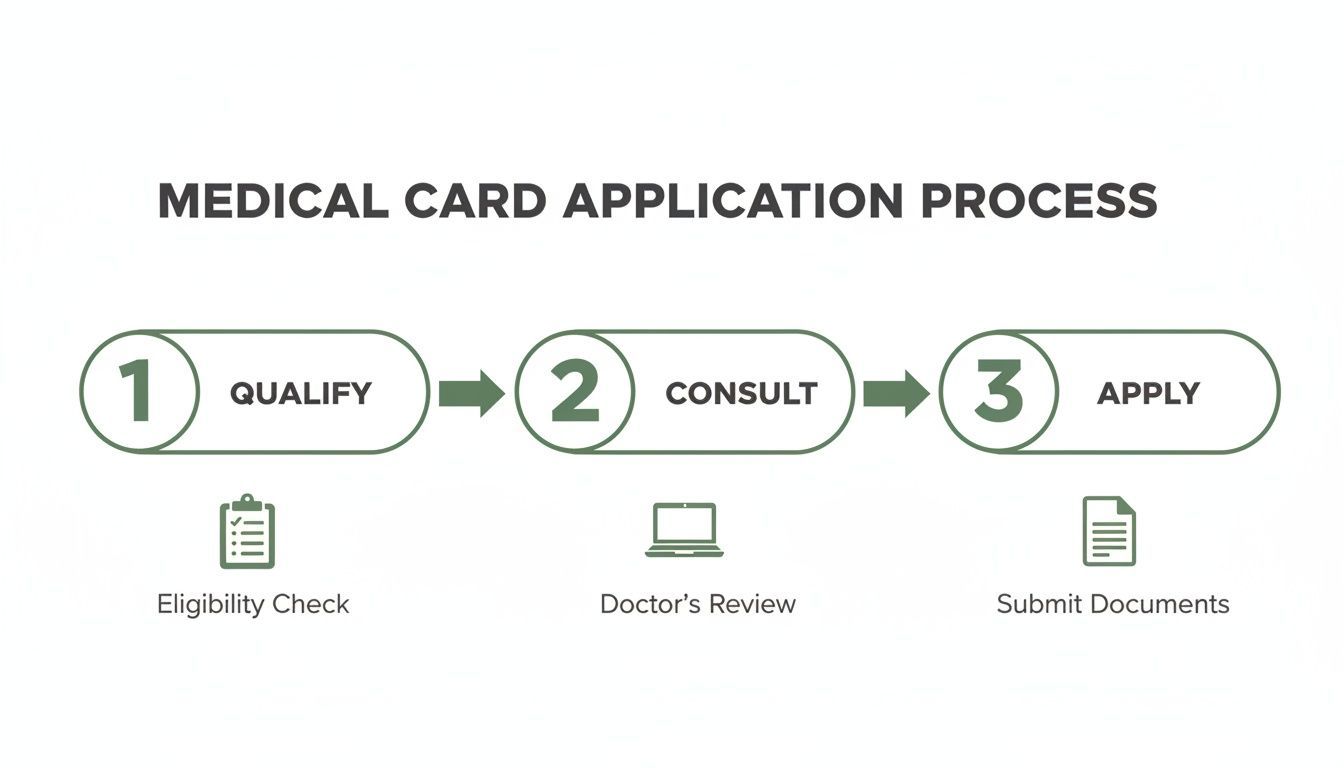
If you're a Mississippi resident thinking about how medical marijuana might fit into your seizure treatment plan, your journey starts with one essential step: getting a medical marijuana card. This isn't just about checking a legal box; it's your passport to a safe, regulated system built to protect patients.
Let's walk through how the Mississippi Medical Marijuana Program works. Following the official process ensures you're getting lab-tested products under the care of a professional who truly understands the delicate balance between seizure and marijuana . It’s all about empowering you to take charge of your health, both safely and legally.
Confirming Your Eligibility
So, where do you begin? The first thing to do is confirm that your medical condition qualifies under Mississippi law. The state has a specific list of "debilitating medical conditions," and you need to be on it.
The good news is that a seizure disorder, including epilepsy, is explicitly named as a qualifying condition in Mississippi. If you have a documented medical history of seizures, you’ve cleared the first hurdle. But a diagnosis by itself isn't enough—you need to have it certified by a state-approved practitioner.
The Practitioner Consultation
Once you know your condition qualifies, your next move is to book a consultation with a healthcare provider registered with the state's medical marijuana program. This is a mandatory and crucial part of the process.
Think of this appointment as a collaborative strategy session. Your provider will:
- Go over your medical records and history related to your seizure disorder.
- Talk with you about your current symptoms and what other treatments you’ve already tried.
- Carefully weigh whether the potential upsides of medical marijuana outweigh the risks for your unique situation.
If your practitioner agrees that medical marijuana is a sound choice for you, they will issue a written certification . This is the official document you'll need for your state application, confirming you have a qualifying condition and are under a practitioner's supervision.
A consultation with a qualified provider is so much more than paperwork. It's a critical safety measure, especially since cannabinoids can interact with common anti-seizure medications. This medical guidance is what separates responsible therapeutic use from the risks of self-medicating.
Submitting Your Application to the State
With that written certification in hand, you're on the home stretch. The final step is applying directly to the Mississippi Department of Health. The entire process is handled online through the state's official portal. You'll need to set up an account, complete the application, and upload your practitioner's certification, a photo, and proof of residency.
After you submit everything and pay the state fee, the Department of Health will review your application. Once approved, they will issue your official medical marijuana ID card. This card is your key to legally purchasing products from any licensed dispensary in Mississippi.
For a more detailed walkthrough of the entire process, you can read our guide on how to get a medical marijuana card. It breaks down each stage to help you feel confident every step of the way.
Creating a Safe and Effective Treatment Plan

Successfully using medical marijuana for seizures is about much more than just getting your card. It's about building a thoughtful, personalized plan that prioritizes safety and delivers consistent results. This is where a qualified Mississippi provider becomes your most important guide, helping you navigate the process and establish a routine that truly fits your life.
Think of it as a partnership. Together, you and your provider will work to maximize the potential benefits of marijuana for your seizures while carefully managing any risks. This whole process is built on making smart, informed choices from day one.
Starting Low and Going Slow
If there’s one rule to live by when starting medical marijuana, it’s this: start low and go slow . In clinical terms, we call this titration . It’s a methodical approach where you begin with a very small, precisely measured dose and increase it gradually over several days or even weeks.
This isn't about being overly cautious; it's about being smart. This process lets you and your provider see exactly how your body is responding. The goal is to find your minimum effective dose —that sweet spot where you get the seizure control you need without any unwanted side effects. Rushing this step can be counterproductive, especially with seizures, as too much of a cannabinoid can sometimes work against your goals.
Choosing the Right Product Form
Here in Mississippi, medical marijuana comes in several forms, and your choice has a big impact on your treatment. When you’re managing seizures, consistency is everything. That’s why we typically see patients have the most success with specific types of products.
- Oils and Tinctures: These are liquid extracts that you take with a dropper, usually under the tongue. They are the gold standard for precise dosing, allowing you to make tiny, repeatable adjustments.
- Capsules: Just like any other pill, capsules give you a pre-measured, no-fuss dose every single time. They take all the guesswork out of the equation.
These forms offer a level of control that’s absolutely essential for a good treatment plan. Your provider can help you find a product with the right cannabinoid ratio—often one high in CBD—to match your specific needs. Our new patient guide is a great resource to look over before your first appointment to help you get prepared.
Open Communication Is Essential for Safety
While a regulated medical program is a much safer path, it's critical to understand that cannabinoids can interact with other medications. This is particularly true for the anti-epileptic drugs (AEDs) that many seizure patients rely on. CBD, for example, is metabolized by the same liver enzymes that process many common prescriptions.
The difference between guided medical use and unmonitored recreational use is stark. Studies and case reports show that while some medical users found relief, an alarming 81.1% of seizures reported by recreational users were severe, leading to significantly more hospital visits. This data highlights just how crucial a regulated, medically supervised approach really is.
This is precisely why being completely open with your provider about all the medications and supplements you take isn’t just a good idea—it’s a non-negotiable part of staying safe. A knowledgeable practitioner can watch for potential drug interactions and make adjustments to keep you safe. This expert oversight is what transforms the complex relationship between seizure and marijuana from an unknown risk into a responsible therapy. You can explore more on these important safety distinctions here.
Common Questions About Marijuana and Seizures
Thinking about medical marijuana for seizure control can feel overwhelming, and it's natural to have a lot of questions. If you're in Mississippi, getting trustworthy answers is the first step toward making a safe, educated choice. Let's break down some of the most frequent questions we hear from patients.
Is a Medical Card Required for Seizure Treatment in Mississippi?
Yes, 100% . The only legal and safe way to access marijuana for seizures—or any other medical condition—in Mississippi is through the state’s medical program. A medical card is your assurance that you're getting products that are lab-tested for purity and strength, all while under the care of a qualified provider.
Trying to get marijuana from unregulated sources is not just illegal; it's a huge gamble for your health. You have no way of knowing the actual potency or whether the product contains harmful contaminants, which could be dangerous and might even trigger a seizure.
Can THC in Marijuana Make My Seizures Worse?
That's a valid concern, and the honest answer is that for some people, it can. THC can sometimes lower the seizure threshold, essentially making the brain more prone to seizure activity. This effect is highly individual, which is why working with a medical professional isn't just a good idea—it's absolutely essential.
An experienced provider will almost always start with a product that has a very specific cannabinoid ratio. For seizures, that typically means a formula that is high in CBD with only very small, controlled amounts of THC. This approach is designed to tap into the therapeutic benefits while steering clear of potential risks.
What Is the First Step for Me in Mississippi?
Your journey begins with a single, important step: scheduling a consultation with a healthcare provider registered with the Mississippi Medical Marijuana Program. This first meeting is the bedrock of your entire treatment plan.
During this appointment, the provider will first confirm that your seizure disorder qualifies under state law. From there, they’ll talk with you about your health history to determine if medical marijuana is a good fit. If it is, they will help you navigate the state's official application process to get your medical card.
It's crucial to understand that CBD, a key component in medical marijuana, can interact with many common anti-epileptic drugs. This is because CBD and many seizure medications are processed by the same enzymes in the liver, which can alter how effective your prescribed medication is.
Will Medical Marijuana Interact with My Seizure Medication?
Yes, it can, and this is a major safety point to consider. Cannabinoids, especially CBD, are known to interact with many common anti-seizure drugs. Think of it like a traffic jam in your liver—when CBD and another medication are both processed by the same enzyme, it can change the concentration of the anti-seizure drug in your bloodstream. This could make it less effective or, conversely, amplify its side effects.
This is exactly why complete honesty with your provider is non-negotiable. They need to know every single medication and supplement you take. Armed with that information, they can create a safe, effective plan that avoids any harmful drug interactions from the start.