Why Abdominal Pain Radiating to Back Is a Serious Warning
That deep ache in your stomach that seems to wrap all the way around to your back isn’t just a bad stomachache. It's a very specific signal from your body, and understanding what it means is the first step toward getting the right diagnosis and finding real relief.
Why Does My Stomach Pain Travel to My Back?
When you feel pain in one place that’s actually caused by a problem somewhere else, it’s called referred pain . This can be unsettling, but it’s a very real phenomenon based on how your body is wired.
Think of your nervous system as a complex highway. Nerves from your internal organs—like your pancreas or gallbladder—often merge onto the same main nerve pathways as nerves from the muscles in your back. They all travel together on their way to the brain.
When an organ in your abdomen is inflamed or injured, it sends out distress signals. But because these signals share a "highway" with signals from your back, your brain can get the messages mixed up. It can’t quite pinpoint where the problem started, so you end up feeling pain in your back, even when the issue is deep inside your abdomen.
This nerve signal mix-up, known as viscerosomatic convergence, is why a problem with an internal organ can show up as a dull ache or sharp pain in your middle or upper back. Your brain is simply having a hard time tracing the signal back to its true source.
Reading the Clues Your Pain Provides
For a healthcare provider, this pattern of referred pain is a critical diagnostic clue. The exact location and feel of the pain can help figure out which organ might be in trouble.
Here are a few common examples:
- Pancreatitis: Inflammation of the pancreas often causes an intense, boring pain in the upper abdomen that feels like it’s going straight through to the middle of your back.
- Gallbladder Problems: Gallstones or inflammation can cause a sharp pain just under your right rib cage that often radiates up toward your right shoulder blade.
- Kidney Issues: A kidney stone or infection typically creates a severe, sharp pain in your side or flank area that wraps around to your back. If you have concerns about how medications can impact your organs, you may want to learn more about the relationship between acetaminophen and kidneys.
Just knowing that your stomach and back pain are connected is a huge step forward. It gives you the power to describe your symptoms with clarity, which helps your provider in Mississippi narrow down the possibilities and get you on the fastest path to diagnosis and treatment.
What's Causing Your Abdominal and Back Pain?
When you have a deep ache in your abdomen that also shoots through to your back, it’s a confusing and unsettling feeling. This isn't just a simple stomach ache. Understanding that the pain is traveling, or “radiating,” is the first step. The next, more important step is figuring out why.
This specific type of pain can signal anything from a routine digestive problem to a more serious issue with an internal organ. When you can describe your symptoms clearly, you’re giving a healthcare provider a roadmap to the source of the problem, which helps you get the right diagnosis and treatment much faster.
So, why would a problem in your belly cause your back to hurt? It’s a phenomenon called referred pain .

Think of it like a crossed wire. The nerves from your internal organs share the same major pathways to the brain as the nerves from your back muscles. When an organ is in distress, your brain can't always pinpoint the exact source of the signal and interprets it as pain coming from your back as well.
Pancreas and Gallbladder Problems
Two of the most common culprits behind abdominal pain that radiates to the back are the pancreas and the gallbladder. These small but mighty organs are tucked away in your upper abdomen, and when they get inflamed, they can cause a world of hurt.
-
Pancreatitis: This is inflammation of the pancreas, and it often triggers a severe, relentless, “boring” pain right in the center of your upper abdomen. Many people say it feels like something is drilling straight through to their mid-back. The pain often gets worse after a meal or when you try to lie down flat.
-
Gallstones: These are tiny, hard deposits that can block the pathways from your gallbladder. The result is a sudden, sharp, and intense pain, usually in the upper right side of your belly, just below your ribs. This pain frequently radiates around to your right shoulder blade or the area between your shoulders.
Pain that starts in the abdomen and moves to the back is a classic warning sign that shouldn't be ignored. In fact, acute pancreatitis is one of the top four most common gastrointestinal reasons people are admitted to the hospital in the U.S., with abdominal pain being the number one symptom that brings them in.
Digestive and Urinary System Issues
It’s not just the pancreas and gallbladder, either. Other parts of your digestive and urinary systems can create that same radiating pain, making it tricky to self-diagnose.
A peptic ulcer , particularly one located on the back wall of your stomach or small intestine, can cause a gnawing or burning ache that feels like it’s boring right through to your back. On the other hand, a kidney stone is famous for causing one of the most excruciating pains imaginable—a sharp, stabbing pain in your side and back that often comes and goes in waves as the stone moves through your urinary tract.
For some, especially women, this radiating pain pattern can even be connected to issues in the pelvis. If you've been dealing with persistent discomfort in that area, our guide on understanding chronic pelvic pain syndrome might offer some helpful insights. It’s important to consider all possibilities.
Symptom Checker for Abdominal and Back Pain
With so much overlap, it can be tough to tell what's what. This table is designed to help you spot key differences between some of the most common conditions.
| Condition | Pain Location & Type | Common Associated Symptoms |
|---|---|---|
| Pancreatitis | Upper-middle abdomen; deep, "boring," and constant pain that radiates straight to the back. | Nausea, vomiting, fever, rapid pulse, tenderness of the abdomen. Often worse after eating or lying flat. |
| Gallstones | Upper-right abdomen; sudden, severe, and cramping pain that may radiate to the right shoulder or between the shoulder blades. | Nausea, vomiting, sweating, restlessness. Often occurs in "attacks" after a fatty meal. |
| Kidney Stone | Side and back (flank), below the ribs; sharp, stabbing pain that comes in intense waves. | Painful urination, pink/red/brown urine, cloudy or foul-smelling urine, nausea, and vomiting. |
| Peptic Ulcer | Upper-middle abdomen; burning, gnawing, or dull ache that can bore through to the back. | Feeling of fullness, bloating, heartburn, nausea. Pain may improve or worsen with eating. |
Remember, this is just a guide to help you make sense of your symptoms. It is not a substitute for a professional medical diagnosis. Paying attention to the character of your pain—whether it's sharp or dull, constant or intermittent—provides critical clues for your healthcare provider.
When You Must Seek Immediate Medical Attention
It can be hard to know what to do when that deep, radiating pain strikes. Is this something that can wait for a medical appointment, or is it a true, drop-everything-and-go emergency? Knowing how to tell the difference is crucial, and it can even be life-saving.

This guide is here to help you cut through the confusion and feel confident in your next steps. The most important rule is to never downplay or try to "tough out" severe symptoms.
Urgent Red Flag Symptoms
If the abdominal pain radiating to your back comes with any of the signs below, it’s time to head to the nearest emergency room or call 911 right away. These are not "wait and see" symptoms.
- Sudden, Severe, and Unbearable Pain: This is a big one. If the pain hits you out of nowhere and is so intense that you can't get comfortable, it signals a potential crisis.
- High Fever with Chills: A temperature climbing over 101°F alongside the pain can point to a serious infection, like pancreatitis or a kidney infection that needs immediate treatment.
- Vomiting Blood or Passing Black, Tarry Stool: These are hallmark signs of internal bleeding. This is always a critical medical emergency.
- Chest Pain or Shortness of Breath: Sometimes, a heart attack can feel like upper abdominal pain. If you have any chest pressure, pain, or trouble breathing, don't take a chance.
- Yellowing of Skin or Eyes (Jaundice): This is a classic symptom of a liver or gallbladder problem that has become urgent and requires prompt medical evaluation.
- A Hard or Rigid Abdomen: If your stomach feels unusually firm, bloated, or is extremely tender when you press on it, it could mean something dangerous is happening internally, like a bowel obstruction or perforation.
Chronic Pain vs. an Acute Emergency
It’s important to understand the difference between a sudden, acute crisis and a nagging, chronic problem. Chronic pain—like a persistent dull ache you’ve had for weeks or even months—is absolutely serious and needs a proper diagnosis from a healthcare provider. But usually, it can be addressed during a scheduled appointment.
An acute emergency is different. It’s a sudden change, a spike in intensity, or the arrival of one of the red flag symptoms we just discussed.
The key takeaway is simple: never ignore pain that feels severe or "wrong." An acute emergency demands immediate action, while chronic pain requires a thorough medical investigation to find the right path to relief. Either way, getting a proper diagnosis is the non-negotiable first step.
Why Abdominal Pain So Often Radiates to the Back in Women

For many women, that deep, nagging ache in the abdomen that also shoots into the back isn't just a coincidence. It's a specific pain pattern often tied to health issues unique to women, from digestive problems to the physical aftermath of childbirth. Feeling this connection isn't in your head; it’s a very real experience, and understanding why it happens is the first step toward getting the right diagnosis.
There’s a powerful connection between gut health and back pain. When you’re dealing with things like chronic bloating, constipation, or irritable bowel syndrome (IBS), your digestive system can become over-sensitized. An irritated gut can fire off constant pain signals, and because it shares nerve pathways with your back, those signals get "referred" to your lower or mid-back. It creates a frustrating cycle of discomfort in both areas.
The Postpartum Connection
The time after having a baby brings massive physical adjustments, and one of the most overlooked issues is rectus abdominis diastasis (RAD) . This is simply the medical term for when the "six-pack" muscles separate to accommodate a growing baby. When these essential core muscles are weakened and spread apart, they can’t support your spine like they used to.
Without that strong frontal support, the muscles in your lower back are forced to work overtime for every little thing—from lifting your baby to just standing up straight. This leads to chronic strain, muscle fatigue, and a persistent backache that feels directly tied to your abdomen.
After childbirth, many women are left with abdominal weakness that directly triggers back pain. Rectus abdominis diastasis (RAD), or a muscle separation of over 2 cm, affects between 30% to 46.5% of postpartum women. The risk is even higher after a cesarean delivery, with those women having a 4.5 times greater risk of developing RAD compared to those with vaginal births.
Endometriosis and Referred Pain
Conditions like endometriosis are also a major cause of this radiating pain. When tissue similar to the uterine lining grows outside the uterus, it can cause severe inflammation and irritate nerves throughout the abdomen and pelvis. This deep internal pain often gets referred to the lower back, creating a confusing and debilitating combination of symptoms.
For women struggling with this specific condition, we've put together a guide on how medical marijuana helps with endometriosis pain relief.
Managing these complex pain signals requires a careful, personalized approach. For Mississippians with qualifying conditions, medical Marijuana can be a valuable option. It can help calm the chronic inflammation and nerve-related pain that fuel this radiating discomfort, offering a path to relief and a better quality of life.
Navigating a Diagnosis in Mississippi
When you’re dealing with abdominal pain that spreads to your back, the not-knowing can be just as difficult as the pain itself. Getting a clear diagnosis isn't just a medical step—it's the first real step toward finding relief and taking back control.
For those of us here in Mississippi, knowing what to expect from the medical process can make all the difference. It helps turn anxiety into action and empowers you to become your own best advocate.
The journey to an answer always starts with a conversation with a healthcare provider. This isn't just small talk; it's a critical investigation known as history taking , where your story provides the most important clues. Your provider will listen carefully and ask specific questions to build a clear picture of what’s happening inside your body.
Preparing for Your Appointment
To get the most out of your visit, a little preparation goes a long way. The single most helpful thing you can do is keep a simple pain and symptom log. Before you see a provider, try to write down the answers to these questions.
- When did the pain start? Was it out of the blue, or did it creep up on you?
- Where, exactly, is the pain? Does it begin in your stomach and then travel to your back?
- What does it feel like? Is it a sharp, stabbing feeling, or more of a deep, dull ache?
- On a scale of 1 to 10, how bad is it? Does the intensity change with your daily activities?
- What makes it better or worse? Does eating a meal, lying in a certain position, or moving around change the pain?
- Are there any other symptoms? Be sure to mention anything else you’ve noticed, like nausea, fever, a change in your appetite, or unexplained weight loss.
When you gather this information beforehand, you're not just a patient; you're a vital partner in your own care. You’re providing the clues that help your provider solve the puzzle of your pain much more quickly.
The Diagnostic Process
After listening to your story, your provider will do a physical exam. This almost always involves gently pressing on different parts of your abdomen to feel for any tenderness, swelling, or firm spots that can point toward a specific problem.
Think of your story and the physical exam as the first two pieces of the puzzle. Based on those findings, your provider will decide which tests are needed to look "under the hood" and see what’s really going on.
These tests are essential for confirming what your provider suspects or, just as importantly, for ruling out more serious conditions. Some of the most common tests for this kind of pain include:
- Blood Work: Simple blood tests can reveal signs of infection, inflammation, or problems with organs like your liver or pancreas.
- Ultrasound: This imaging test uses sound waves to create a picture of your organs. It’s fantastic for finding issues like gallstones or problems with your gallbladder.
- CT Scan: A CT scan provides a much more detailed, cross-sectional view of your abdomen. It's often used to get a clear look at deeper organs like the pancreas or to identify other complex issues.
Managing Chronic Pain with Medical Marijuana in Mississippi
When you’re living with chronic pain that starts in your abdomen and wraps around to your back, daily life can feel like a constant battle. If you've tried conventional treatments and still haven't found the relief you need, it’s only natural to look for other options. While not a cure, medical Marijuana is becoming an important therapeutic tool for many Mississippians, helping them manage difficult symptoms and get back to their lives.
The science behind this isn't magic—it’s rooted in our own bodies. The natural compounds in the Marijuana plant interact with our body's endocannabinoid system, a complex network that helps regulate everything from pain perception and inflammation to muscle function. By working with this system, medical Marijuana can help tackle that radiating pain from several different angles.
How Medical Marijuana Can Help
That complex pain that travels from your gut to your back often has multiple causes, which is where a multi-pronged approach can make a real difference.
- Reduces Inflammation: Many of the conditions behind this pain, like pancreatitis or inflammatory bowel disease, are driven by chronic inflammation. Medical Marijuana has well-known anti-inflammatory properties that can help calm this underlying fire.
- Soothes Nerve Pain: Radiating pain is often a sign of irritated or overactive nerves. Medical Marijuana can help modulate these nerve signals, essentially turning down the "volume" on the pain messages being sent to your brain.
- Eases Muscle Spasms: It’s common for the muscles in your abdomen and back to clench up in response to organ pain. This creates a miserable cycle of spasms and aches. Marijuana can act as a gentle muscle relaxant, helping to break that cycle.
This is especially relevant when you look at the strong connection between gut problems and back pain. One major study involving over 38,050 women found that those with gastrointestinal issues like constipation were far more likely to have frequent back pain, with odds up to 3.3 times higher. Calming the gut can have a direct and powerful impact on your back.
Obtaining a Medical Card in Mississippi
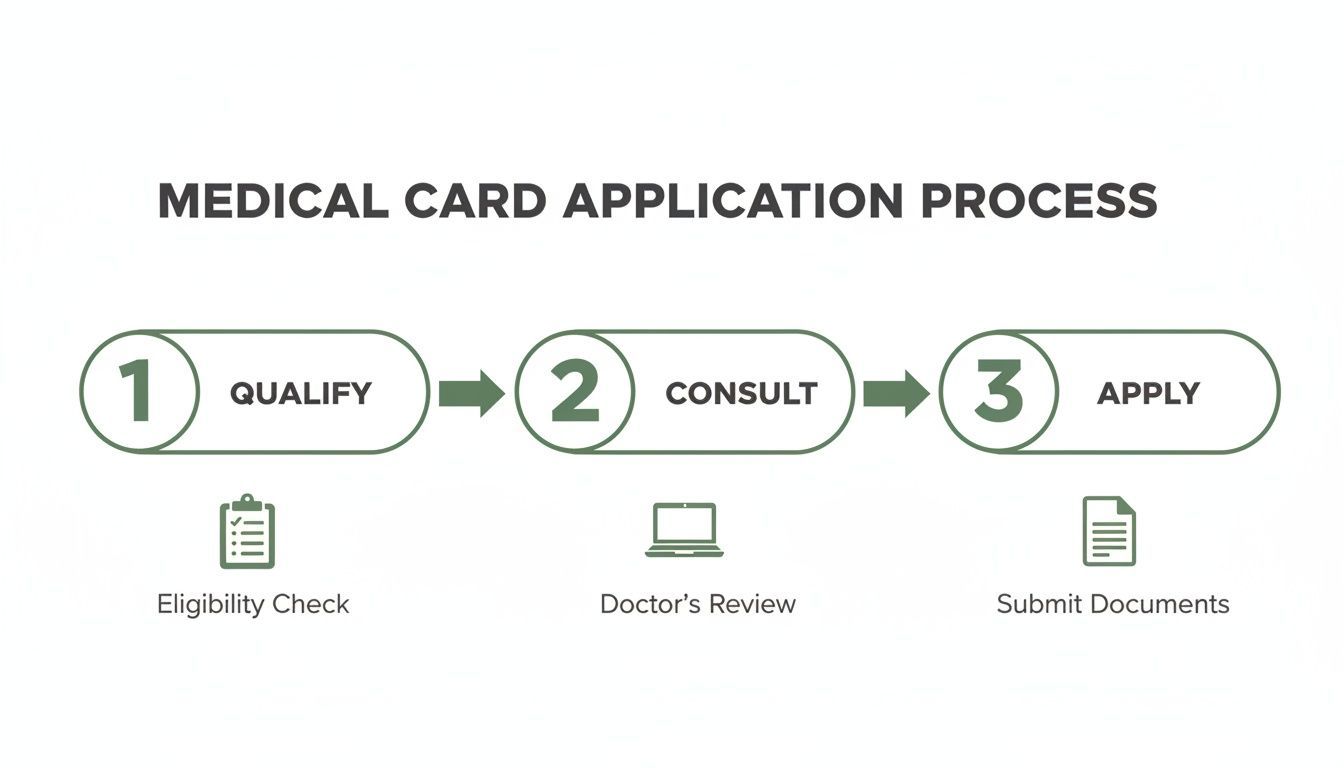
Here in Mississippi, getting a medical Marijuana card is a professional and regulated process designed to put patient safety first. It all starts with a simple consultation with a qualified practitioner who will take the time to understand your specific health needs and history.
For many Mississippians, medical Marijuana offers a new avenue for managing chronic pain. It provides a way to address symptoms like inflammation and nerve pain directly, helping to restore function and improve day-to-day comfort under the guidance of a healthcare provider.
If your abdominal pain radiating to back is the result of a chronic, debilitating medical condition, you may be eligible for the program. A provider will carefully review your medical history and current symptoms to see if medical Marijuana is an appropriate part of your pain management plan.
Once certified, they'll guide you through the state's application, making sure every detail is handled correctly. This compassionate, expert-led approach makes it possible for eligible residents to access a safe, regulated option for relief. To explore this option in more detail, you can find a helpful guide on how medical marijuana helps chronic pain in Mississippi.
Frequently Asked Questions
How Do I Get A Medical Marijuana Card For Chronic Pain In Mississippi?
Your journey begins with a private, one-on-one consultation with a qualified Mississippi practitioner. During your visit, a compassionate review of your medical history will be conducted to see if your chronic pain stems from a qualifying condition under state law. If you’re eligible, the practitioner will handle the official medical certification and guide you through every step of the state's online application, ensuring everything is handled professionally and correctly.
Can Stress Make My Abdominal And Back Pain Worse?
Yes, it absolutely can. Think of stress as a volume knob for pain. Thanks to a powerful connection called the ‘gut-brain axis,’ emotional and mental stress can directly fuel physical symptoms. It can increase inflammation, cause the muscles in your abdomen and back to clench up, and even make your nervous system more sensitive to pain signals.
This is why a good pain management plan often goes beyond just the physical, incorporating stress-reduction techniques to help quiet the entire system down.
For many people, abdominal pain radiating to the back can feel worse during times of high stress or anxiety. This connection highlights the importance of addressing both the physical and mental aspects of your discomfort.
Is Medical Marijuana A Safe Option For Pain From Digestive Issues?
When guided by a qualified medical provider, medical Marijuana can be a very safe and helpful tool for managing symptoms tied to certain digestive conditions. The active compounds are well-known for their ability to calm inflammation, ease the painful muscle cramping common in gut issues, and reduce related nausea.
The key is working with a professional who understands your specific condition. A knowledgeable provider will create a personalized care plan, recommending the right products, dosages, and methods to ensure you can find relief safely and effectively, improving your overall quality of life.
If you're in Mississippi and ready to explore how medical Marijuana can fit into your chronic pain management plan, you can seek guidance from compassionate, local providers who can help you navigate the process with confidence. Visit us to learn more and schedule your consultation.