How to Stop Feeling Overwhelmed: A Practical Guide for Mississippi
When that tidal wave of overwhelm hits, your first instinct might be to fight it, to push harder. But what if the most powerful thing you can do is just… stop?
Taking one small, intentional step back is often the best way to begin. When chronic pain flares or anxiety starts to spiral, everything can feel like an emergency. Gently acknowledging that feeling, without judging yourself for it, and then shifting your focus to the present moment can make an immediate difference.
Your First Step Away From Overwhelm Today

Think of that overwhelmed feeling as a signal flare from your body and mind, telling you you've hit your limit. Instead of trying to silence the alarm by piling on more pressure, the goal here is to give yourself permission to pause.
This isn't about trying to solve every single problem right now. It's about finding an anchor in the middle of the storm. A simple grounding technique can pull you out of the frantic rush of thoughts and plant you firmly back in your physical space, creating a pocket of calm.
These quick grounding exercises are designed to bring you back to the present moment. They're simple, discrete, and incredibly effective when you feel your thoughts starting to race.
Quick Grounding Techniques for Immediate Relief
| Technique | How It Works | When to Use It |
|---|---|---|
| The 5-4-3-2-1 Method | Engages all five senses to pull your focus out of anxious thought loops and into your immediate physical surroundings. | Perfect for when you feel a panic attack starting, are stuck in a worry cycle, or just feel disconnected from your body. |
| Mindful Breathing | Involves focusing on the physical sensation of your breath moving in and out, which slows your heart rate and calms the nervous system. | Use this in a stressful meeting, while waiting in line, or anytime you have 30 seconds to close your eyes and reset. |
| Physical Anchoring | Press your feet firmly into the floor or your hands onto a solid surface. Focus entirely on the sensation of pressure and stability. | A great, subtle tool for staying present during difficult conversations or when you're in a crowded, overstimulating place. |
Each of these techniques offers a lifeline. They don't erase your problems, but they give you the mental space needed to face them without being consumed.
The 5-4-3-2-1 Sensory Method In-Depth
Out of all the grounding tools, the 5-4-3-2-1 method is one of the most practical. You can do it anywhere, anytime—in a busy office, in the middle of the grocery store, or lying in bed—and no one has to know. It works by forcing your brain to switch gears from abstract worry to concrete observation.
Here’s a simple breakdown:
- See 5 things: Look around you and silently name five objects. Don't just list them; notice a detail. "I see the grain of the wood on my desk." "I see the red light on the power strip."
- Feel 4 things: Bring your awareness to the sensation of touch. What can you feel? Maybe it's the soft fabric of your sweater, the coolness of a glass of water, or your feet planted firmly on the ground.
- Hear 3 things: Listen. Tune out the noise in your head and focus on what's actually reaching your ears. The hum of your computer, a bird outside the window, the distant sound of traffic.
- Smell 2 things: What scents are in the air? This one can be subtle. Perhaps you can smell your coffee, the soap on your hands, or even just the clean, neutral scent of the room.
- Taste 1 thing: Focus on one thing you can taste. This is easy if you have a drink or a piece of gum, but you can also just notice the neutral taste in your mouth.
This exercise is like a hard reset for an anxious brain. By focusing on your senses, you are sending a powerful message to your nervous system: you are safe, right here, in this present moment.
This simple practice is your first line of defense. It interrupts the cycle of "what-if" thoughts about the future and regrets about the past, giving you a foothold in the now.
Mastering a grounding exercise like this is a foundational skill. It's the first step in building a bigger, more resilient toolkit for managing stress. When feeling overwhelmed becomes your default state, it can quickly lead to burnout, which requires its own specific strategies. If this feels familiar, you can learn more about how to deal with burnout in our detailed guide. This first step gives you the breathing room to explore the deeper solutions that will lead to a more balanced life.
Understanding the Roots of Overwhelm in Mississippi
Before you can figure out how to stop feeling so overwhelmed, it helps to know where that feeling is coming from. For so many of us here in Mississippi, it’s not just about having a full calendar. It's an exhaustion that runs bone-deep, tangled up with the daily grind of managing a chronic health condition.
The constant hum of pain or the sheer effort of living with an illness puts a heavy weight on your mind and spirit, far beyond the physical symptoms.
Think about it. You wake up already feeling behind, knowing you have a gauntlet of appointments, medications, and physical discomfort to push through just to handle the basics. That relentless cycle is a perfect recipe for overwhelm. It creates a mental fog that can make small choices feel huge and planning for the future feel downright impossible. This is the quiet reality for countless people in our state.
If you’re caught in that loop, it’s no wonder that the usual advice doesn't cut it. When standard pain relief or anxiety management hasn't brought you the peace you deserve, looking for another way forward isn’t just a good idea—it’s essential. This is often the point where people in Mississippi start exploring their options for a medical marijuana card.
The Link Between Chronic Conditions and Mental Exhaustion
The connection between physical pain and mental exhaustion is powerful and real. Chronic pain isn't just a feeling; it's a constant alarm bell ringing in your nervous system. Being in that perpetual "on alert" state drains your mental batteries, leaving you much more vulnerable to feeling swamped by everyday demands.
Imagine your brain's energy as a phone battery. On a good day, a healthy person starts at 100%. But when you're living with a chronic condition, you might be waking up with just 50% or 60% because your body is already working overtime just to manage your symptoms.
This constant energy drain often shows up in a few familiar ways:
- Decision Fatigue: Even tiny decisions, like what to eat for dinner, can feel completely paralyzing.
- Emotional Volatility: You might notice you’re more irritable, or that anxiety and sadness bubble up much more easily.
- Brain Fog: Trying to focus or just remember simple things can become a real struggle.
This isn’t a personal flaw. It’s a physiological response to a long-term battle with your health. Just acknowledging that can be a huge step toward giving yourself some grace and finding strategies that actually work. A big part of that journey is looking at the whole picture, which is why a holistic approach to pain management that treats both mind and body is so critical.
Scientific Insights on Reducing Stress
As more people search for new ways to cope, science is giving us some fascinating clues on how to dial down that feeling of being overwhelmed. One area getting a lot of attention is how certain compounds can influence the body's stress response system, and groundbreaking studies are showing how specific components of Marijuana can play a part.
That intense, crushing feeling of overwhelm, for example, can actually be lessened by low-dose THC. This isn't just anecdotal; it's backed by clinical trials. A 2017 study from the University of Illinois Chicago looked at healthy volunteers who used Marijuana from time to time. They were given either a placebo or a specific dose of THC before facing a stressful public speaking task.
The results were remarkable. A low dose of 7.5mg of THC significantly cut down their stress levels, helping them feel less nervous and recover faster. On the flip side, a higher dose of 12.5mg actually made things worse, increasing their anxiety and negative feelings. You can read the full research about these dose-dependent findings on mmjoutcomes.org.
This study points to something incredibly important: dosage is everything . The goal isn't to feel "out of it," but to find a precise, low dose that can help calm the nervous system without adding to the brain fog.
This dose-dependent effect is a perfect example of why a medically supervised plan is so crucial when considering medical Marijuana. It validates what many people have found through their own experience—that there's a scientific reason why they feel a sense of calm and clarity. It's all about using the right tool, in the right amount, to target the very roots of overwhelm.
Building Daily Routines That Prevent Burnout

When you’re stuck wondering how to stop feeling overwhelmed , it’s easy to focus only on putting out fires as they happen. But the real, lasting change comes from building a lifestyle that prevents those fires from starting in the first place. This isn’t about a massive, intimidating life renovation. It’s about weaving small, consistent habits into your day that create a stronger foundation.
Especially for those living with chronic pain, a rigid, demanding schedule is often a recipe for failure. Good days and bad days can be worlds apart. The secret, then, is flexibility. We need to focus on simple, low-effort routines you can adapt to whatever energy and pain levels you're facing.
This is how we turn the vague idea of "wellness" into something real and practical—taking back a piece of control, one small choice at a time.
Create a Protected Morning Window
The very first moments of your day have an outsized impact on the hours that follow. If your first move is to grab your phone and dive into emails or the news, you’re kicking off your day by reacting to everyone else's priorities. You're letting the outside world set your mental and emotional pace.
Instead, try to carve out a 'protected' first 30 minutes for yourself. Think of it as a quiet bubble just for you before the rush begins. This is your time to reflect, move gently, or just sit with a cup of coffee and your own thoughts.
- Gentle Stretching: Forget intense workouts. Try a few simple stretches while still in bed or on a mat. Pay close attention to areas that hold pain or tension, moving with slow, deliberate care.
- Mindful Hydration: As you drink your first glass of water for the day, notice the sensation. Think of it as a simple act of rehydrating and caring for your body after a long rest.
- Journaling One Thought: No need to write a novel. Simply jot down one small thing you’re grateful for or a single intention you want to set for the day.
This isn’t just another item on your to-do list. It's a buffer. It’s a quiet act of self-preservation that reinforces your mental defenses for whatever the day holds.
Implement a Digital Sunset
Just as a calm morning can ground you, a structured end to your evening can profoundly improve your ability to rest and recover. Being glued to screens right up until bedtime keeps your brain firing on all cylinders, making it incredibly difficult to wind down and get the deep sleep you need. This is where a 'digital sunset' can make a huge difference.
A digital sunset is a designated time each evening when you intentionally put away all screens—your phone, tablet, and computer. Aim for at least an hour before you plan to sleep.
This simple boundary allows your brain to naturally transition into sleep mode. You can use that screen-free time to read a real book, listen to some calming music, or do some light tidying. If you’re looking for ways to calm anxiety naturally , this is a powerful tactic because it directly dials down mental stimulation.
Build Buffer Time into Your Schedule
One of the sneakiest culprits behind that overwhelmed feeling is a packed schedule. When our tasks and appointments are jammed back-to-back, there’s zero margin for error. A little traffic or a meeting that runs long can send your whole day into a tailspin.
The solution is 'buffer time' —the simple act of scheduling empty space between your commitments.
For instance, let's say you have an appointment that should take 30 minutes, with a 15-minute drive each way. Don't block out just one hour in your calendar; block out an hour and a half. That extra 30 minutes is your safety net. If you hit traffic, you won't panic. If the provider is running late, you won't be stressed. And if everything goes perfectly? You’ve just given yourself a free moment to breathe, listen to a podcast in your car, or just exist without feeling rushed.
How Medical Marijuana Can Help Ease the Burden of Chronic Pain and Anxiety
When you're living with chronic pain and anxiety, just searching for a solution can feel like another full-time job. For so many people here in Mississippi, the usual treatments just don't cut it, which leads them to look for other options that can be integrated into their care. Medical Marijuana, when used under the guidance of a certified practitioner as part of a complete plan, is becoming a really promising way for people to get some control back from their symptoms.
This isn't about finding a magic bullet. It’s about understanding how specific compounds can work with your body's natural systems to dial down the very things that make you feel so overwhelmed. The goal is to shift from constantly reacting—to a flare-up, to a wave of anxiety—to finding a more stable, peaceful state of being.
The Pain-Anxiety-Overwhelm Cycle
Chronic pain and anxiety are often tangled together in a way that’s hard to separate. The constant physical pain jacks up your stress hormones, which makes you more prone to anxiety. Then, that anxiety can actually make the pain feel worse. It’s a vicious cycle that just drains you, physically and mentally, until you're left feeling completely swamped by it all.
Breaking that cycle means you have to tackle both the physical and the emotional sides of the problem at once. This is exactly where the potential of medical Marijuana comes in. It offers a way to soothe the body while also calming the mind, quieting those internal alarm bells that are always ringing.
The positive effects are remarkable. When the pain just drops a notch or two, you suddenly have more mental space to handle everyday stress. You might find you have more patience, and you can start re-engaging with the parts of your life that aren't defined by your symptoms.
This dual-action relief is a huge reason why so many with chronic conditions are exploring this path. For those who feel like they've already tried everything, it brings a new sense of hope and a real way to improve their day-to-day life.
The Proof Is in the Patient Outcomes
The relief people experience isn't just a story; it's backed by some really impressive patient-reported data. A major patient survey gave us a clear window into the positive side effects of medical Marijuana. In that study, a massive 97% of users were seeking help for chronic pain, and the results were incredible. On average, their pain scores plummeted from a 7.8 down to a 2.8 on a 10-point scale. That’s a 64% decrease. You can discover more insights about these patient outcomes from the National Institutes of Health.
But the results went far beyond just pain relief. This is where it all connects back to feeling less overwhelmed:
- 50% of everyone in the study reported major relief from their stress and anxiety.
- 45% said their sleep got significantly better—and we all know how crucial sleep is for managing overwhelm.
Perhaps most telling, 71% of people in the study reported no negative side effects at all. This data paints a clear picture: when you can effectively manage the physical pain, your mental well-being gets a huge boost, which is the foundation for finally feeling in control again.
A Personalized Plan Is Non-Negotiable
Here’s the thing: medical Marijuana isn't a one-size-fits-all solution. Its effectiveness really comes down to having a personalized plan with medical supervision. Research has shown time and again that dosage is everything—what works wonders for one person might be totally ineffective for another. This is why having a qualified practitioner in Mississippi guiding you is so incredibly important.
A knowledgeable practitioner takes the guesswork out of the process. They’ll sit down with you to truly understand your symptoms, your health history, and what you’re hoping to achieve. From there, they help create a plan that’s just for you, ensuring you use the right products at the right doses to get the positive side effects—like less pain and anxiety—without unwanted ones.
This kind of supportive approach empowers you and makes the whole journey feel safer and more predictable. If you're curious about the exact steps to get started, you might find our guide on how to get a medical marijuana card helpful. In the end, a supervised plan is about making sure your path to relief is safe, effective, and finally helps you stop feeling so overwhelmed.
A More Compassionate Approach to Your Mental Health
When you’re trying to figure out how to stop feeling overwhelmed , it’s not just about managing a to-do list. It’s about dealing with the heavy mental and emotional weight that often comes with chronic conditions. If you're living with persistent pain or burnout, you know that anxiety and depression can feel like unwelcome companions. This isn't a personal failing—it’s a completely normal human response to your body and mind being under constant stress.
Let's talk about how integrated treatments are offering new hope. For many people here in Mississippi, carefully combining traditional care with medically supervised options like a medical marijuana card creates a much more complete path to feeling better. It’s a way to treat you , the whole person, not just a collection of symptoms.
Why Overwhelm Feels So Tied to Mental Health
That feeling of being completely swamped isn't just in your head. It’s a real state of being where your ability to cope has been pushed past its limit. When that state becomes your new normal, it gets tangled up with clinical anxiety and depression.
Think of it this way: the constant stress of managing a health condition can drain the very brain chemicals that help keep your mood stable. This is why it can feel so hard to find motivation, why negative thoughts seem to stick around, and why a true sense of calm feels almost impossible to reach. Simply seeing this connection is the first real step toward finding solutions that work for both your mind and body.
It’s All About the Dose: The Science of Finding Relief
When we look at integrated treatments like medical Marijuana, the goal is always to find something that helps without creating new problems. More and more, research shows that the dose is the absolute key to unlocking the positive mental health side effects. This is about using precision to calm the storm.
For instance, we have solid studies showing that specific components, especially CBD, can make a real difference for anxiety. But the effect changes dramatically depending on the amount used. This is why it’s so critical to work with a qualified practitioner who can guide you to a dose that quiets your nervous system without clouding your mind.
A major Minnesota study looked at cancer patients, a group that deals with incredible stress. They found that after using medical Marijuana products, patients reported an average 24.8% improvement in anxiety scores. Depression symptoms also improved by 25.6% . The data even showed that for every 5mg increase in daily CBD, anxiety dropped an extra 0.05 points . This confirms that higher CBD doses ( >14.3mg/day ) worked better than lower ones, giving us a clear, tailored path to calm. You can read the full research on these findings to see the science for yourself.
This kind of evidence is so important because it shifts the conversation from guesswork to a science-backed strategy. It shows that a personalized plan isn’t just a nice idea—it’s a crucial part of feeling better.
The data below shows what this can look like in practice, with many patients finding significant relief from both pain and stress.

As you can see, the goal is a balanced one: reducing stress and pain effectively, with minimal issues, so you can get back to your life.
Your Personalized Path Forward in Mississippi
If you're an adult in Mississippi navigating these challenges, please know there is hope. A personalized, medically supervised plan for a medical marijuana card can make a world of difference. This isn’t a one-size-fits-all prescription; it’s a partnership between you and a practitioner who gets it.
Here’s what that process actually looks like:
- A Deep Dive into Your Health: A good provider will take the time to truly understand your entire health picture—your specific symptoms of anxiety or depression, and how they connect to your chronic condition.
- A Plan Just for You: Based on that conversation, they can recommend specific product types and precise dosages designed for relief. Often, this means starting with a very low dose and adjusting slowly to find what works best for your body.
- Support for the Journey: This isn't a one-and-done appointment. Follow-ups are essential to make sure the plan is working and to make any adjustments as your needs evolve.
This thoughtful approach takes the mystery out of the process and puts you in control. It's about using every tool available—safely and wisely—to lift that heavy fog of overwhelm. The goal is to help you find more moments of peace, clarity, and control in your everyday life.
Your Questions About Managing Overwhelm in Mississippi, Answered
If you're looking into your options for managing chronic pain and anxiety here in Mississippi, you probably have a lot of questions. That's completely understandable. Feeling well-informed is the first step toward feeling in control again, so let's get you some clear, straightforward answers.
This is all about giving you the knowledge you need to feel confident as you decide what’s right for you.
How Do I Know if My Condition Qualifies for a Medical Marijuana Card in Mississippi?
This is often the very first question people ask, and it’s a big one. The Mississippi state program keeps a specific list of "debilitating medical conditions" that are eligible. Think of conditions that cause chronic, severe pain, persistent nausea, or other symptoms that get in the way of you living your life.
Now, while a diagnosis like generalized anxiety might not be on that list by itself, it's almost always part of the bigger picture. The mental and emotional toll of living with chronic pain is immense and very real. A certified practitioner will look at your health as a whole, including the anxiety and stress that come with your primary condition.
Honestly, the only way to know for sure is to talk to a certified practitioner. They can look at your medical history, listen to what you're going through, and give you a definite answer based on the state’s criteria.
The Process of Getting a Card Seems Overwhelming Itself. Is It Complicated?
This is a common concern. When you're already stretched thin, the last thing you need is a mountain of paperwork. The good news is, while there are a few required steps, the system in Mississippi is more manageable than you might think—especially when you have someone in your corner.
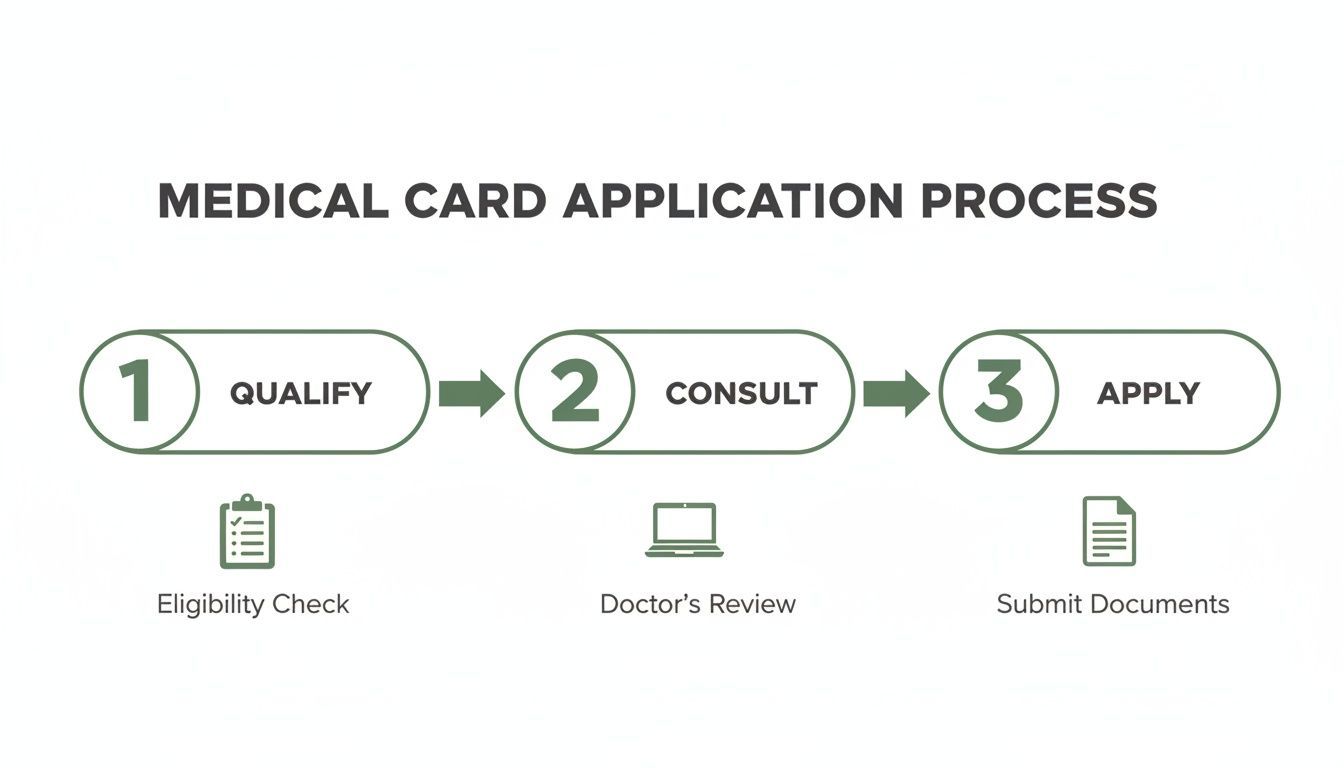
Essentially, you’ll consult with a certified practitioner who can confirm your condition qualifies. If it does, they issue a medical certification, which you then use to complete your application with the Mississippi State Department of Health.
But here’s the key takeaway: you don't have to do it alone. Many providers in Mississippi have built their entire process around supporting patients through these steps. They’ll walk you through the application, answer your questions, and make sure everything is in order, taking that administrative weight right off your shoulders.
It’s all designed to let you focus on what actually matters: getting better.
Will Using Medical Marijuana Make Me Feel More Out of It or Less in Control?
This is such a valid and important question. The whole point of any treatment is to bring clarity and control back into your life, not make you feel more disconnected.
The answer really comes down to one thing: a personalized, medically supervised plan. It's not about guessing or taking a high, unmanaged dose. In fact, research has shown that when it comes to anxiety, dosage is everything . Small, precise amounts of certain compounds can be incredibly effective at reducing stress. Too much, however, can have the opposite effect.
This is exactly why working with a professional is non-negotiable. A knowledgeable practitioner acts as your partner. They’ll work with you to find the right product and starting dose for your body and your symptoms. The goal is always to achieve the positive side effects—easing the pain, calming your mind—so you can feel more present and capable in your daily life.
It's a careful, compassionate, and science-backed approach to help you finally find some peace.
If you're ready to explore a personalized path to relief, Pause Pain and Wellness is here to support you with compassionate care from local Mississippi providers. Learn more about how we can help.