Get Your Medical Marijuana Card in Mississippi Today

If you're looking into getting a medical card for marijuana in Mississippi, it's helpful to know that the state has a well-defined process. This card is your official key to accessing therapeutic marijuana legally and safely, all under the guidelines of the Mississippi Medical Cannabis Act.
Your Path to a Mississippi Medical Marijuana Card
At first glance, navigating Mississippi's medical marijuana program might seem a little intimidating. But it's actually built with patient safety and clarity as the top priorities. The whole system is designed to make sure that people with qualifying debilitating medical conditions get the legal access they need.
This guide breaks down the journey, step by step, so you can move forward feeling confident and prepared.
Think of it as a partnership between you, a qualified practitioner, and the Mississippi State Department of Health. Every part of the process matters, from confirming your eligibility to understanding the therapeutic benefits. This is your roadmap to successfully getting your medical marijuana card.
Understanding the Core Components
The journey always starts with one key question: does your health condition meet the state's criteria? Mississippi has a specific list of debilitating medical conditions that qualify someone for the program. These are typically chronic conditions that seriously impact a person's quality of life. For a deeper look at the exact requirements, you can explore our detailed guide on how to get a medical card.
After confirming your condition qualifies, the next big milestone is the medical consultation. This is a mandatory appointment where a practitioner reviews your medical history and current symptoms to certify that medical marijuana is a suitable option for you.
A successful consultation really comes down to open communication. The more prepared you are with your medical records and a clear description of your symptoms, the better. It helps the practitioner make an informed, accurate certification.
The Role of Medical Marijuana in Wellness
Many people look into getting a medical marijuana card because they're trying to manage symptoms that haven’t responded well to conventional treatments. The therapeutic benefits of medical marijuana are the main reason it's gaining acceptance as a legitimate option.
These benefits often include:
- Significant Pain Management: This is especially true for chronic pain that's otherwise hard to get under control.
- Reduction in Nausea and Vomiting: A game-changer for patients going through treatments like chemotherapy.
- Improved Sleep Quality: A huge help for those who struggle with insomnia or other sleep issues related to their condition.
- Alleviation of Muscle Spasms: Provides real relief for people with conditions like multiple sclerosis.
We'll walk you through every part of the process, from getting ready for your consultation to submitting your application. By the end, you'll have a clear plan for navigating the system and taking the next step on your path to wellness in Mississippi.
Do You Qualify for Medical Marijuana in Mississippi?
So, you're wondering if you qualify for a medical marijuana card in Mississippi. It's the first and most important question on this journey, and the answer comes down to one thing: does your health diagnosis appear on the state's official list?
The Mississippi Medical Cannabis Program was built to give residents with specific debilitating conditions a safe, legal way to find relief. It's a structured system designed to ensure marijuana is accessible for those who truly need it for therapeutic reasons.
Before you even think about booking a consultation, let’s run through the conditions that Mississippi recognizes. This is the essential first step.
The Core List of Qualifying Conditions
Mississippi law is very clear about the primary health issues that make someone eligible for the program. If you've been formally diagnosed with any of the following, you're likely on the right track.
This is a quick look at the main conditions that Mississippi recognizes for its medical marijuana program.
Qualifying Medical Conditions for a Mississippi Marijuana Card
| Condition Category | Specific Examples |
|---|---|
| Neurological Disorders | Parkinson’s disease, Huntington’s disease, muscular dystrophy, spastic quadriplegia, seizures. |
| Chronic Diseases | Cancer, glaucoma, positive status for human immunodeficiency virus (HIV), acquired immune deficiency syndrome (AIDS). |
| Pain & Debilitating Symptoms | Chronic terminal or debilitating pain, intractable nausea, severe and persistent muscle spasticity. |
| Wasting Syndromes | Cachexia (often associated with conditions like cancer or AIDS). |
This list covers many of the most common reasons patients seek information. You can get a more detailed look at the state's specific guidelines by exploring the full details of medical marijuana's legal status in Mississippi.
Diving Deeper into Common Conditions
Beyond that core list, many Mississippians seek help for symptoms tied to chronic pain and other persistent ailments. The state's regulations are written to include these, as long as they meet a certain level of severity.
For instance, chronic terminal or debilitating pain is a huge category. This is for pain that profoundly impacts your daily life and hasn't gotten better with other treatments. Think of conditions like severe arthritis, fibromyalgia, or nerve pain that just won't quit.
The same goes for health issues that cause intractable nausea, severe muscle spasticity, or seizures. These are all explicitly included.
This isn't just a local trend. Globally, the acceptance of marijuana as medicine is growing fast. The medical marijuana market was valued at USD 13.8 billion back in 2022 and continues to expand as more people recognize its benefits for managing serious symptoms.
What About Conditions Not Explicitly Listed?
What happens if your specific diagnosis isn't on that main list? Don't worry, Mississippi law leaves some room for a healthcare practitioner's professional judgment.
The program includes a provision for any "debilitating medical condition or its treatment that is added by the Mississippi Department of Health." This means the list of qualifying conditions can—and likely will—grow over time as new research comes out.
More importantly, a practitioner can certify you if you have a condition of the "same kind or class" as those listed. For example, a severe autoimmune disorder that isn't on the list by name but causes chronic pain and inflammation almost identical to multiple sclerosis. In a case like that, a qualified practitioner can use their medical expertise to determine if the symptoms are debilitating enough to qualify.
The key isn't just the name of your diagnosis. It’s about proving that your condition leads to one or more of these debilitating symptoms: cachexia (wasting syndrome), chronic pain, severe nausea, seizures, or severe and persistent muscle spasms. The focus is on how the symptoms impact your life.
This patient-first approach ensures people with genuine medical needs don't get turned away on a technicality. This is why your medical records and an honest, thorough conversation with your practitioner are so crucial—they help build the case for your eligibility.
Therapeutic Benefits of Medical Marijuana
Once you know you're eligible for a Mississippi medical card, the conversation naturally shifts to what this can actually do for you. For most people, this isn't about just getting a card; it's about reclaiming their quality of life and managing symptoms that conventional treatments haven't touched.
The relief so many patients report comes from compounds called cannabinoids. These interact with your body’s own internal systems to help regulate things like pain, mood, and sleep. This is the science that turns a diagnosis from a daily struggle into a manageable condition.
This isn't just a local trend. The global medical marijuana market was valued at around USD 24.9 billion in 2024 and is expected to skyrocket to USD 159.2 billion by 2033. That explosive growth is happening for a reason: growing acceptance from medical professionals, more legalization, and countless success stories. You can dig into the medical cannabis market trends to see just how big this shift is.
Finding Relief from Chronic Pain
For so many Mississippians, chronic pain is a constant, unwelcome guest. It limits what you can do and drains the joy from daily life. Medical marijuana has become a powerful tool for relief, especially for nerve pain—that complex, frustrating pain that comes from nerve damage.
Think about someone dealing with severe neuropathy in their feet from diabetes or chemotherapy. That constant burning or tingling can make just walking across a room feel like a monumental task. By working medical marijuana into their treatment plan, many find those sensations start to quiet down, allowing them to get back on their feet.
It's not about masking the pain. It's about restoring function.
Easing Anxiety and Improving Sleep
A debilitating medical condition rarely travels alone. It often brings along anxiety and sleepless nights, creating a brutal cycle of pain and worry that leaves you exhausted. Medical marijuana can be a key to breaking that cycle by helping promote a sense of calm.
For many patients, just getting a full, restorative night of sleep is the single biggest benefit. When your body can finally rest, it has a chance to heal, and your mind is stronger for the next day's challenges.
Better sleep and less anxiety create a domino effect. Patients report feeling more clear-headed, having more energy, and feeling more emotionally resilient. That empowerment helps them take a much more active role in their own health journey.
Managing Treatment Side Effects Like Nausea
Anyone who has been through chemotherapy knows the side effects can be just as miserable as the illness itself. Constant nausea and a total loss of appetite can cause weakness and weight loss, making a tough recovery even harder.
Medical marijuana is well-known for its anti-nausea properties. It can also be a powerful appetite stimulant, which is absolutely critical for patients struggling to maintain their strength during treatment.
Here’s a common scenario:
- A cancer patient in Mississippi is so nauseous from their treatment that they can't stand the thought of food.
- After getting their medical card, they use a prescribed product before meals.
- The nausea fades, their appetite comes back, and they're strong enough to better tolerate their treatments, improving their overall prognosis.
This is a perfect example of how medical marijuana can work as a supportive therapy, helping people manage the difficult but necessary parts of their medical care.
How to Prepare for Your Medical Consultation

The medical consultation is a required—and incredibly important—part of getting your Mississippi medical card. Think of it less as a test and more as a productive conversation about your health. Coming in prepared makes the entire process smoother and helps practitioners get a clear picture of your needs.
Your main goal here is to help the practitioner understand the full scope of your symptoms and how they impact your day-to-day life. That's what allows for a proper, accurate certification.
Gathering Your Essential Documents
Before your appointment, it’s a good idea to spend a few minutes collecting your paperwork. Having everything ready to go means you can focus on the conversation instead of scrambling for information. It just makes the whole visit more efficient and less stressful.
Here’s a quick checklist of what you’ll need to have on hand:
- Proof of Mississippi Residency: Your standard, unexpired Mississippi driver's license or state-issued ID card is perfect. This simply confirms you meet the state's residency rules for the program.
- Medical Records: This is probably the most critical piece. You need documents that clearly state your qualifying debilitating medical condition. Things like recent physician’s notes, diagnostic reports, or a letter from a specialist confirming your diagnosis work perfectly.
- List of Current Medications: Jot down a complete list of everything you're currently taking—prescriptions, over-the-counter meds, and even supplements. Be sure to include the dosages and how often you take them. This gives the practitioner a complete picture of your current treatment plan.
Having these documents ready shows you're prepared and provides the objective evidence needed to support your certification for a medical marijuana card.
Discussing Your Health with Confidence
This consultation is your time to talk openly about your health history and symptoms. Practitioners need to hear directly from you how your condition really affects you. Don't feel like you need to downplay your symptoms; be honest about the challenges you're facing.
For instance, instead of just saying you have "chronic pain," try to describe it. Explain where it is, how often it flares up, and what activities it stops you from doing. That kind of detailed context helps the practitioner understand the true severity of your condition.
Your personal story is powerful. Sharing how your symptoms disrupt your sleep, impact your work, or limit time with your family provides crucial insight that medical records alone can't convey. It's the human element that completes the clinical picture.
Remember, this conversation is completely confidential and focused on your well-being. The more open you are, the better practitioners can determine if medical marijuana is a suitable option for your specific needs.
In-Person vs. Telehealth Appointments
Here in Mississippi, you have the flexibility to choose between an in-person visit and a telehealth consultation. Both options are equally valid for getting a medical marijuana certification, but they offer slightly different experiences.
An in-person appointment is the traditional clinic visit where you meet with the practitioner face-to-face. Some people just prefer that direct, personal interaction.
On the other hand, a telehealth appointment lets you have your consultation from the comfort of home, using a computer or smartphone. This is a fantastic option for anyone with mobility issues or for those who live a good distance from a clinic. The process is secure, private, and just as thorough as coming in person.
No matter which format you choose, the core requirements and the depth of the evaluation are exactly the same. Your documents will be reviewed, your symptoms discussed, and any questions you have will be answered. Your preparation will make either type of appointment a success.
How to Complete the Mississippi State Application
You’ve got your medical certification—fantastic! You’re officially on the home stretch. The last piece of the puzzle is completing your application through the Mississippi State Department of Health's online portal.
This part is pretty straightforward, but it’s where paying attention to the details really matters. Many applications get delayed over small mistakes, so let’s walk through it together to make sure yours sails through smoothly.
Setting Up Your Online Account
The entire state application is digital, which means your first move is to create an account on Mississippi's official medical cannabis program portal. Think of this as your personal dashboard—it's where you'll submit everything, check on your application's status, and eventually, get your electronic medical card.
When you register, make absolutely sure to use an email address you check all the time. The state will use it to send you every important update, including your approval notice and the digital card itself.
Getting registered is simple:
- Head over to the official Mississippi Medical Cannabis Program website.
- Find and click the option to register as a new patient.
- Enter your name, date of birth, and other contact info.
- Set up a secure password you'll remember.
Once that's done, you can log in and get started on the application. For a more detailed, screen-by-screen tutorial, we've put together a full guide on
how to apply for a Mississippi medical card right here on our site.
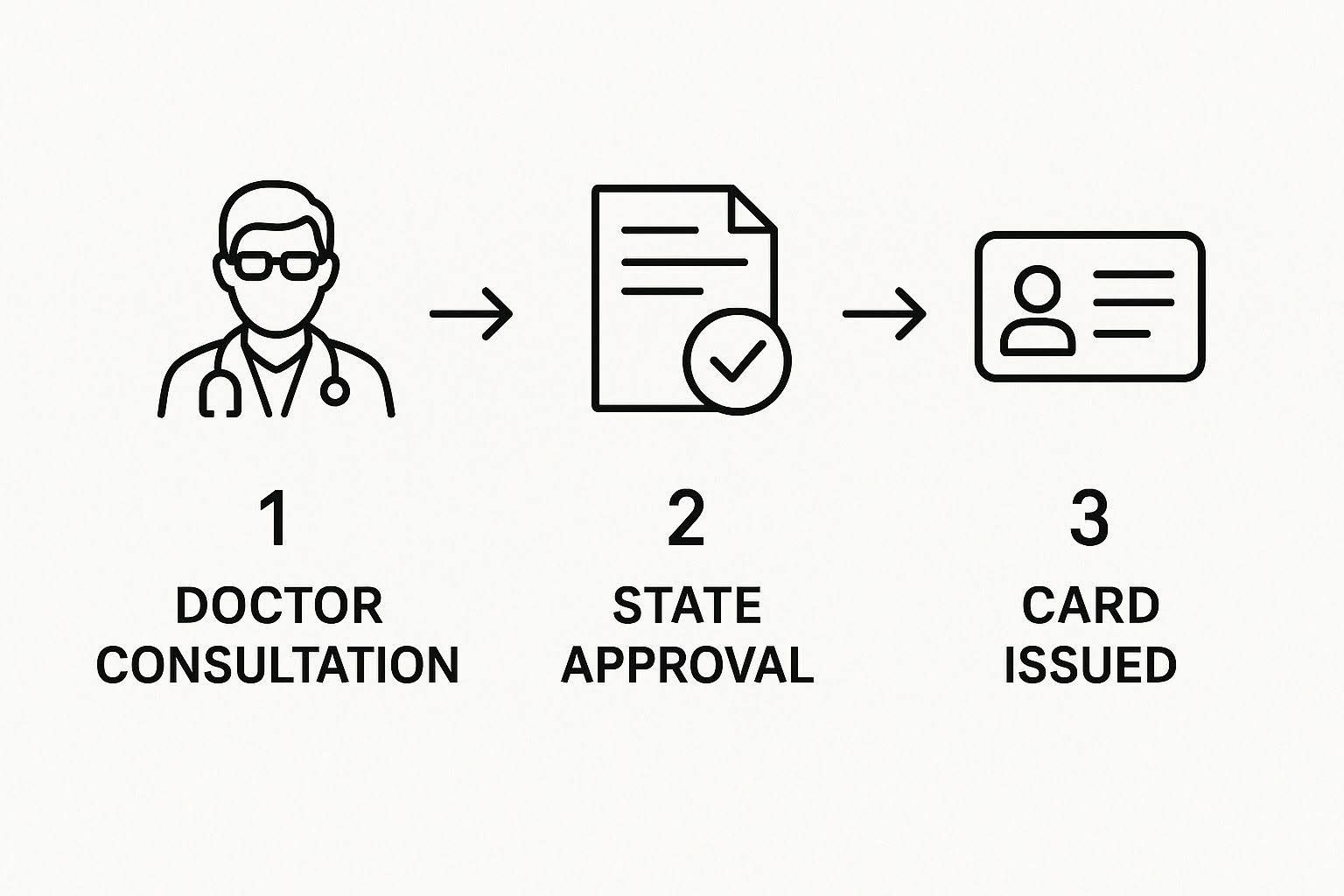
As this graphic shows, once your consultation is done, the state's review is the final bridge to cross before your card is issued.
Entering and Uploading Your Information
With your account set up, it’s time to fill out the form and upload your documents. Accuracy here is your best friend. Double- and triple-check that the name and birthday you enter are an exact match to what’s on your Mississippi ID. A tiny typo can cause a frustrating delay.
You’ll need to have digital copies of a few documents ready to go. Taking a clear, well-lit photo with your smartphone works perfectly—no need for a fancy scanner.
Here’s what you’ll need to upload:
- Your Practitioner Certification: This is the official document you received after your consultation. It's the key that proves a qualified practitioner certified you.
- Proof of Mississippi Residency: A crisp, clear picture of the front of your unexpired Mississippi driver’s license or state ID card is perfect.
- A Recent Photo: This needs to be a simple, passport-style headshot against a plain background. No hats, no sunglasses, just a clear view of your face.
A quick pro-tip: Take your time with the uploads. Blurry photos or unreadable documents are the #1 reason applications get kicked back for corrections. Make sure each file is clear and legible before you hit submit.
The last step inside the portal is paying the state's application fee, which you can do securely with a credit or debit card. Once your payment goes through, your application is officially in the queue for the Mississippi Department of Health to review. You're almost there.
Common Questions About Mississippi Medical Cards
Navigating the path to getting your medical marijuana card in Mississippi is one thing, but what happens after you apply? It's completely normal to have a few lingering questions about timelines, legal limits, and how your card actually works day-to-day.
Let's clear up any final confusion so you can move forward with total confidence.
How Long Does It Take to Get My Card After Applying?
Once you've submitted your application through the state's online portal, the waiting game begins. The Mississippi Department of Health (MDH) is in charge of reviewing and processing every single patient application that comes through.
The MDH typically processes applications within five business days after receiving a complete submission.
One key thing to know: you won't get a physical card in the mail. Instead, you’ll receive an electronic identification card sent straight to the email address you used to register. This digital card is your official proof of registration. You can save it right to your phone or print out a copy to have on hand when you visit a licensed dispensary.
If you don't see that email within a week or so, it’s always a good idea to log back into the state portal and check for any status updates.
What Are the Possession Limits for Patients?
Yes, Mississippi law is very specific about how much medical marijuana a patient can legally purchase and possess. Understanding these limits is key to staying compliant. The state measures marijuana in a unit called Mississippi Medical Cannabis Equivalency Units, or MMCEUs.
Here’s a simple breakdown of the limits for registered patients:
- Weekly Limit: You can't purchase more than six MMCEUs in a single week.
- Monthly Limit: Your total purchases can't go over 24 MMCEUs in any 30-day period.
These rules are in place to ensure a controlled and safe system for everyone. You don't have to worry about calculating this yourself, though. Dispensaries are required to track all your purchases through a statewide monitoring system, which automatically prevents you from accidentally going over the legal limit.
It's helpful to think of these limits as your monthly therapeutic supply. The system is designed to give you consistent access to your medicine without allowing for stockpiling, keeping the program's focus squarely on patient health and safety.
Can I Grow My Own Marijuana with a Mississippi Card?
This is easily one of the most common questions, and the answer is a firm no. Even with a valid medical card, Mississippi law does not permit patients to grow their own marijuana plants at home.
The rules are very clear on this. All medical marijuana products must be grown, processed, and sold by state-licensed facilities. This is actually a good thing for patients, as it guarantees that every product you buy meets strict safety, testing, and labeling standards set by the Mississippi Department of Health. When you buy from a licensed dispensary, you know you're getting a regulated and safe product.
Will My Mississippi Medical Card Work in Other States?
This is a tricky one. Using your Mississippi medical card in another state depends on a legal concept called reciprocity, which is just a fancy way of saying one state agrees to recognize another state's medical cards. Unfortunately, reciprocity is not universal, and the rules can change dramatically from one state to the next.
While a few states have programs that allow visiting patients to use their out-of-state cards, many do not. The legal landscape is always shifting, so you should never assume your card will be accepted outside of Mississippi.
Before you travel, it's absolutely essential to research the specific laws of your destination. The most reliable source of information is always the state's official government or health department website. Taking a few minutes to check can save you a lot of trouble. To better understand the responsibilities that come with being a cardholder, you might be interested in our article discussing the
pros and cons of a medical marijuana card.