Mindfulness Meditation for Pain Relief Guide
Mindfulness meditation isn't about making pain disappear—it’s about changing how you relate to it. The goal is to learn how to separate the raw physical sensation from your emotional reaction, which is often where the real suffering lies.
With consistent practice, you can actually retrain your brain to meet discomfort with calm awareness instead of the usual fear, frustration, and tension.
How Mindfulness Rewires Your Brain's Response to Pain
Before we get into the "how-to," it’s important to understand why this works. This isn't just wishful thinking; it's about making real, physical changes in your brain. When you live with chronic pain, your brain can get trapped in a nasty feedback loop where the physical sensation gets amplified by stress, anxiety, and frustration. It just keeps feeding itself.
Mindfulness meditation is the tool that helps you break that cycle. It gives you the power to observe the physical feeling of pain without immediately attaching a negative story or judgment to it. This simple act of non-judgmental awareness can fundamentally change how your brain processes those pain signals.
Uncoupling Sensation from Suffering
Think of pain as having two parts: the primary sensation (the "ouch") and the secondary suffering (all the mental and emotional baggage that comes with it). Mindfulness goes to work on that second layer. By bringing your full attention to the present moment, you start to see that the physical feeling is just one piece of the puzzle.
This practice creates a little bit of mental space between the sensation and your reaction. It’s in that space that you can find a sense of control and calm, even when the physical discomfort is still there.
By training your attention, you learn to attend to your pain in a way that helps reduce your suffering. You’re not ignoring the pain; you’re changing the quality of your attention towards it.
The Science Behind the Shift
This is more than just a psychological trick—it's backed by some solid neuroscience. Research shows that a consistent mindfulness practice can literally reshape the neural pathways in your brain. This is a process called neuroplasticity. Brain scans of people practicing mindfulness show significant drops in both how intense their pain feels and how unpleasant it is.
Studies have found that this practice activates parts of the brain responsible for managing pain and executive control, like the orbitofrontal cortex. It means mindfulness is actively engaging your brain's own pain-relief mechanisms, which is why it’s so much more than a placebo. You can read the full research on how mindfulness changes brain activity to get a deeper look at the science.
For many people in Mississippi dealing with chronic conditions, mindfulness can be a powerful addition to their current treatments. For example, patients who have a medical marijuana card often find that mindfulness helps them better regulate their body’s responses. This makes sense, as both can influence the body's internal balancing system. You can learn more about what the endocannabinoid system is and the role it plays in your health in our guide.
Building a Foundation of Confidence
Just knowing the science behind this can be incredibly empowering. It shows that you aren't just passively waiting for the pain to go away. You are an active participant in your own relief, retraining your brain one session at a time.
- You build resilience. Each time you practice, you strengthen your ability to handle discomfort without feeling overwhelmed.
- You gain a new perspective. Pain becomes an experience you can observe, not an identity that consumes you.
- You foster self-compassion. The practice encourages you to be kinder and gentler with yourself and your body.
This knowledge gives you the confidence that your efforts are making a real, measurable difference. As we move into the practical techniques, remember that you're not just meditating—you're learning a skill that can provide lasting relief.
Building Your Foundational Mindfulness Practice
Jumping into meditation can feel like a huge commitment, but it’s simpler than you might think. You don't need a special cushion or a silent retreat. It really just starts with a decision to carve out a few moments for yourself—a small island of calm in an otherwise busy day.
For anyone in Mississippi wanting to use mindfulness to manage pain, it all boils down to three things: a quiet spot, a comfortable posture, and a gentle mindset. It’s about creating a space where you can finally listen to your body without judgment.
This isn’t about silencing your thoughts or reaching some perfect state of zen. It's about building a supportive, compassionate practice from day one that can fundamentally change your relationship with chronic pain.
Setting the Stage for Your Practice
Your surroundings matter. Find a quiet corner in your home where you know you won’t be disturbed for 10 to 15 minutes. It could be a comfy chair in the living room, a rug in your bedroom, or even a peaceful spot on the porch.
The key is to make it a habit. By returning to the same place each day, you’re sending a signal to your brain that it's time to be mindful. That spot becomes your dedicated space for calm, making it easier to settle into your practice over time.
Next up is your posture. The only goal here is to support your body without causing more discomfort. For many people with chronic pain, sitting cross-legged on the floor just isn't going to happen, and that's perfectly fine.
- Sitting in a Chair: This is a great option. Sit with your feet flat on the floor and your back straight but not stiff. A small pillow behind your lower back can add some welcome support.
- Lying Down: If sitting is too painful, lying on your back is an excellent alternative. Try placing a pillow under your knees to take the pressure off your lower back.
- Standing or Walking: For some, gentle, mindful movement is more accessible. The principle is the same—just bring your awareness to the sensations in your body as you move.
The most important rule? Be kind to your body. Your meditation posture should reduce strain, not add to it.
Finding Your Anchor in the Breath
Once you’re settled, you can begin the core of the practice. This means choosing an anchor—a point of focus to come back to whenever your mind inevitably wanders. For most people just starting out, the breath is the easiest and most accessible anchor. It’s always there, and its natural rhythm is incredibly calming.
You don't need to breathe in a special way. Just notice it. Bring your awareness to the sensation of the air as it comes in and goes out. You might notice the feeling at the tip of your nose or the gentle rise and fall of your chest.
Your mind will wander. That’s not a failure; it’s just what minds do. The real "work" of mindfulness is the simple, gentle act of noticing your mind has drifted and kindly guiding it back to your breath. Each time you do this, you’re strengthening your "attention muscle."
This simple process of returning your focus, again and again, is how you build a solid mindfulness practice. The visual below shows how these small steps can build on each other to create a consistent, sustainable habit.
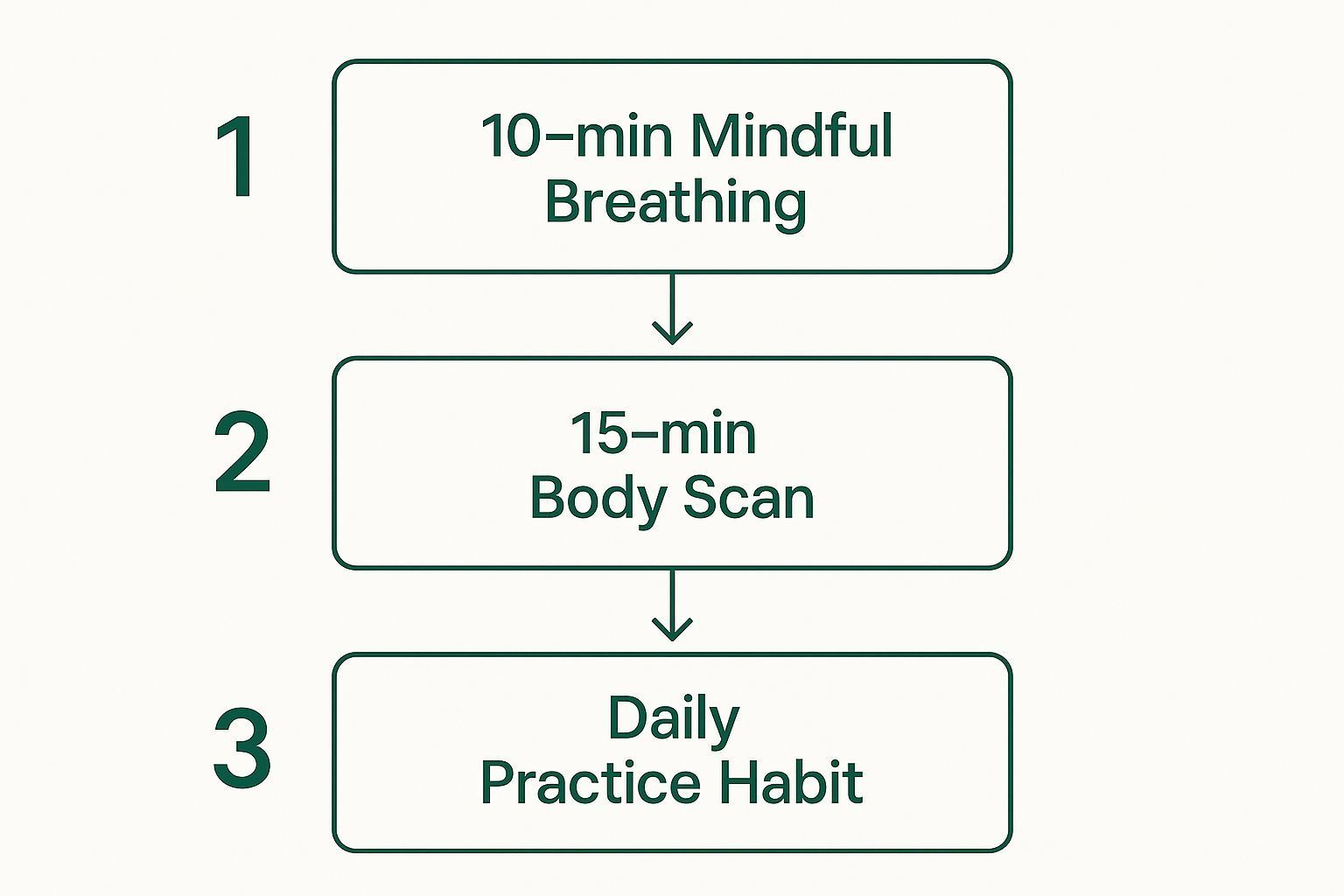
As you can see, a lasting practice is built with small, consistent steps, not giant leaps.
To help you get started, here's a quick look at some foundational techniques and what they offer.
Core Mindfulness Techniques for Pain Relief
This table summarizes some of the foundational exercises you'll encounter. Each one offers a different way to engage with your body and mind, providing specific benefits for people living with pain.
| Technique | Primary Focus | Benefit for Pain Management |
|---|---|---|
| Mindful Breathing | The physical sensation of the breath entering and leaving the body. | Calms the nervous system and provides a simple anchor to return to when pain flares up. |
| Body Scan Meditation | Bringing non-judgmental awareness to different parts of the body, one by one. | Helps you reconnect with your body and notice sensations other than pain, reducing its dominance. |
| Loving-Kindness Meditation | Directing phrases of compassion and goodwill toward yourself and others. | Fosters a kinder relationship with your body and can help counteract the frustration and anger that often accompany pain. |
These techniques aren't about fixing your pain but changing how you relate to it, which can make all the difference.
Cultivating a Mindset of Compassion
Finally, and this is crucial, you have to be gentle with yourself. So many people think they’re "bad at meditating" because they can’t stop their thoughts. But the goal of mindfulness isn't an empty mind—it's an aware mind.
The real objective is to observe your thoughts and feelings without getting tangled in them. You are learning to sit with your experiences—including pain—with a sense of curiosity and kindness rather than resistance.
This compassionate approach is everything when you're dealing with chronic pain. Some days will be harder than others. On days when the pain is screaming, your practice might just be noticing that sensation for a moment and then shifting your focus to a part of your body that feels neutral or even okay.
This practice can also work hand-in-hand with other wellness strategies. For Mississippi residents who have a medical marijuana card for their qualifying conditions, mindfulness can be a powerful mental tool to navigate their experiences with more awareness and calm. Both approaches encourage a deeper connection with your body's signals. And since anxiety often comes with pain, it’s helpful to explore other tools like these 5 relaxation techniques to try when you’re anxious to round out your routine.
When you treat yourself with patience and understanding, your practice becomes a source of relief, not another source of pressure. This foundation is what will support you as you begin to explore even more ways to manage your pain.
Exploring Deeper Techniques for Chronic Pain
Once you've gotten comfortable with mindful breathing, you can start exploring practices that open the door to even more profound relief. These aren't complicated, but they do guide you toward a more compassionate relationship with your body.
Instead of treating pain like an enemy to be defeated, you start to meet its signals with curiosity and kindness. This shift in mindset is the cornerstone of using mindfulness for pain. It’s about moving from constant resistance to gentle awareness, which can turn down the volume on the emotional suffering that so often rides shotgun with physical discomfort.
The Power of the Body Scan Meditation
One of the most effective tools for people with chronic pain is the Body Scan Meditation. It sounds simple: you systematically move your attention through your body, from your toes all the way to the top of your head, just noticing whatever sensations are there. No judgment.
You’re not trying to fix or change anything you find. The entire goal is just to notice. You might feel warmth, tingling, coolness, or tension in places you never realized you were holding it. When your attention reaches a spot that hurts, the instruction is exactly the same: just observe the raw sensations with an open mind.
This practice is so powerful because it helps you reconnect with your whole body, not just the parts that are screaming for attention. By tuning into neutral or even pleasant sensations elsewhere, you can loosen the grip that pain signals have on your awareness.
The body scan is a direct way to practice uncoupling the physical sensation from your emotional reaction to it. You learn to observe the pain as a set of qualities—maybe it's throbbing, sharp, or dull—instead of getting lost in the old stories of "I can't take this" or "this is never going to end."
Bringing Awareness into Mindful Movement
For many people dealing with chronic pain, sitting perfectly still can be a real challenge. That's where Mindful Movement comes in. This practice is all about bringing that same non-judgmental awareness to gentle, intentional movements.
This isn't about exercise or trying to hit a perfect yoga pose. It's about focusing completely on the physical sensations of your body as you move. It could be as simple as:
- Gentle Stretching: Slowly reaching your arms overhead and just noticing the feeling in your shoulders, back, and ribs.
- Mindful Walking: Paying close attention to the sensation of your feet connecting with the ground with each and every step.
- Slow, Purposeful Actions: Bringing full awareness to the simple act of standing up from a chair or bending to pick something up.
The key is to move with your body, not against it. You learn to listen to its signals, respect its limits, and gently explore what it can do. This helps build a sense of trust and partnership with your body, which can be incredibly healing for anyone living with chronic pain.
And the science backs this up. The effectiveness of mindfulness for pain relief is well-documented, as it reduces both the physical and emotional sides of pain. One study found that just four mindfulness sessions led to an average 40% reduction in pain intensity and a huge 57% drop in the unpleasantness of pain. You can read more about the research behind these pain perception findings to see the data for yourself. That's a massive shift in day-to-day quality of life.
How These Techniques Foster a Deeper Connection
Both the Body Scan and Mindful Movement help you create a more accurate map of what’s really happening in your body. Chronic pain can make it feel like your entire being is consumed by discomfort, but these practices show you a much more detailed and nuanced picture.
You start to notice the subtle shifts and changes in sensation from one moment to the next. This is incredibly empowering because it proves that pain isn't some static, unchanging monster. It has rhythms. It ebbs and flows. And you have the tools to navigate those changes with more ease.
For Mississippi residents looking at different ways to manage discomfort, these mindfulness techniques can be a powerful partner to other treatments. For instance, people who have a medical marijuana card often find that mindfulness helps them tune into their body’s needs more effectively. Understanding all the available approaches is key, and you can explore more about chronic pain treatment options in our guide.
By developing this deeper connection with your body's signals, you're really cultivating self-compassion. You learn to work with your body to find relief, building a foundation of resilience that can support you through even the toughest days. And that is the true heart of mindfulness for pain relief.
Weaving Mindfulness into Your Mississippi Lifestyle
While sitting down for a formal meditation session is powerful, the real magic happens when mindfulness moves off the cushion and into your everyday life. This is where you build the kind of resilience that helps you navigate a sudden pain flare-up without getting overwhelmed.
The good news? You don't need to find an extra hour in your day. It’s about transforming ordinary moments into tiny opportunities for awareness—whether you’re stuck in traffic on I-55 or just enjoying a quiet moment on your porch. These small acts build a powerful mental toolkit that keeps you centered, no matter what your pain levels are doing.
Finding Mindfulness in Everyday Mississippi Moments
The trick is to anchor your awareness to things you already do. This way, you’re cultivating mindfulness without adding a single new item to your to-do list. The goal is simple: perform these routine tasks with your full, non-judgmental attention.
Take your morning coffee, for instance. Instead of scrolling through your phone while you sip, turn it into a two-minute meditation. Actually feel the warmth of the mug in your hands. Inhale the rich aroma before you take a sip. Notice the flavors. Just like that, a mindless habit becomes a grounding ritual.
Here are a few other "micro-practices" you can weave into your day:
- The Red Light Reset: When you stop at a red light, instead of getting antsy, take three slow, deliberate breaths. Feel your hands on the steering wheel and your feet on the pedals. Use that forced pause to check in with your body.
- Mindful Walking: As you walk from your car to the grocery store, pay attention to the simple sensation of your feet hitting the pavement. Notice the air on your skin. Is it a humid Gulfport morning or a crisp Oxford afternoon?
- Savoring a Meal: Pick one meal a day to eat without the TV, your phone, or any other distractions. Pay attention to the colors, textures, and tastes of your food. It’s not only better for digestion but also a fantastic way to anchor yourself in the present.
Preparing for Pain Flare-Ups with Micro-Practices
This constant, gentle return to the present moment does more than just lower your daily stress—it’s actively training you for when pain spikes. When a flare-up hits, our instinct is to tense up and let our minds spiral into worry. These micro-practices train your brain to have a different reflex.
Because you’ve practiced coming back to your breath at a red light, it’s that much easier to come back to your breath when a wave of pain hits. You’ve built a reliable anchor that can stop you from getting swept away by the emotional storm that pain so often brings.
By sprinkling moments of awareness throughout your day, you are essentially training your nervous system to find its calm center more quickly. This makes your response to pain less reactive and more intentional.
This mindset is a cornerstone of a well-rounded wellness strategy. For Mississippi residents with a medical marijuana card, these mindfulness techniques can be especially powerful. They give you a mental framework to stay tuned in to your body’s signals, helping you manage your experiences with more clarity and calm.
When you pair these mental skills with other treatments, you create a much more complete path to well-being. If you're looking at all your options, learning about holistic pain management near you can open up new possibilities for a supportive care plan.
Building a Resilient Mindset
Ultimately, weaving mindfulness into your life is about switching your brain’s default setting from "autopilot" to "aware." Every time you choose to be present—whether it’s for a single breath or an entire meal—you’re casting a vote for a calmer, more resilient you.
You’re proving to yourself, over and over, that you can find pockets of peace and control even on the hardest days. This builds a deep, quiet confidence in your ability to handle whatever comes your way. It’s this foundational strength that makes mindfulness such a life-changing practice for pain relief.
Wellness Benefits Beyond Managing Pain

Most people start exploring mindfulness to get a handle on their pain. But what they soon discover is that the benefits don't stop there. Think of it as a ripple effect—the practice touches nearly every part of your daily life, cultivating a mind that's not just managing discomfort but is also more resilient and centered.
Living with chronic pain often means dealing with its unwelcome sidekicks: stress, anxiety, and just feeling low. Mindfulness directly targets this emotional weight. By building a habit of non-judgmental awareness, you learn to watch your thoughts and feelings come and go without getting swept up in the drama. It's a game-changer for finding emotional balance.
Improving Sleep and Sharpening Focus
For many, one of the most welcome side effects is better sleep. We all know the vicious cycle: pain disrupts sleep, and poor sleep makes the pain feel a thousand times worse. Mindfulness helps break that pattern. It calms the nervous system and quiets the racing thoughts that keep you staring at the ceiling at 2 a.m.
At the same time, the practice is like a workout for your brain's attention muscle. Regular meditation is proven to sharpen cognitive functions, especially your ability to concentrate. That mental clarity can make daily tasks feel less overwhelming and give you a real sense of being back in control.
By cultivating mindfulness, you're not just treating a symptom; you're nurturing a more resilient, calm, and centered self. This improvement in your overall quality of life is one of the most compelling outcomes of the practice.
A Holistic Approach to Well-Being in Mississippi
Here in Mississippi, this kind of holistic thinking fits right in with a modern, patient-centered approach to health. It’s all about valuing your mental and emotional wellness just as much as your physical treatment.
Many individuals with a medical marijuana card find that mindfulness is the perfect partner for their care plan. It gives them powerful mental strategies to navigate their experiences with greater awareness and build a complete toolkit for well-being.
The science backs this up. Mindfulness helps people develop coping strategies that directly reduce the anxiety and depression so often tied to chronic pain. Studies confirm that a consistent practice leads to real improvements in stress, sleep, and overall health—all critical pieces of the pain management puzzle.
You might start this journey looking for pain relief, but you’ll likely find a much deeper transformation along the way. You build a stronger, more compassionate relationship with yourself, learning to meet life’s challenges—pain included—with a steady and peaceful mind. It becomes less about just managing pain and more about reclaiming your sense of wholeness and vitality.
Common Questions About Mindfulness for Pain
Starting something new always sparks a few questions. When you begin using mindfulness to manage pain, it’s completely natural to feel a bit unsure or have some concerns pop up. Getting clear, straightforward answers can build the confidence you need to really make the practice your own.
This section tackles some of the most common questions, offering practical insights to help you on your journey.
How Long Until I Feel a Difference in My Pain?
This is usually the first question on everyone's mind, and the honest answer is: it’s different for everyone. Some people notice a subtle shift in their relationship with pain in just a few sessions. They might feel calmer or less overwhelmed by it, even if the physical sensation itself hasn’t changed much yet.
For more noticeable changes in pain intensity, consistency is everything. Think of it like building a muscle. Many clinical studies on mindfulness for pain relief use an 8-week program as a benchmark for seeing significant results. That's because you're literally building new neural pathways, and that takes time and repetition.
My advice? Try to focus on the process of showing up for yourself each day rather than watching the clock for a specific outcome. The benefits will follow.
What if Focusing on My Pain Makes It Feel Worse?
This is a really common fear—and a valid one. The first time you turn your full attention toward a painful sensation without the usual distractions, it can feel more intense. It’s like turning up the volume on something that was just background noise before.
The key here is to approach the sensation with curiosity, not resistance. Instead of tensing up against it, see if you can just observe it. Notice its qualities without layering on judgment or fear.
If it becomes too much, gently guide your focus back to a neutral anchor, like the feeling of your breath moving in and out, or the sounds in the room. You can even shift your attention to a part of your body that feels comfortable or neutral. The goal is to learn to be with the sensation, not to be consumed by it.
It’s a strange paradox of attention: when we give our full, accepting focus to pain, the suffering that comes with it often starts to fade. We stop fighting the sensation, which in turn reduces the mental and emotional tension that makes the pain feel so much worse.
Can I Practice if I Can't Sit Still?
Absolutely. The idea that you have to sit perfectly still in a cross-legged position is one of the biggest myths about meditation. The priority should always be to find a posture that supports your body and minimizes discomfort, not one that adds to it.
You’ve got plenty of options:
- Lying Down: This is a fantastic choice if sitting is painful. Use pillows under your knees or head to make sure your body is fully supported and can relax.
- In a Chair: Sit with your feet flat on the floor and your back supported. This is a stable and accessible posture for almost everyone.
- Mindful Walking: You can even practice while in gentle motion. Focus on the physical sensations of your body moving and your feet connecting with the ground.
Your practice should always adapt to your body's needs, not the other way around. This adaptable mindset is particularly helpful for residents in Mississippi managing conditions that may qualify them for a medical marijuana card, as it fits right in with a patient-first approach to wellness.
If you're a Mississippi resident exploring options for managing chronic pain, our local healthcare providers are here to guide you through the process of
getting a medical marijuana card. Learn more and take the first step toward relief.